
TL;DR

Get decor and gifts delivered free with Prime
- Fast, free delivery on millions of items
- Prime Video, Amazon Music and more included
- Member-only deals all year
House Beautiful’s retrospective traces wallpaper styles from the 1940s through the 2020s, using examples from past issues and designer projects. Its account shows recurring shifts between bold pattern and quieter, more traditional looks; it also cautions that the current decade is not over, so its defining wallpaper style remains uncertain.
House Beautiful has published a retrospective tracing wallpaper styles from the 1940s through the 2020s, using archival magazine examples and more recent interiors to show how patterns and materials changed over time. The account describes postwar florals, midcentury novelty prints, 1980s chintz and abstract designs, and today’s interest in botanical patterns, murals and texture—but says it is too early to define the current decade’s lasting style.
The retrospective links the 1940s to a shift within the decade: wallpaper in its first half used more subdued colors during World War II, while the later years brought brighter palettes, bold florals and geometric designs. House Beautiful points to an April 1946 example as an illustration of the more playful postwar look.
In the 1950s, busy patterns included novelty motifs such as boomerangs, aquariums and kitchen utensils, alongside pastel colors and floral bouquets. The magazine describes the 1960s as a period of mod-inspired geometry, graphic florals and contrasting oranges, browns and greens, with psychedelic swirls and experimental abstracts also appearing.
The report says the 1970s amplified those visual statements through larger, more detailed and repetitive patterns, as well as textured materials such as vinyl and grasscloth. Its example is a dining area featured in the magazine in August 1974. For the 1980s, it describes interiors that layered wallpaper with borders and trim, while popular looks ranged from chintz and soft florals to vibrant abstract designs associated with the Memphis Group.
How Wallpaper Tracks Changing Tastes
The chronology offers readers a way to place familiar interior styles in time: wallpaper that may now look dated or nostalgic was once part of a broader shift in color, pattern and home decoration. It also shows that design eras are not clean breaks. The report identifies repeated motifs and materials across decades, including florals, geometric patterns and textured wallcoverings.
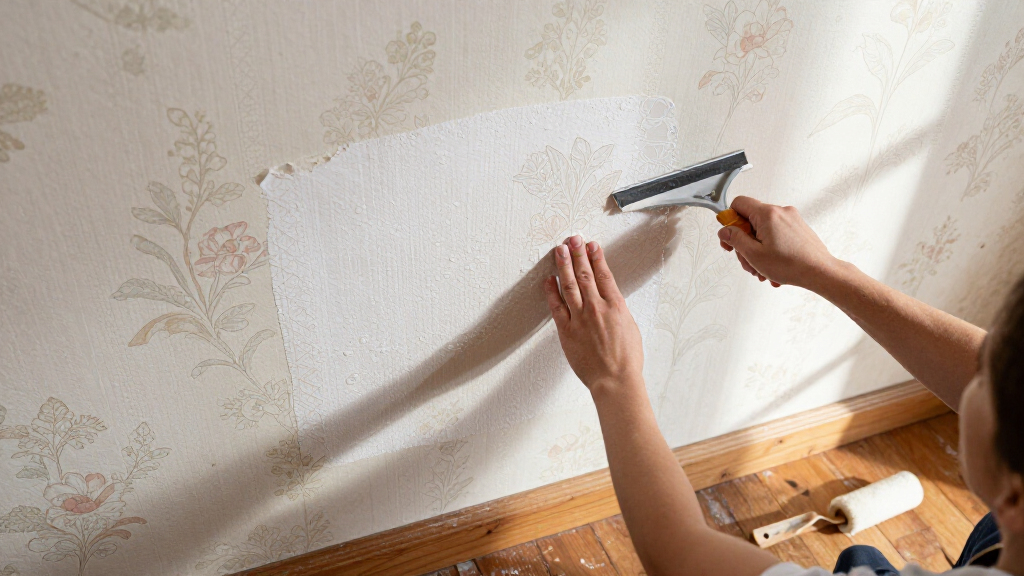
For homeowners and renters, the retrospective provides visual context for current choices rather than a set of rules. The reported rise of peel-and-stick wallpaper in the 2010s, for example, changed how easily some people could use wallpaper without committing to traditional installation. The source does not provide market data or evidence that any one style is more popular across the industry.
As an affiliate, we earn on qualifying purchases.
From Postwar Prints to Peel-and-Stick
House Beautiful’s account relies on examples published in its own past issues alongside later designer interiors. Those references give the timeline specific snapshots: a 1962 floral, a 1974 dining area, a 1982 bathroom and a 1994 living room. They illustrate the magazine’s interpretation of each era, rather than a measured survey of every home or wallpaper product available at the time.
By the 1990s, the report says, neutral tones, simple patterns and country-cottage influences were prominent, including subtler wallpaper borders and a renewed interest in damask. In the 2000s, shabby-chic florals and traditional motifs such as toile appeared alongside brighter, computer-designed abstracts. The 2010s brought peel-and-stick options, trompe-l’oeil effects, textured grasscloth and minimalist geometric prints such as chevron.
For the 2020s, House Beautiful identifies oversized florals, richly colored botanicals, immersive murals and continued interest in texture. It presents these as styles visible so far, not as a settled definition of the decade.
““We’re only just over halfway through the 2020 decade, so it’s not possible to say for certain what wallpaper styles will come to epitomize this era.””
— House Beautiful
The 2020s Are Still Taking Shape
The article does not establish which current styles will endure or become most associated with the 2020s. Its observations about maximalism, biophilic design, murals and grasscloth are descriptions of trends seen so far, not forecasts backed by sales figures or a broad industry study. The account also does not quantify how common any style was in a given decade, and its magazine examples should be read as illustrations rather than a comprehensive record of household interiors.
More Trends May Define the Decade
There is no specific follow-up announcement or forecast in the retrospective. The clearest next point is time: as the 2020s continue, later examples and reporting may show whether today’s botanical prints, murals and textured finishes remain prominent or give way to different styles. For now, House Beautiful presents them as visible features of current design, while leaving the decade’s eventual signature open.
Key Questions
What wallpaper styles were common in the 1950s?
House Beautiful describes novelty designs such as boomerangs, aquariums and utensil patterns, as well as pastel shades and floral bouquets.
What changed in wallpaper during the 1980s?
The retrospective describes layered rooms with wallpaper, borders and wood trim. Styles ranged from chintz and softer florals to vibrant abstract patterns associated with the Memphis Group.
What wallpaper trends does the report associate with the 2010s?
It points to the spread of peel-and-stick wallpaper, trompe-l’oeil effects, textured grasscloth and minimalist geometric prints such as chevron.
What styles are appearing in the 2020s?
House Beautiful cites oversized florals, richly colored botanicals, murals and textured finishes. It says the decade is still underway, so those styles cannot yet be treated as its definitive look.
Source: rss
Columbus Day / Indigenous Peoples' Day Picks
long weekend sales
As an affiliate, we earn on qualifying purchases.