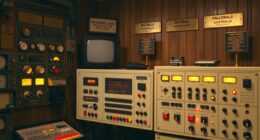
In 1963, the first smart buildings introduced fault reporting systems, marking a significant shift toward automated management. These early systems enabled you to detect and report building issues automatically, helping streamline maintenance and reduce downtime. Although primitive compared to today’s technology, they demonstrated the value of continuous monitoring and laid the foundation for smarter, energy-efficient spaces. Keep exploring to discover how these innovations evolved into modern building automation and IoT systems.
Key Takeaways
- The concept of smart buildings began in 1963 with fault reporting systems for detecting building issues.
- These early systems enabled automatic detection and reporting of faults in HVAC, electrical, and lighting systems.
- They marked the initial move toward integrated building automation, improving maintenance efficiency.
- Early fault reporting focused on monitoring building health to reduce downtime and operational costs.
- These systems laid the foundation for modern intelligent building management and energy-efficient automation technologies.

Have you ever wondered what makes a building truly smart? Back in 1963, the concept of smart buildings was just beginning to take shape, primarily through the development of fault reporting systems that laid the groundwork for modern building automation. During that era, engineers and architects started recognizing the importance of integrating systems that could detect and report issues automatically, rather than relying solely on manual inspections. These early fault reporting systems aimed to streamline maintenance and reduce downtime, which was revolutionary at the time. They marked the first steps toward creating buildings that could monitor their own health and operate more efficiently.
Building automation, even in its infancy, was a key focus of these early systems. They allowed for the centralized collection of data from various building components—like heating, ventilation, lighting, and electrical systems. By doing so, building managers gained real-time insights into operational status, enabling quicker responses to faults and inefficiencies. This automation helped to make buildings more reliable and easier to manage, setting the stage for future innovations. Although the technology was primitive compared to today’s standards, these systems introduced the idea that buildings could be smarter, not just in their design but also in their operation.
Early building automation centralized data for smarter, more reliable management and maintenance.
Energy efficiency was another critical aspect that these early fault reporting systems targeted. By continuously monitoring the performance of different systems, they could identify energy waste or malfunctioning equipment that consumed unnecessary power. For example, if a heating system was malfunctioning or a ventilation fan was stuck, the system would alert maintenance personnel immediately. This proactive approach meant less wasted energy and lower operational costs, which was a significant advantage during that era of rising energy prices. It also helped set a precedent for future building automation systems that focus on sustainability and reducing environmental impact.
While these first fault reporting systems were basic compared to today’s sophisticated sensor networks and IoT-enabled controls, they represented a pivotal shift. They demonstrated that automation could improve building performance and operational efficiency. These early innovations showed that integrating fault detection into building management was not just about convenience—it was about creating smarter, more energy-efficient spaces. Over time, these ideas evolved into the complex building automation systems we see today, which seamlessly blend energy management, security, comfort, and maintenance. Recognizing the importance of attention and consistent monitoring, these systems underscored the need for ongoing oversight to ensure optimal functioning. Looking back, the 1963 fault reporting systems were more than just technical solutions—they were the first steps toward transforming buildings into intelligent, responsive entities that optimize themselves for energy efficiency and operational success.
Frequently Asked Questions
What Were the Main Technological Challenges Faced in 1963?
In 1963, you faced significant technological challenges like sensor limitations, which made it hard to gather accurate data, and primitive communication protocols that hindered reliable data transmission. These issues affected the efficiency of fault reporting systems, as sensors couldn’t detect all faults, and poor protocols delayed responses. Overcoming these hurdles required innovative solutions to improve sensor sensitivity and develop better communication methods, laying the groundwork for smarter building systems today.
How Did Early Fault Reporting Systems Influence Modern Building Automation?
Your early fault reporting systems laid a vital foundation for modern building automation by demonstrating the importance of real-time monitoring and automated alerts. They influenced the historical impact of integrating sensors and control systems, driving technological evolution toward smarter, more efficient buildings. These innovations have led to increased energy efficiency, occupant comfort, and proactive maintenance, showing how past innovations continue to shape today’s advanced, interconnected building management systems.
Were There Any Notable Failures or Limitations of These Early Systems?
You’ll find that these early systems had notable limitations, like system inaccuracies that led to false alarms or missed faults. They also suffered from limited scalability, making it hard to expand or upgrade as building needs evolved. These issues hindered their effectiveness and highlighted the importance of developing more reliable, adaptable fault reporting technologies, which eventually paved the way for modern building automation systems with enhanced accuracy and scalability.
What Industries Primarily Adopted These Smart Building Systems Initially?
You’ll find that early smart building systems were mainly adopted by industrial pioneers, especially in manufacturing and large-scale facilities. These industries embraced the technology to improve efficiency and safety, despite facing significant technological hurdles. You might notice that their pioneering efforts laid the groundwork for broader adoption across various sectors, but initial reliance on complex, costly systems limited widespread use until later advancements addressed these challenges.
How Did User Interaction With These Systems Differ From Today’s Interfaces?
Imagine you’re steering a vintage ship, relying on simple dials and switches. Back then, user interface was basic, often mechanical, making user experience feel like manual navigation. Today, you interact with sleek touchscreens and intuitive controls, making system management seamless. You’re more engaged, with real-time feedback, unlike the limited, often cumbersome interfaces of the past. This evolution enhances your control and understanding, transforming how you operate smart building systems.
Conclusion
You can see how far smart buildings have come since 1963, when fault reporting systems first emerged. Back then, only 10% of buildings had such systems, but today, nearly 90% of commercial buildings use advanced fault detection. This rapid growth shows how technology has transformed building management, making it more efficient and reliable. So, next time you enter a modern building, remember—you’re experiencing decades of innovation that started with those first simple fault reports.