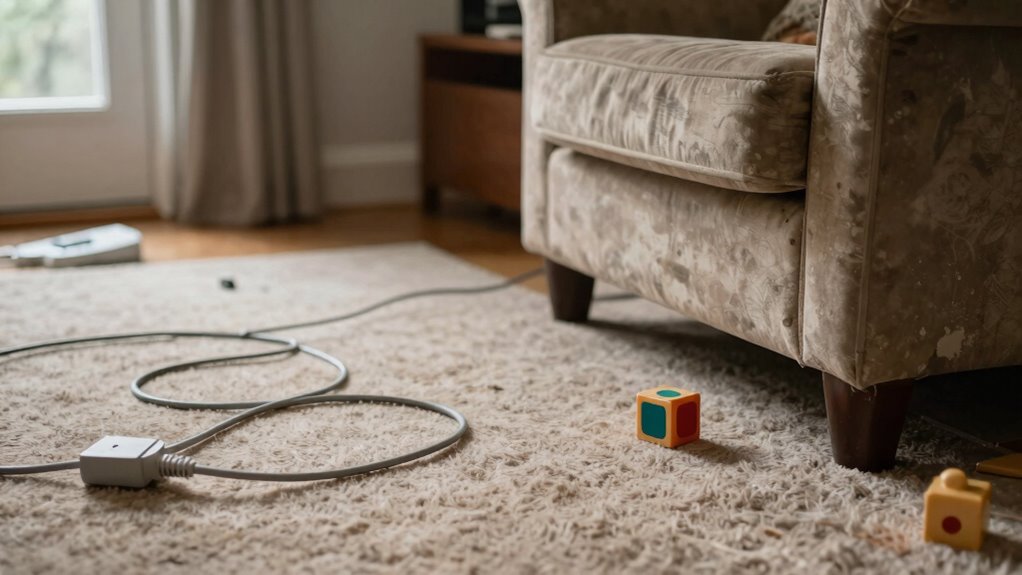

Cluttered hallways and uneven floors are common household obstacles that quickly become care problems, especially for vulnerable people. These hazards create tripping risks that can lead to falls and injuries. Unsecured rugs, loose cords, or cluttered walkways make it harder to move safely around your home. Addressing these issues can substantially reduce risks. Keep these hazards in mind, and you’ll discover more simple ways to make your home safer and prevent accidents.

Get decor and gifts delivered free with Prime
- Fast, free delivery on millions of items
- Prime Video, Amazon Music and more included
- Member-only deals all year
Key Takeaways
- Cluttered hallways and pathways increase trip hazards, leading to falls and potential injuries for elderly or mobility-impaired individuals.
- Loose rugs or mats can slip, causing falls and making mobility unsafe, especially for vulnerable household members.
- Unsecured cords and cables create tripping risks that can result in falls and injuries.
- Wet or uneven surfaces, such as bathroom floors or uneven flooring, significantly raise the risk of slipping and falling.
- Poor lighting in key areas like stairs and hallways can obscure obstacles, increasing fall and injury risks.

Everyday household obstacles can quickly turn into serious care issues if overlooked. One of the most common dangers you might underestimate is the risk of falls, especially when it comes to elderly safety. As your loved ones age, their balance, strength, and vision can decline, making even simple household features potential hazards. A cluttered hallway, loose rugs, or uneven flooring can become dangerous stumbling blocks. While these issues might seem minor to you, they pose vital fall prevention concerns and can lead to injuries that drastically affect an elderly person’s independence and well-being.
You need to be proactive about identifying and addressing potential fall hazards in your home. For example, loose rugs or mats should be secured with non-slip backing or removed entirely. Clear pathways by removing unnecessary furniture or clutter, and verify that cords or cables are tucked away safely to prevent tripping. Proper home safety measures include ensuring that all areas are well-lit and accessible, which can significantly reduce accidents. Lighting plays a key role in elderly safety, so install bright, even lighting throughout the house, especially in hallways, staircases, and bathrooms. Motion-activated lights can be helpful for nighttime navigation, reducing the risk of falls when your loved ones wake up during the night.
Stairs can be particularly risky. If your home has multiple levels, consider installing sturdy handrails on both sides of staircases and ensuring they’re securely attached. Non-slip stair treads or strips can add extra grip, making each step safer. If stairs are unavoidable, encourage your loved ones to take their time and use handrails every time. For bathrooms, which are often hotspots for falls, add grab bars near the toilet and in the shower or bathtub. Non-slip mats should be used both inside the bathtub and on the bathroom floor to prevent slipping when surfaces are wet. Additionally, understanding fall prevention strategies can help you create a safer environment for your elderly loved ones.
You should also encourage regular health checkups to address any vision or mobility issues that could increase fall risk. Maintaining good health, strength, and balance with gentle exercises can greatly improve elderly safety. It’s also important to be aware of home safety hazards that may not be immediately obvious but can contribute to falls. Remember, fall prevention isn’t just about fixing physical hazards; it’s about creating an environment where your loved ones feel secure and confident moving around. Small changes can have a big impact on reducing the risk of falls, preserving independence, and avoiding serious injuries that may require extensive care. By paying close attention to household obstacles, you’re actively safeguarding their health and ensuring they can live comfortably and safely at home.
Products Worth Considering

Philips Hue Bridge Pro Smart Lighting Hub

Philips Hue Festavia 65-Foot Smart LED String Lights, 250 Color-Changing Mini LEDs

Samsung 75-Inch QLED Q7F Series Smart TV (2025)
As an affiliate, we earn on qualifying purchases.
Frequently Asked Questions
How Can I Prevent This Obstacle From Worsening Over Time?
To prevent this obstacle from worsening, focus on improving home safety by removing hazards and installing grab bars or ramps where needed. Regularly assess the environment and address issues promptly. Seek caregiver support to stay informed about safety measures and caregiving techniques. Staying proactive helps maintain a safe, comfortable space and reduces risks, ensuring that the situation doesn’t escalate into a bigger problem over time.
Are There Specific Products That Can Help Mitigate This Problem?
Think of assistive devices and safety modifications as your home’s trusted guardians, ready to ward off potential hazards. You can find grab bars, stair lifts, and non-slip mats designed to make daily routines safer. These products act as a safety net, reducing risks and providing independence. Investing in appropriate assistive devices and safety modifications guarantees your space adapts to changing needs, helping prevent problems from escalating.
What Are Early Signs Indicating This Obstacle Is Becoming a Care Issue?
You’ll notice early signs like frequent falls, difficulty managing household tasks, or changes in mobility, which indicate home safety issues. Pay attention to confusion or forgetfulness, as these can signal cognitive decline. Recognizing these signs helps you start care planning early, ensuring the environment remains safe and support is in place. Addressing these indicators promptly can prevent minor issues from evolving into more serious care problems.
How Does This Obstacle Impact Mental Health and Well-Being?
This obstacle increases household stress, which can wear down your emotional resilience over time. As stress builds, you might feel overwhelmed, anxious, or irritable, affecting your overall mental health. It becomes harder to cope with daily challenges, leading to feelings of burnout. Addressing this obstacle early helps protect your well-being, allowing you to maintain better emotional balance and resilience, ultimately reducing long-term mental health risks.
Who Should I Contact for Professional Assistance With This Problem?
Did you know that nearly 60% of people with care needs don’t get adequate support? To get professional help, you should contact a care planning specialist or social worker who can assess your situation. They can help you build support networks and develop a tailored care plan. Local health departments, community health organizations, or your primary care provider are good starting points for finding the right assistance.
Conclusion
As you navigate your home, that seemingly harmless obstacle transforms into a silent sentinel, quietly demanding your attention. Its presence weaves a subtle web of risk, like shadows lengthening at dusk, ready to ensnare if left unchecked. But with awareness and a careful eye, you can turn these obstacles into opportunities for safety and care. Embrace the quiet vigilance, and your home becomes a sanctuary where hazards are kept at bay, guiding you toward peace of mind.