
If your furniture feels off, you might be ignoring the room’s focal point, making the space look cluttered or unbalanced. Overcrowding or underusing areas can disrupt flow and comfort, while placing pieces in high-traffic paths hampers safety and movement. Additionally, blocking natural light or choosing furniture that doesn’t match the space’s scale can make it feel dull or cramped. Keep these mistakes in mind—discover more ways to perfect your space as you explore further.
Key Takeaways
- Ignoring a clear focal point can make your space look cluttered and unbalanced.
- Overcrowding furniture hampers flow, while underutilized space feels empty and uninviting.
- Placing furniture in high-traffic pathways disrupts movement and safety.
- Neglecting natural light and viewlines reduces space brightness and outdoor connection.
- Using furniture that’s too large or small creates proportion issues and visual imbalance.

BirdSuite Artistic Focal Point Rose Art Picture – Delicate Layered Petal Frameless Canvas Wall Art Painting for Bohemian, Modern & Farmhouse Style Living Room Bedroom Office – 40'' x 20''
【Detailed Rose Art Pictures】This 40'' x 20'' frameless canvas features finely rendered layered rose petal textures, serving as…
As an affiliate, we earn on qualifying purchases.
As an affiliate, we earn on qualifying purchases.
Ignoring the Focal Point of the Room

Many people overlook the importance of establishing a clear focal point when designing a room, which can lead to a cluttered or unbalanced space. Without a central feature, your furniture arrangements may seem scattered or aimless. To avoid this, create centered arrangements around a main focal point, such as a fireplace, artwork, or window view. Proper accent placement helps draw attention to this feature and guides the eye naturally. Position seating and accessories to highlight the focal point, ensuring it remains the star of the room. When you focus on a well-defined center, everything else falls into place, creating harmony and visual appeal. Ignoring this step can make your space feel disjointed, so prioritize a clear, intentional focal point in your design.

HOUSE DAY Black Magic Space Saving Hangers 10 Pack, Premium Smart Hanger Hooks, Sturdy Cascading Hangers with 5 Holes for Heavy Clothes, Closet Organizers and Storage, College Dorm Room Essentials
Durable Closet Organizers and Storage – Made from durable plastics with ideal dimensions measuring at: 9.3" wide and…
As an affiliate, we earn on qualifying purchases.
As an affiliate, we earn on qualifying purchases.
Overcrowding or Underutilizing Space

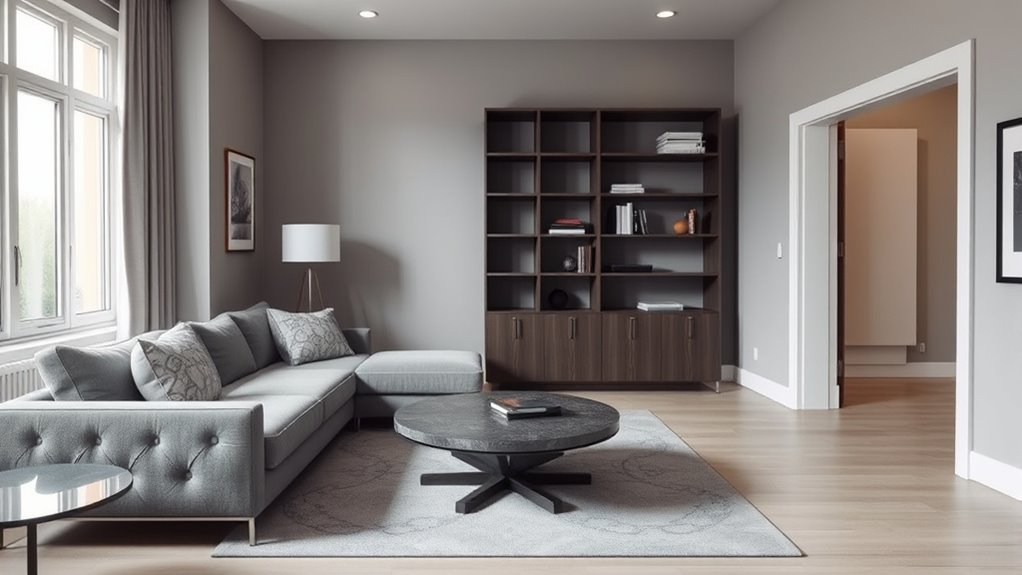
Balancing the use of space is essential to creating a functional and inviting room. Overcrowding can block room flow, making it feel cramped and difficult to move around. Conversely, underutilizing space leaves your room feeling empty and unwelcoming. To get it right, focus on maintaining a furniture balance that enhances both comfort and practicality.
Consider these tips:
- Avoid placing furniture too close, which hampers room flow
- Use scale-appropriate pieces to fill the space without overwhelming it
- Leave enough open areas to allow easy movement
- Group furniture to create designated zones
- Remove unnecessary items to prevent overcrowding
- Incorporate proper space planning principles to optimize room layout and improve overall functionality.
ODIKA Flatwoven Area Rug 4×6 ft, Minimalist Shapes in Flowing Abstract Arrangement, Non Slip, Stain Resistant, Washable High Traffic Area Rugs for Living Room, Bedroom Decor
Modern, artistic: Add a piece of modern charm from ODIKA to your bedroom collection. Designed with the art…
As an affiliate, we earn on qualifying purchases.
As an affiliate, we earn on qualifying purchases.
Placing Furniture in High-Traffic Pathways

Placing furniture in high-traffic pathways can disrupt movement and create safety hazards. Poor furniture placement blocks traffic flow, forcing people to navigate around obstacles and increasing the risk of accidents. To optimize your space, avoid positioning large pieces directly in walkways. Instead, create clear pathways that allow smooth circulation. Using vertical storage solutions can also help maximize space and reduce clutter in high-traffic areas. Consider this table for better traffic flow:
| Good Furniture Placement | Bad Furniture Placement |
|---|---|
| Along walls, leaving center aisles clear | Blocking doorways or main walkways |
| Small furniture near edges | Placing bulky items in busy areas |
| Open spaces for passage | Cluttering walkways with furniture |
Proper furniture placement guarantees safety and improves functionality, making your space more comfortable and efficient.

OVZME Natural Curtains for Small Window Treatment, Light Blocking Short Kitchen Window Curtains Over Sink, Dual Rod Pocket Half Window Tiers for Bathroom Basement, Each 40Wx36L, 2 PCS
Sold as 2 Panels: Each package contains 2 pieces kitchen curtains, each panel measures 40" in width and…
As an affiliate, we earn on qualifying purchases.
As an affiliate, we earn on qualifying purchases.
Neglecting Natural Light and Viewlines

Ignoring natural light and viewlines can turn a well-designed space into a dull, uninspiring environment. Proper window placement allows sunlight to brighten your rooms and creates a connection with outdoor views. If you overlook these aspects, you miss the opportunity to make your space feel open and inviting. Incorporating natural materials like wood and stone can further enhance the cozy farmhouse ambiance by emphasizing authenticity and warmth. Consider these common mistakes: – Blocking windows with large furniture pieces – Placing seating away from natural light sources – Ignoring outdoor views when arranging your layout – Forgetting to maximize window placement for daylight – Overlooking the importance of clear sightlines to outdoor scenery
Choosing the Wrong Scale for Your Furniture
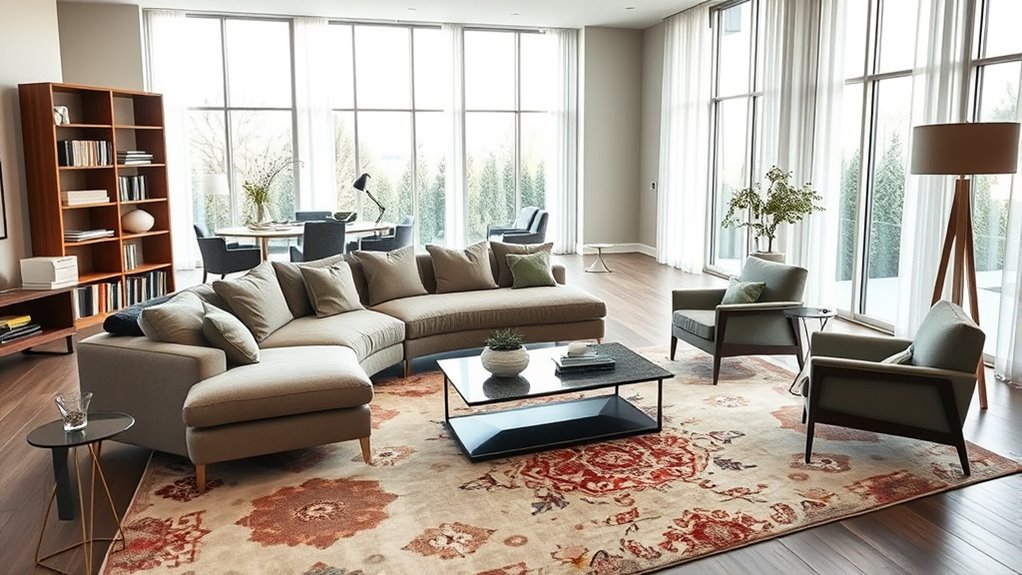
Choosing furniture that’s too large or too small for your space can make your room feel awkward and uncomfortable. This scale mismatch creates proportion errors that disrupt the room’s harmony. When furniture is oversized, it can overwhelm the space, making it feel cramped and cluttered. Conversely, small pieces can look out of place and leave the room feeling empty or unbalanced. To avoid these issues, measure your space carefully and select furniture that fits proportionally. Keep in mind the flow and function of the room—large pieces should complement the overall scale, not dominate it. Getting the scale right guarantees your furniture enhances the space without creating visual chaos. Proper proportion leads to a balanced, inviting environment where everything feels just right.
Frequently Asked Questions
How Can I Measure My Space Accurately Before Furniture Placement?
To measure your space accurately before furniture placement, start with reliable measuring tools like a tape measure or laser measure. Carefully note the length, width, and height of each area, ensuring precise measurements for space calibration. Don’t forget to include doorways, windows, and obstacles. Double-check your measurements to avoid mistakes, and use these details to plan furniture placement that fits perfectly and maximizes your space’s potential.
What Are Quick Tips to Identify My Room’S Focal Point?
Think of your room as a stage, and the focal point as the spotlight. To spot it quickly, look for the area with the strongest visual hierarchy—perhaps a fireplace or large window. Pay attention to lighting focus; natural or accent lighting often highlights the main feature. Arrange furniture to frame this point, making it obvious and inviting. These quick tips help you identify your room’s true center of attention effortlessly.
How Do I Balance Aesthetics With Functionality in Space Planning?
To balance aesthetics with functionality in space planning, focus on creating decor harmony and visual balance. You should choose furniture and decor that complement each other while serving your needs. Arrange pieces so they’re easy to access and promote flow, but don’t sacrifice style. Keep clutter minimal, and use rugs, lighting, and colors to unify the space. This approach guarantees your room looks beautiful and works well for everyday use.
Can Furniture Placement Affect Room Acoustics and Sound Flow?
You might not realize that furniture placement can impact room acoustics and sound flow. Properly arranged furniture helps manage sound reflection, reducing echoes and improving clarity. It also aids noise control by absorbing or blocking sound waves, creating a more comfortable environment. Avoid placing large pieces against walls or near sound sources, and use soft furnishings to enhance sound quality. Thoughtful placement guarantees your space sounds as good as it looks.
What Are Common Signs My Furniture Arrangement Feels Uncomfortable?
Did you know that poor furniture arrangement can make a room feel 30% smaller? If your furniture feels uncomfortable, you might notice tight spaces, awkward traffic flow, or pieces that block windows and doors. These decorating mistakes disrupt the room’s harmony and can cause discomfort. Trust your instincts—if you avoid sitting in certain spots or feel cramped, it’s a sign your furniture arrangement needs a rethink to improve comfort and function.
Conclusion
Don’t let furniture flubs frustrate your space. By focusing on focal points, fitting furniture freely, and respecting traffic and light, you’ll foster a flawless flow. Avoid overcrowding or underusing areas, and choose pieces that suit your space’s scale. With mindful movement and masterful planning, you’ll make your furniture function beautifully. Turn your space into a serene sanctuary by sidestepping these sneaky space planning mistakes—sweet, simple, and superbly structured.