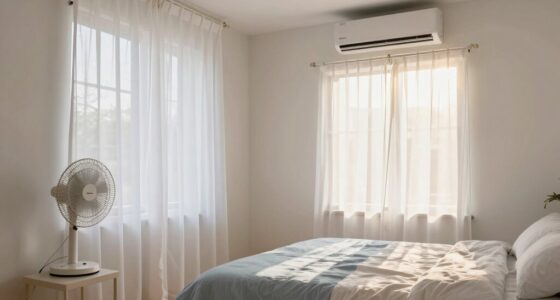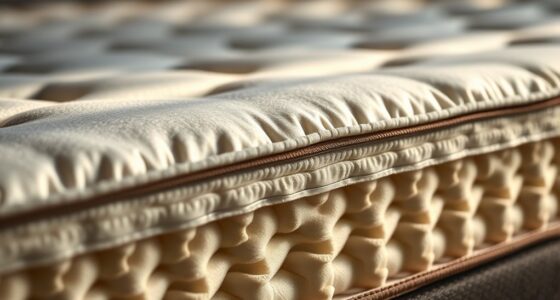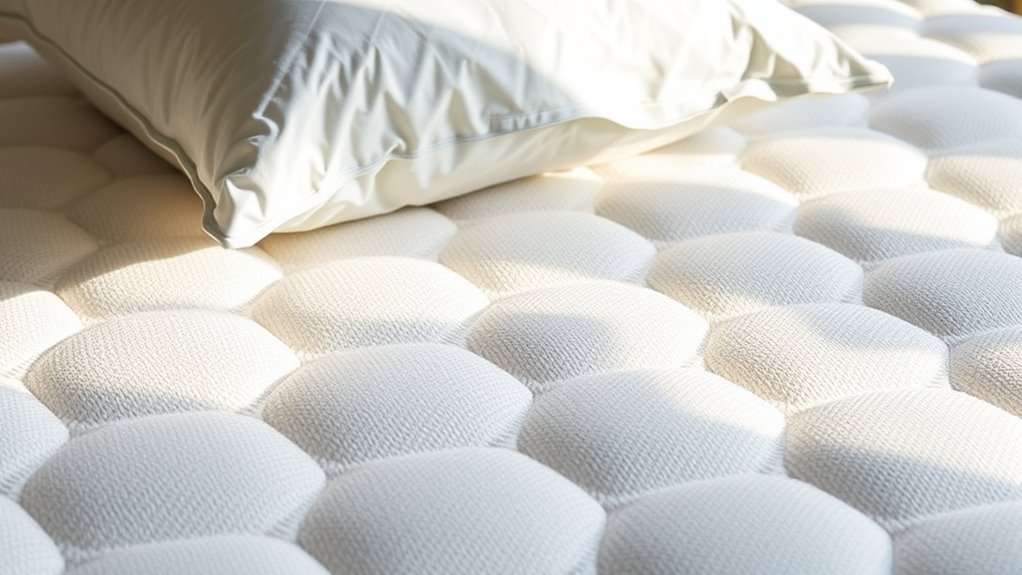

Choosing the right mattress and pillow materials is essential for support and comfort. Higher-density foam provides better durability and body support, especially for heavier sleepers or those with joint issues. Breathable fabrics and ventilated pillow covers help regulate temperature, prevent overheating, and reduce moisture build-up. Combining supportive foam with breathable covers creates a cooler, more comfortable sleep environment. Keep exploring to discover how to select materials that best match your sleep needs and preferences.

Get decor and gifts delivered free with Prime
- Fast, free delivery on millions of items
- Prime Video, Amazon Music and more included
- Member-only deals all year
Key Takeaways
- Foam density affects mattress firmness, support, durability, and suitability for different body weights and sleep positions.
- High-density foams offer longer-lasting support and resist sagging, enhancing overall mattress longevity.
- Breathable fabrics and cover materials improve airflow, wick moisture, and help regulate temperature for a cooler sleep.
- Combining supportive foam with breathable covers prevents heat buildup, promoting uninterrupted, comfortable sleep.
- Selecting materials that balance foam density and fabric breathability optimizes support, comfort, and climate control.
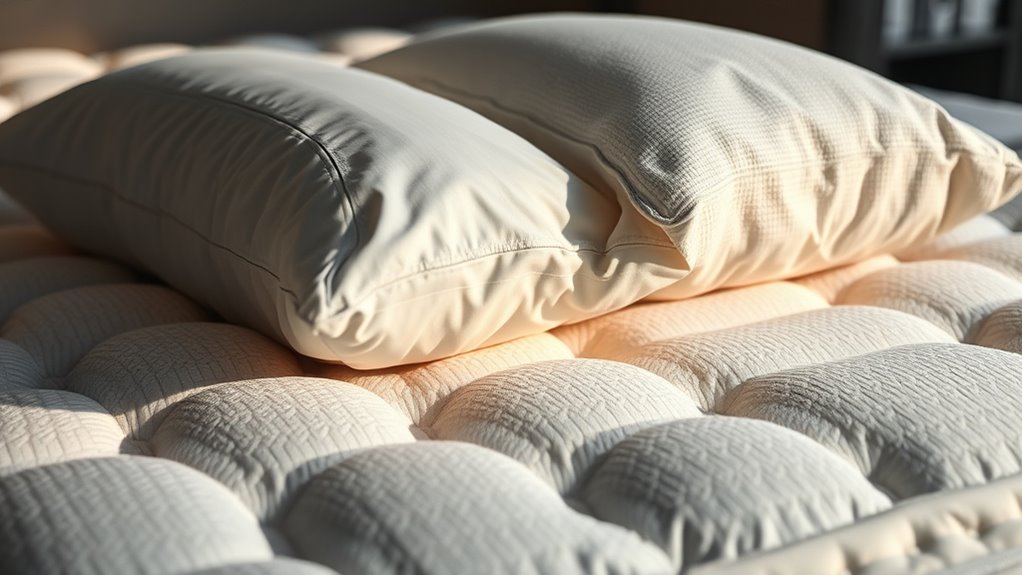
Choosing the right mattress and pillow materials can substantially impact your sleep quality and comfort. When selecting these essentials, understanding the role of foam density and fabric breathability can help you make informed decisions that support restful nights. Foam density, for instance, determines how firm or soft your mattress feels and how well it supports your body. Higher-density foam tends to be more durable and provides better support, especially for heavier individuals or those with specific joint concerns. It offers a denser core that resists sagging over time, maintaining comfort and support for years. Conversely, lower-density foam can feel softer and more plush but might wear out faster, leading to less consistent support. It’s essential to find a balance that matches your preferred sleeping position and weight, ensuring the mattress cradles your body without feeling too firm or too soft.
Fabric breathability plays a critical role in creating a comfortable sleep environment. Bedding materials with good breathability wick away moisture and promote airflow, helping you stay cool and dry throughout the night. This is especially important if you tend to sweat or live in a warm climate. Breathable fabrics such as cotton, linen, or specialized moisture-wicking textiles allow heat to escape, reducing overheating and night sweats. When it comes to pillows, choosing covers made from breathable materials can significantly enhance comfort by preventing heat buildup around your head and neck. This can lead to fewer awakenings caused by discomfort from heat or moisture retention. Combining breathable pillow covers with supportive, well-ventilated foam cores creates a sleeping surface that feels cooler, fresher, and more comfortable, especially over long periods.
You also need to contemplate how foam density and fabric breathability work together to influence sleep. A mattress with high-density foam may provide excellent support but could trap heat if paired with non-breathable fabric coverings. To counteract this, opt for mattress covers and pillowcases made from breathable materials. Likewise, a softer foam with lower density might feel more plush but could lack durability, so ensure the fabric covering promotes adequate airflow to compensate for potential heat retention. Ultimately, the goal is to create a harmonious balance—supportive enough to keep your spine aligned and breathable enough to regulate temperature. By paying attention to foam density and fabric breathability, you’re investing in a sleep setup that promotes restful, uninterrupted nights and waking up feeling refreshed.
high density memory foam mattress
As an affiliate, we earn on qualifying purchases.
As an affiliate, we earn on qualifying purchases.
Frequently Asked Questions
How Do Different Materials Affect Allergy Symptoms?
Different materials can critically impact your allergy symptoms. hypoallergenic fabrics help reduce allergic reactions by preventing common allergens from settling in. Dust mite resistance is essential, as it keeps mites at bay, minimizing triggers. When choosing a mattress or pillow, opt for these allergen-reducing materials to create a healthier sleep environment. This way, you’ll breathe easier and wake up feeling more refreshed, without allergy flare-ups disrupting your rest.
Are There Eco-Friendly Options for Mattress and Pillow Materials?
Yes, you can find eco-friendly options for mattresses and pillows. Look for products made from organic fibers like organic cotton, wool, or latex, which are sustainably sourced. Many brands now use sustainable fabrics that reduce environmental impact. These materials not only support eco-conscious living but also often provide better breathability and comfort. By choosing eco-friendly options, you help protect the planet while enjoying a healthier sleeping environment.
What Are the Best Materials for Side Sleepers?
Ever wonder what makes the perfect pillow for side sleepers? You should choose memory foam with cooling gels, as it contours your neck and shoulders for ideal support and keeps you cool throughout the night. These materials relieve pressure points, align your spine, and enhance comfort. Isn’t a good night’s sleep worth investing in quality materials? Memory foam with cooling gels truly delivers the balance of support and cooling you need.
How Do Temperature-Regulating Materials Work?
Temperature-regulating materials work by enhancing breathability factors, allowing heat and moisture to escape, which keeps you cool and comfortable throughout the night. They often contain advanced fabrics or gels that absorb and dissipate heat effectively. These materials also boast high durability, ensuring long-lasting performance without losing their breathability or support qualities. This combination helps maintain an ideal sleep temperature, improving overall rest and comfort.
Can Material Choices Impact Sleep Quality Long-Term?
Your material choices are like the foundation of a building—impacting your sleep quality long-term. Durable fabrics endure nightly use, while advanced manufacturing processes ensure consistent comfort. When you select high-quality materials, you’re investing in a sleep sanctuary that supports your health and well-being. Over time, these choices help prevent discomfort and promote restful sleep, turning your mattress and pillows into reliable allies for your nightly recharge.
Conclusion
Now that you know how different materials shape your sleep, you can make smarter choices for better support and comfort. Remember, choosing the right mattress and pillow isn’t just about comfort—it’s about investing in your well-being. Don’t put all your eggs in one basket; explore your options and find what works best for you. After all, a good night’s sleep is the foundation for a great day ahead.
Halloween Picks
halloween
As an affiliate, we earn on qualifying purchases.