
Maintaining proper indoor humidity between 40-60% is key to improving your sleep quality. When humidity drops too low, you might experience dry skin, nasal irritation, and frequent waking, while high humidity can lead to mold, dust mites, and breathing issues. Using tools like humidifiers or dehumidifiers helps keep moisture levels balanced, creating a more comfortable, relaxing sleep environment. Staying mindful of humidity’s effects can make a significant difference—discover more tips to optimize your sleep environment and rest better.
Key Takeaways
- Maintaining indoor humidity between 40-60% reduces respiratory irritation and promotes more restful sleep.
- Using a hygrometer helps monitor moisture levels, preventing dryness or dampness that disrupt sleep.
- Proper humidity enhances comfort, minimizes allergens, and decreases coughing or nasal congestion during sleep.
- Dehumidifiers and humidifiers regulate moisture, protecting sleep quality by preventing mold and dust mite growth.
- Balanced moisture levels support skin health and prolong bedding lifespan, contributing to overall sleep comfort.
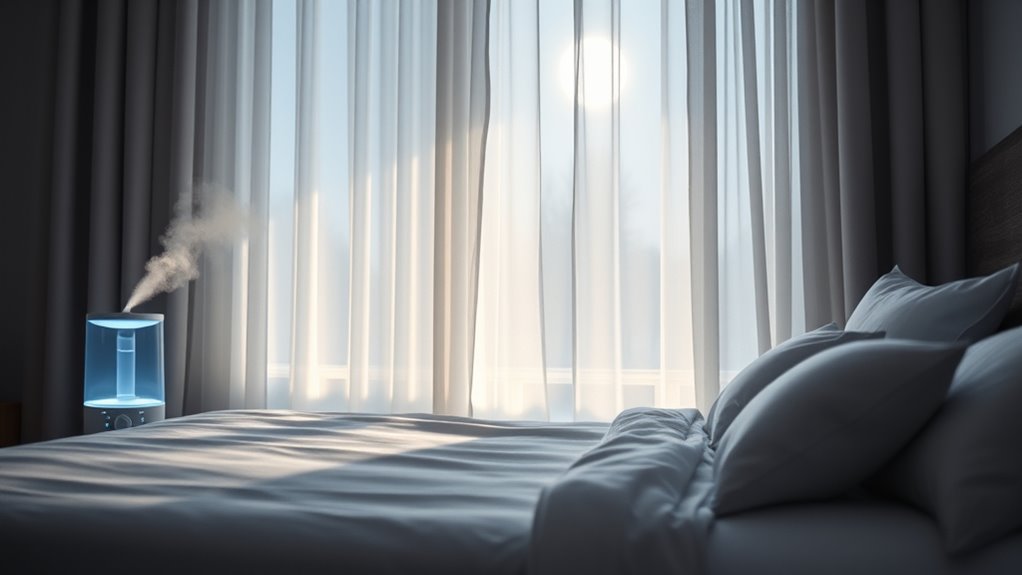
Maintaining the right humidity levels in your bedroom can considerably impact your sleep quality. When the air is too dry or too damp, it affects not only how comfortable you feel but also the overall air quality and the integrity of your sleep environment. Proper humidity helps regulate your breathing and prevents issues like dry skin, nasal congestion, and sore throats that can disrupt your rest. By optimizing moisture levels, you create a healthier sleep environment where your body can relax fully and recover overnight.
If the air in your room is too dry, often caused by heating systems or cold weather, your nasal passages and throat may become irritated. This dryness can lead to increased coughing or frequent awakenings, making it difficult to achieve deep, restorative sleep. On the other hand, overly humid conditions can promote mold growth, dust mites, and bacteria, which compromise your air quality. These allergens can trigger respiratory issues or worsen allergies, further disturbing your sleep. Striking the right balance ensures your air quality remains high, reducing potential health risks and promoting a more restful night.
Your sleep environment is vital in setting the stage for quality sleep, and humidity plays a key role in shaping this environment. When you keep humidity levels within an ideal range—generally between 40% and 60%—you enhance comfort and safety. This range prevents the air from becoming too dry or overly moist, both of which can negatively impact your sleep. Using a hygrometer helps you monitor these levels accurately, so you know when to add a humidifier or dehumidifier. Maintaining consistent humidity levels means your body doesn’t have to work harder to adapt, which helps you fall asleep faster and stay asleep longer.
In addition to comfort, proper humidity can improve your air quality by reducing airborne particles and allergens. Dry air tends to cause dust and other irritants to become airborne more easily, aggravating allergies or asthma symptoms. Keeping humidity in check minimizes these irritants, creating a cleaner, healthier sleep environment. Glycolic acid, known for its ability to exfoliate and improve skin texture, also demonstrates how maintaining a balanced environment can benefit overall skin health. A well-balanced atmosphere also helps maintain the integrity of your bedding and furniture, preventing mold or mildew that could further compromise air quality. Ultimately, by managing moisture levels effectively, you’re fostering an environment that promotes relaxation, enhances air quality, and supports your overall well-being during sleep.

TempPro TP50 Digital Hygrometer Indoor Thermometer Room Thermometer
- Wellness Indicator: Displays air condition levels
- High Accuracy & Fast Updates: ±2-3%RH and ±1°F, updates every 10 seconds
- Record Tracking: Displays high and low temperature and humidity
As an affiliate, we earn on qualifying purchases.
As an affiliate, we earn on qualifying purchases.
Frequently Asked Questions
Can Humidity Levels Affect Sleep Apnea Severity?
Yes, humidity levels can affect sleep apnea severity. When it’s too dry, you might experience increased airway inflammation and nasal congestion, making it harder to breathe comfortably during sleep. Conversely, overly humid air can also worsen symptoms. Maintaining ideal humidity helps reduce airway irritation, eases breathing, and minimizes sleep disruptions. So, controlling moisture in your environment can considerably improve your sleep quality and potentially lessen sleep apnea symptoms.
What Is the Ideal Humidity Range for Sleep Comfort?
Think of your sleep environment as a delicate garden; the right humidity is like nourishing rain. Keep your room’s humidity between 40-60% for ideal sleep comfort. This range ensures good air quality and temperature control, preventing dryness or dampness that can disrupt rest. When you maintain this balance, you create a cozy, breathable space that promotes restful sleep and overall well-being.
How Does Humidity Influence Allergy Symptoms During Sleep?
High humidity levels can worsen allergy symptoms during sleep by promoting dust mites and mold growth. Dust mites thrive in moist environments, triggering allergies and asthma, while mold spores become airborne, causing respiratory issues. Keeping humidity between 40-50% helps you reduce mold and dust mites, easing allergy symptoms. Proper ventilation and dehumidifiers are effective tools to maintain ideal moisture levels, ensuring a healthier, more comfortable sleep environment.
Are There Health Risks Associated With Very Low or High Humidity?
High humidity levels above 60% can increase your risk of indoor mold growth and skin irritation, leading to respiratory issues. Conversely, very low humidity below 30% causes dry skin and throat discomfort. Studies show that improper humidity can worsen allergies and asthma. To stay healthy, maintain balanced indoor moisture, use dehumidifiers or humidifiers as needed, and guarantee proper ventilation to prevent mold and skin problems.
How Quickly Can Adjusting Humidity Improve Sleep Quality?
Adjusting humidity can lead to rapid sleep improvement, often within a few nights. When you optimize your environment’s moisture levels, your body responds quickly, reducing issues like dry skin or congestion that disrupt sleep. Using a humidifier or dehumidifier allows you to make rapid adjustments, helping you create a more comfortable sleep space. This swift change can markedly enhance your sleep quality, making restful nights more achievable in just a short time.
Conclusion
By mastering the humidity in your bedroom, you hold the power to transform your sleep into a sanctuary of pure bliss. When you manage moisture levels effectively, you’ll experience rest so deep it feels like you’re floating on clouds—truly a sleep revolution! Don’t let humidity sabotage your nights. Take control today, and turn your sleep environment into the ultimate retreat. Your dreams deserve nothing less than perfect moisture for the most restful, rejuvenating sleep of your life.