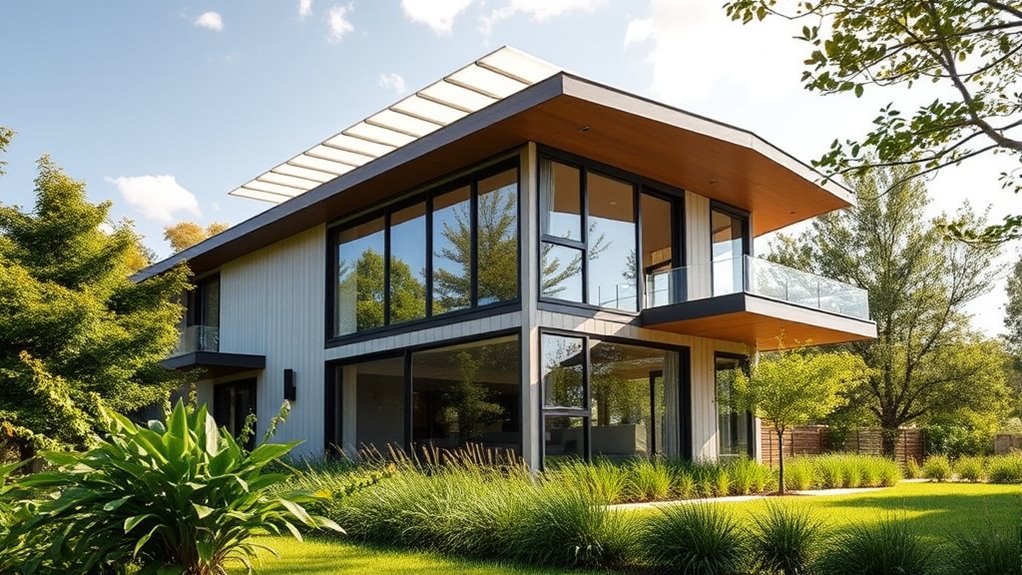

To design homes for natural comfort, you should focus on passive heating and cooling techniques like orienting your house to maximize winter sun and shade summer heat, using thermal mass materials to stabilize temperatures, and incorporating shading devices such as overhangs or trees. Proper window placement also plays a key role. By combining these strategies, you create a home that stays comfortable year-round while reducing energy use. Keep exploring to discover how all these elements work together for ideal indoor climate control.
Key Takeaways
- Orient homes to maximize winter solar gain and minimize summer heat through strategic placement of windows and living spaces.
- Incorporate shading devices like overhangs, awnings, and trees to block high summer sun while allowing winter sunlight.
- Use high thermal mass materials in walls and floors to absorb and release heat, stabilizing indoor temperatures.
- Design window sizes and placement to optimize natural light and reduce dependence on active heating or cooling systems.
- Combine passive strategies—orientation, shading, thermal mass, and natural ventilation—for year-round indoor comfort.
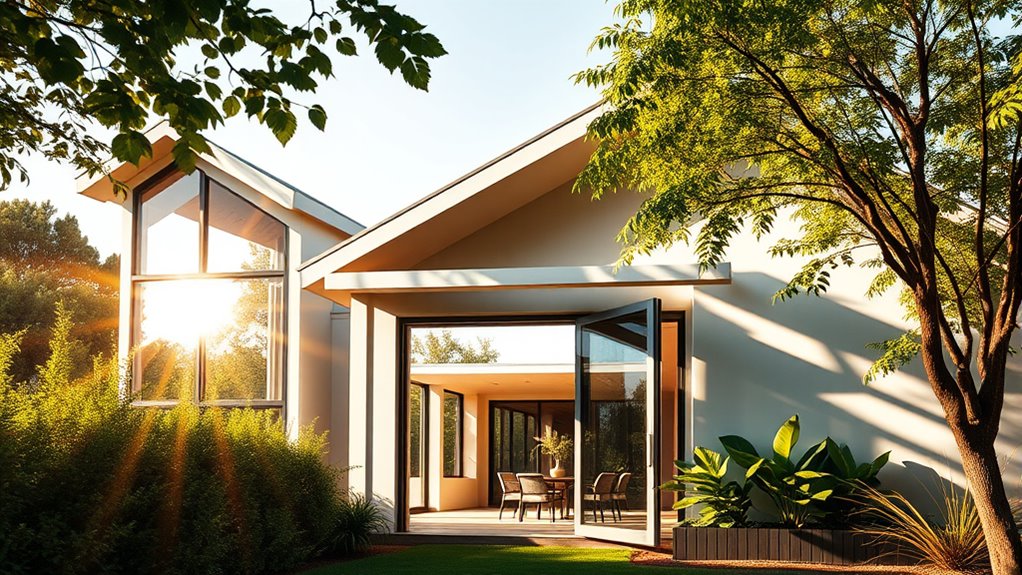
Passive heating and cooling are sustainable ways to regulate indoor temperatures without relying on energy-consuming systems. When you design your home with these principles in mind, you harness natural processes to keep your living space comfortable year-round. One key element you should contemplate is thermal mass, which refers to the materials inside your home that can absorb, store, and release heat. Materials like concrete, brick, or stone have high thermal mass, meaning they can soak up heat during the day and slowly release it at night. By strategically placing these materials in your walls or floors, you confirm that your home maintains a stable temperature, reducing the need for active heating or cooling. Additionally, understanding the importance of passive design strategies can further enhance your home’s energy efficiency and comfort. Building orientation also plays a vital role in passive temperature regulation. You want to position your home to maximize solar gain during winter and minimize it during summer. For instance, orienting your main living spaces toward the south (in the northern hemisphere) allows sunlight to naturally warm your home during colder months. Conversely, shading those same windows during summer can prevent overheating. Overhangs, awnings, or strategically placed trees can block high summer sun while letting in lower-angle winter rays, optimizing energy efficiency and comfort. When you pay attention to building orientation, you’re effectively designing your home to work with the sun’s natural path rather than fighting against it. Incorporating thermal mass and strategic orientation isn’t just about choosing the right materials or placement; it’s about understanding how these elements interact. For example, a well-oriented home with thick, thermal mass walls can leverage the sun’s energy to keep interiors warm in winter, while shading and insulation prevent excessive heat gain in summer. You’ll want to contemplate window placement and size carefully, ensuring they’re positioned to take advantage of natural sunlight while avoiding unwanted heat during the hotter months. Proper design allows your home to breathe with the seasons, reducing reliance on HVAC systems and lowering energy bills.
Frequently Asked Questions
How Do Passive Systems Perform During Extreme Weather Conditions?
During extreme weather, passive systems rely on thermal insulation to maintain comfort and weather resilience. They perform well by minimizing heat gain in hot conditions and retaining warmth in cold weather. However, you should reinforce insulation and design for specific climate challenges to guarantee consistent performance. Properly implemented, passive systems adapt effectively, providing natural comfort even during severe weather, saving energy, and reducing reliance on mechanical systems.
What Are the Initial Costs Versus Long-Term Savings of Passive Design?
Your initial investment in passive design might be higher upfront due to planning and quality materials, but you’ll see significant cost savings over time. These savings come from reduced energy bills, less reliance on HVAC systems, and lower maintenance costs. While the initial costs can seem steep, the long-term benefits include improved comfort, energy efficiency, and environmental impact, making passive design a smart investment for sustainable living.
Can Existing Homes Be Retrofitted for Passive Heating and Cooling?
Yes, you can retrofit your home for passive heating and cooling, but be prepared for some challenges. Retrofitting challenges include space constraints and existing structures. You’ll need to select suitable retrofit materials like insulation, window treatments, or shading devices. By tackling these challenges thoughtfully, you can transform your home into a more natural, efficient space, saving energy and enhancing comfort in the long run.
How Do Local Climate Variations Influence Passive Design Strategies?
You should consider your local climate variations because they directly impact your passive design strategies. Climate adaptability means tailoring your home’s features—like insulation, shading, and ventilation—to regional architecture and seasonal patterns. For hot, humid areas, prioritize shading and natural ventilation. In colder climates, focus on insulation and solar gain. Understanding these factors guarantees your home naturally stays comfortable year-round, reducing energy consumption and enhancing sustainability.
What Are Common Mistakes to Avoid in Passive Home Design?
You might think that careful window placement and sealing insulation gaps are enough, but overlooking these can ruin your home’s passive comfort. Avoid placing windows without considering sun angles, which can cause overheating or heat loss. Don’t leave insulation gaps; they create drafts that undermine energy efficiency. These small mistakes can turn your eco-friendly design into a costly, uncomfortable space. Stay vigilant and plan thoroughly for a naturally comfy, energy-efficient home.
Conclusion
By embracing passive heating and cooling, you transform your home into a sanctuary of natural comfort, where energy bills plummet and environmental impact shrinks to insignificance. Think of your house as a living, breathing organism perfectly tuned to its surroundings—it’s like harnessing the power of nature itself! With thoughtful design, you’ll enjoy a home so comfortable and sustainable, it feels almost magical. Start integrating these principles today, and watch your living space become an oasis of effortless climate control.