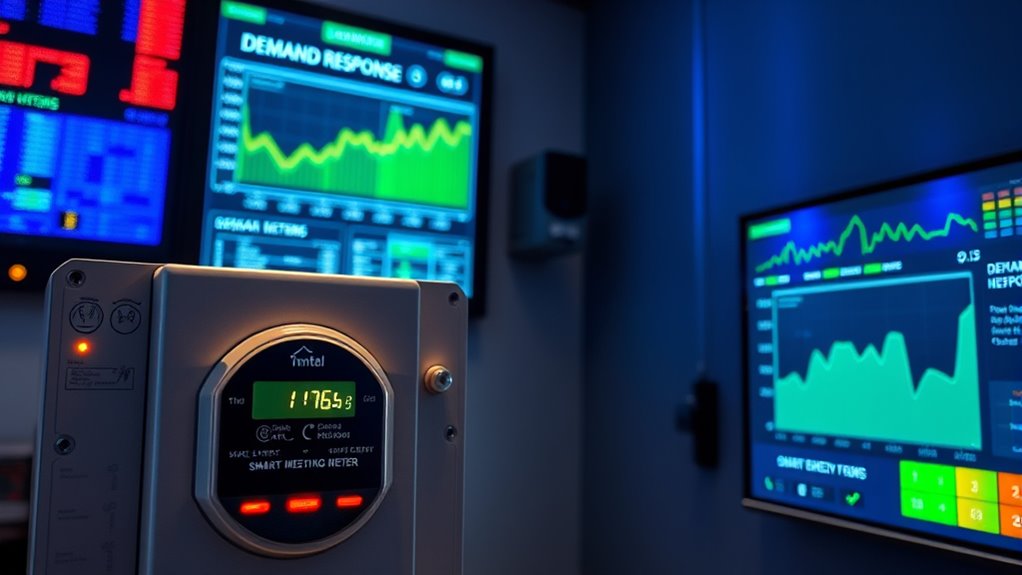

Smart meters and demand response are key milestones in evolving energy management. With smart meters, you gain real-time insights into your energy use, enabling you to make smarter choices. Demand response allows you to shift or reduce your consumption during peak times, helping you save money and support the grid’s stability. These innovations make your energy system more efficient and sustainable, paving the way for a cleaner future—discover how these advancements can benefit you even more.
Key Takeaways
- Smart meters provide real-time energy consumption data, enabling better energy management and user participation in demand response programs.
- Demand response allows flexible adjustment of energy usage based on grid signals, enhancing system stability and reducing outages.
- Integration of smart meters and demand response supports grid modernization with enhanced visibility and control over energy flow.
- These milestones facilitate renewable energy integration, reducing reliance on fossil fuels and promoting sustainability.
- The combined use of smart meters and demand response advances the development of smarter, more resilient, and environmentally friendly energy systems.
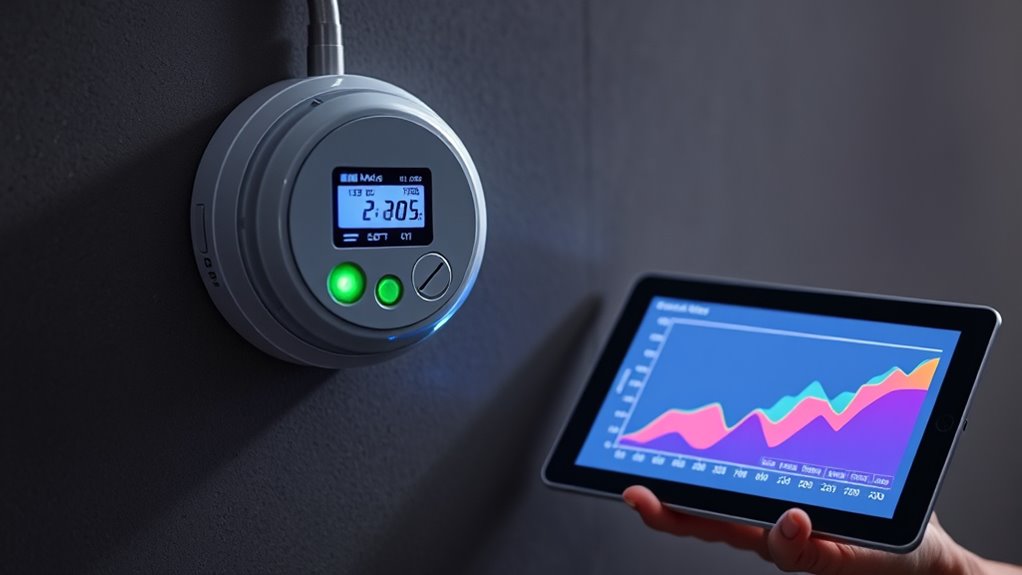
Energy management has evolved considerably over the years, with key milestones shaping how organizations optimize their energy use. One of the most significant developments has been the integration of renewable energy sources into existing power systems. As you harness solar, wind, and other renewable resources, you help reduce reliance on fossil fuels and lower greenhouse gas emissions. This shift toward renewable integration requires smarter management strategies to handle variable energy production. Advances in grid technology now enable real-time tracking of renewable generation, allowing you to balance supply and demand more effectively. This helps guarantee a reliable power supply, even when renewable sources fluctuate, making your energy system more sustainable and resilient.
Alongside renewable integration, grid modernization plays a critical role in advancing energy management. Modernized grids incorporate digital communication and automation, giving you greater visibility and control over energy flow. Smart meters are at the heart of this transformation. These devices provide real-time data on your energy consumption, empowering you to identify patterns and optimize your usage. With smart meters, you can receive instant feedback, enabling you to adjust your consumption habits proactively and reduce waste. This technology also facilitates demand response programs, where you can participate in shifting your energy use during peak periods. By doing so, you contribute to grid stability and avoid costly grid upgrades. Smart meter adoption further enhances your ability to manage energy efficiently, providing detailed insights and control options.
Demand response is a milestone that directly impacts your ability to manage energy efficiently. It allows you to respond to signals from the grid operator, either manually or automatically, to reduce or shift your energy load when demand is high. This helps prevent outages and reduces the need for additional power generation, which often relies on less environmentally friendly sources. Demand response programs are increasingly integrated with smart meters and grid modernization efforts, creating a seamless system where your participation becomes easier and more effective. As you engage in these programs, you not only lower your energy bills but also play a crucial role in maintaining grid stability and supporting the transition to cleaner energy sources.
Together, renewable integration, grid modernization, smart meters, and demand response mark a new era in energy management. They enable you to optimize energy use, enhance system reliability, and promote sustainability. These milestones reflect a shift toward smarter, more flexible energy systems that adapt to your needs and the planet’s demands. As technology continues to evolve, your ability to manage energy efficiently will only improve, making your role in this transition more impactful than ever.
smart energy meter for home
As an affiliate, we earn on qualifying purchases.
As an affiliate, we earn on qualifying purchases.
Frequently Asked Questions
How Do Smart Meters Improve Household Energy Efficiency?
Smart meters improve your household energy efficiency by providing accurate, real-time data on your energy use. This accuracy helps you identify high consumption periods and adjust your habits accordingly. With increased consumer engagement, you become more aware of your energy patterns, making smarter choices that save money and reduce waste. By actively monitoring your usage, you can optimize energy consumption, leading to a more efficient and cost-effective home.
What Incentives Exist for Consumers to Participate in Demand Response Programs?
Imagine you’re back in the days of the Pony Express, racing to save time. Today, you get time-based incentives that reward you for reducing energy use during peak hours. Participating in demand response programs not only saves you money but also benefits the environment by lowering emissions. These incentives motivate you to shift your consumption, helping to balance the grid and promote a healthier planet.
How Secure Are the Data Collected by Smart Meters?
Smart meters prioritize your data privacy through encryption and strict cybersecurity measures, making it difficult for unauthorized access. Utility companies and manufacturers continually update security protocols to protect your information from cyber threats. While no system is entirely invulnerable, ongoing efforts enhance the safety of the data collected. You can also take steps like securing your Wi-Fi to further safeguard your smart meter data against potential breaches.
What Challenges Hinder Widespread Adoption of Demand Response?
Demand response faces formidable delays due to regulatory barriers and lack of consumer engagement. You might struggle to see the benefits or hesitate to participate, while complex policies stall progress. Overcoming these hurdles requires clear communication, compelling incentives, and supportive regulations. If you’re motivated and informed, demand response can become more accessible, helping you save money and support a more sustainable energy system.
How Do Energy Management Milestones Impact Future Grid Stability?
You see, energy management milestones like smart meters and demand response boost future grid stability by enhancing grid reliability and enabling better technological integration. These advancements allow you to monitor and control energy use more effectively, reducing outages and balancing supply and demand. As you adopt these technologies, you help create a more resilient grid capable of handling renewable energy fluctuations and minimizing disruptions, ensuring a stable energy future.
demand response compatible smart thermostat
As an affiliate, we earn on qualifying purchases.
As an affiliate, we earn on qualifying purchases.
Conclusion
As you navigate the landscape of energy management, these milestones act as guiding stars, illuminating your path toward efficiency and sustainability. Smart meters and demand response are the compass and map, helping you steer through the complexities of modern energy use. Embracing these innovations transforms your energy habits into a symphony of balance and control, turning a once formidable journey into a harmonious voyage toward a smarter, greener future.
real-time energy monitoring device
As an affiliate, we earn on qualifying purchases.
As an affiliate, we earn on qualifying purchases.
grid modernization smart meter
As an affiliate, we earn on qualifying purchases.
As an affiliate, we earn on qualifying purchases.