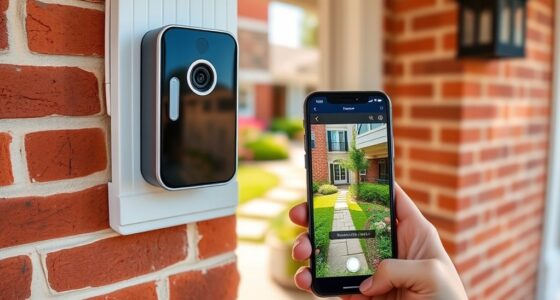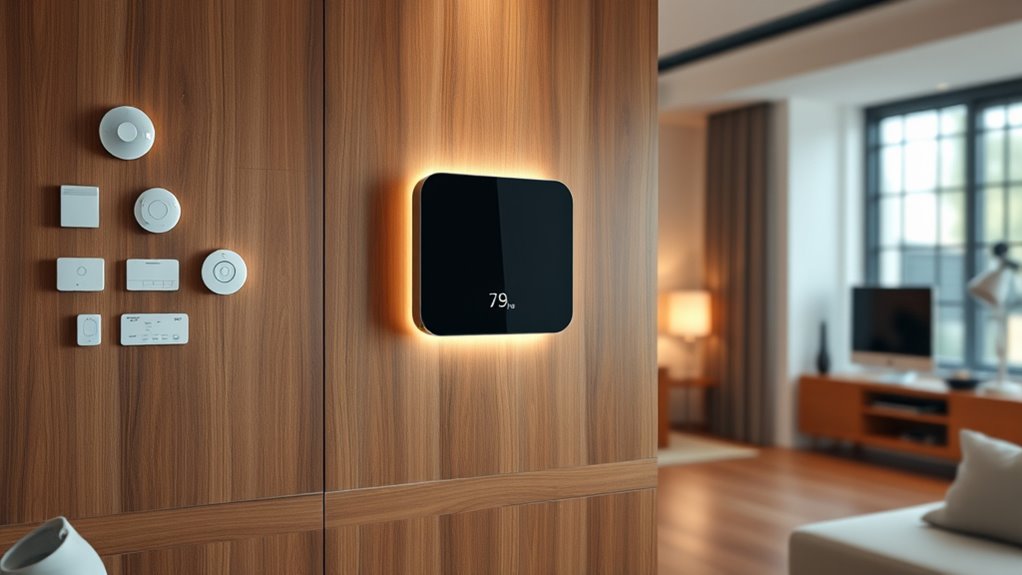

A smart home hub acts as your central control point, letting you manage all your household devices through a single, user-friendly interface. It simplifies your routines by consolidating lighting, security, thermostats, and more, so you don’t need multiple apps. With voice assistant integration and automation features, you can easily control your home hands-free and create routines for safety and comfort. Keep exploring to discover how this technology can make your home smarter and more efficient.
Key Takeaways
- Central control points unify management of lighting, thermostats, security, and door locks for streamlined home automation.
- Voice assistant integration enables hands-free control and seamless operation across devices.
- Security system management through a single platform simplifies monitoring, alerts, and alarm control.
- Customizable scenes and routines automate multiple devices, enhancing safety and comfort efficiently.
- Overall, smart home hubs improve convenience, security, and responsiveness with centralized, easy-to-access interfaces.
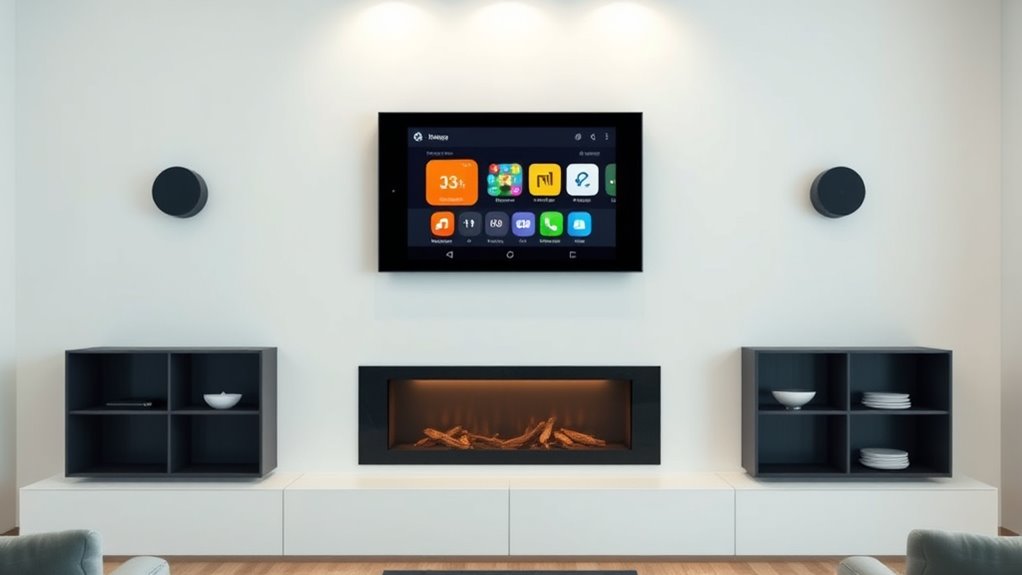
Smart home hubs have become the central control point for modern households, allowing you to manage various connected devices from a single interface. These hubs simplify your daily routines by bringing together everything from lighting and thermostats to security cameras and door locks. With a smart hub, you don’t have to juggle multiple apps or interfaces; instead, you get a unified platform that makes controlling your home more intuitive and efficient. One of the biggest advantages is voice assistant integration. You can connect your preferred voice assistant—like Amazon Alexa, Google Assistant, or Apple’s Siri—to your hub, enabling voice commands to control devices or check statuses. Imagine telling your hub to turn off the lights, adjust the temperature, or lock the doors, all without lifting a finger. This seamless voice control not only adds convenience but also enhances accessibility, especially for those with mobility challenges or busy schedules.
Security system management is another *vital* feature that smart home hubs handle effortlessly. Your hub acts as a command center for your security devices, allowing you to monitor cameras, arm or disarm alarms, and receive alerts in real-time. Instead of logging into multiple apps or platforms, you get a centralized dashboard where you can oversee your entire security setup. This integration ensures you’re immediately aware of any suspicious activity and can respond swiftly. Many hubs also support automation routines, such as setting your security system to activate automatically when you leave the house or disarm when you arrive home. These features give you peace of mind, knowing your home is protected and that you can manage everything from one easy-to-use interface.
Additionally, smart home hubs often come with customizable scenes and routines. For example, you can create a “Good Night” scene that locks your doors, turns off the lights, and arms the security system—all at once, with a single command or scheduled time. The ability to automate these actions saves you time and *guarantees* your home’s safety and comfort are always prioritized. As you set up and personalize your hub, you’ll find that integrating voice assistants and managing your security system become natural parts of your daily routine. The power to oversee your entire smart home ecosystem from one central point makes your living space smarter, safer, and more responsive to your needs. Moreover, understanding the fundamentals of soaring and gliding can inspire innovative ways to enhance the stability and efficiency of your smart home system, ensuring smooth operation under various conditions.

GDLF Large Coffee Bar Cabinet with Fridge Space, Mini Fridge Cabinet with Wine Storage, Buffet Sideboard Table for Home, Fluted Modern Design,53.2" L
【Fits Most Mini Fridges】Designed with a built-in fridge space (19.7”W x 19.9”D x 34.7”H), this bar cabinet fits...
As an affiliate, we earn on qualifying purchases.
Frequently Asked Questions
Can Smart Home Hubs Control Non-Compatible Devices?
Smart home hubs can’t control non-compatible devices directly due to device compatibility and hub limitations. However, you can often use third-party apps, bridges, or smart plugs to connect incompatible devices to your hub indirectly. Keep in mind, this workaround might introduce delays or reduced functionality. To guarantee smooth control, check your hub’s compatibility list and consider devices that natively support your hub’s ecosystem.
How Secure Are Smart Home Hubs From Hacking?
Smart home hubs are generally secure, but their safety depends on your actions. They use strong encryption protocols to protect your data, reducing hacking risks. Regular firmware updates are essential because they patch security vulnerabilities and improve protection. You should also use complex passwords and enable two-factor authentication when possible. Staying vigilant and keeping your hub’s software up-to-date helps make sure your smart home remains safe from hackers.
Do Smart Home Hubs Require Professional Installation?
You don’t need professional installation for a smart home hub; many DIY enthusiasts successfully set them up themselves. For example, with a little research and patience, you can connect devices and configure settings on your own. However, if you have a complex system or prefer expert assistance, professional installation guarantees everything works seamlessly. It ultimately depends on your comfort level and the complexity of your smart home setup.
Can Multiple Users Access the Smart Home Hub Simultaneously?
Yes, multiple users can access the smart home hub simultaneously. You can set up user access permissions so each person has their own account or level of control. This allows family members or roommates to control devices, view security feeds, or adjust settings without interfering with others’ access. With multi-user support, everyone stays connected and in control, making your smart home more convenient and collaborative.
What Is the Average Lifespan of a Smart Home Hub?
You can expect your smart home hub to last around 3 to 5 years, give or take. No, it’s not eternal, so don’t get too attached. Its durability depends on build quality and how well it handles device compatibility updates. As gadgets evolve faster than fashion trends, your hub might become obsolete before it physically breaks. So, cherish it, upgrade wisely, and embrace the smart tech lifecycle!

TAGELIER 67" Tall Display Cabinet with Glass Doors and 2 Drawers, Stable Wooden Frame Curio Cabinet with Smart Human Sensor, Led Display Cases for Collectibles and Books, Living Room Office (Black)
【Smart Sensor & 3 Colors Lighting】Illuminate your collection with this premium display cabinet. It features 3-color LED lights...
As an affiliate, we earn on qualifying purchases.
Conclusion
Think of a smart home hub as the captain steering your ship through calm and stormy seas alike. It brings all your devices into one steady hand, making control smooth and simple. With a hub at the helm, you’re no longer lost in a maze of gadgets — you’re charting your smart home with confidence. Embrace this central navigator, and enjoy the seamless voyage of convenience and control it offers.
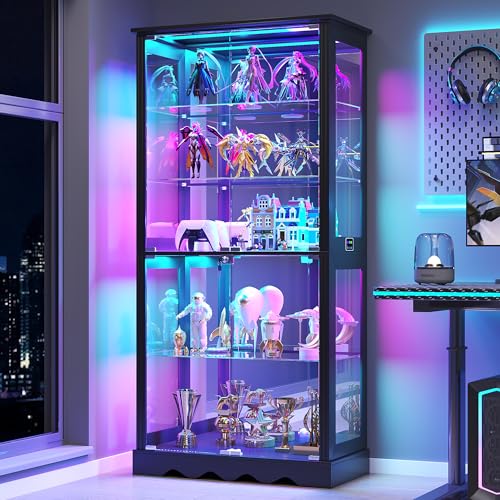
Dystler Display Cabinet with Glass Doors, 71'' Tall Curio Cabinet with RGB Lights for Collectibles, LED Display Case with Removable Shelf for Book/Medal/Figure, Black
【Pop-Up Tempered Glass Doors】Frameless glass doors feature a handle-free, press-to-open design for smooth access. The clean look enhances...
As an affiliate, we earn on qualifying purchases.

BROTTAR Glass Display Cabinet, 4-Tier Curio Cabinets with 3 Color Lights for Collectibles, Storage Cabinet with Door, Glass Display Case & Bookcase with Human Body Sensor, Black
【Pop-Up Glass Doors】The pop-up glass door of this curio cabinet creates an unobstructed view of your collection, while...
As an affiliate, we earn on qualifying purchases.