Front load washers are more energy- and water-efficient than top load models, helping you save on utility bills and reducing your environmental impact. They use less water per cycle and have advanced technology that improves performance while consuming less power. Top load washers tend to be cheaper initially but often use more water and energy over time. To find out how these differences can benefit your laundry routine, keep exploring the details behind each option.
Key Takeaways
- Front load washers use less water per cycle due to gravity-based tumbling, enhancing water efficiency.
- They generally have higher energy efficiency ratings, reducing electricity consumption over time.
- Front load models often include advanced technology and eco modes for optimized performance and energy savings.
- Top load washers typically have shorter cycle times but consume more water and energy per load.
- Although more expensive upfront, front load washers tend to lower utility bills with their long-term efficiency benefits.
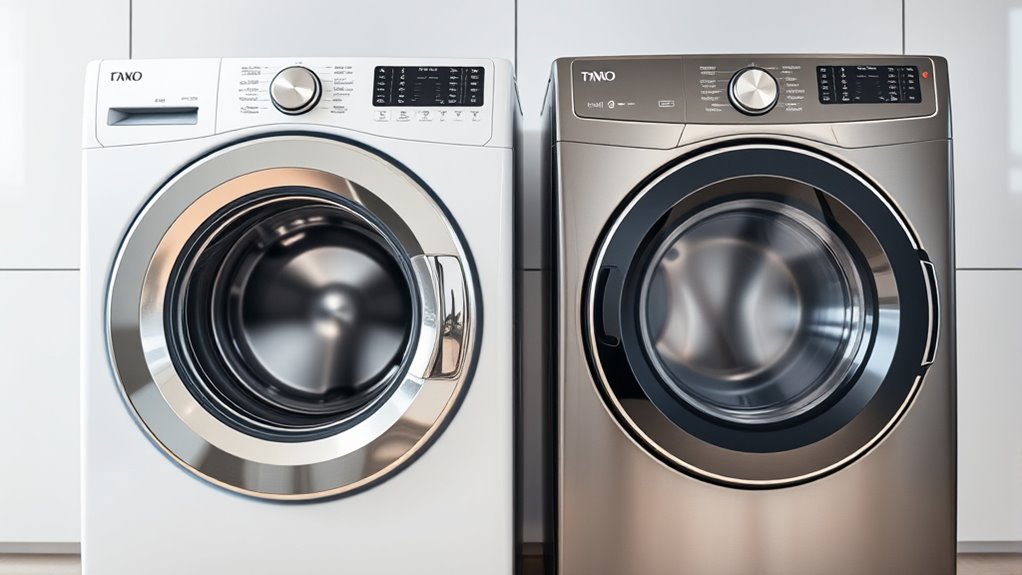
When choosing a washer, understanding the differences between front load and top load models can help you make an informed decision. One of the key factors to weigh is efficiency, especially in terms of energy savings and water consumption. Front load washers generally excel in these areas, making them a popular choice for those looking to reduce utility bills and environmental impact. They tend to use less water per load because their tumbling action relies on gravity to lift and drop clothes, unlike top load models that fill the drum with water for each cycle. This means that, over time, front load washers can notably lower your water bills, especially if you do laundry frequently. Additionally, their efficient water use can contribute to energy savings because less water means less energy needed to heat it, which is a major component of laundry energy consumption. Modern front load washers often incorporate advanced technology that enhances their efficiency and performance even further. In terms of energy savings, front load washers often outperform top load models because they typically have higher efficiency ratings. They usually come equipped with advanced motors and wash cycles designed to maximize cleaning power while minimizing energy use. Many front load washers also feature eco-friendly modes that adjust water levels and cycle times, further reducing energy consumption. When you’re looking to cut down on electricity costs, investing in a front load washer can be a smart move, especially if it’s ENERGY STAR certified, which guarantees it meets strict energy efficiency guidelines.
Front load washers save water and energy with their gravity-based tumbling action.
On the other hand, top load washers are generally more straightforward and often less expensive upfront. They tend to have shorter cycle times, which can be convenient if you need to do laundry quickly. However, they usually consume more water and energy per cycle compared to front load models. This increased water consumption not only raises your water bill but also means more energy is needed to heat that water, resulting in higher overall energy costs. While top load washers have improved in efficiency over the years, they still typically lag behind front load models in terms of water and energy savings.
Choosing between the two depends on your priorities. If you’re focused on long-term savings and environmental impact, a front load washer is likely the better choice due to its superior efficiency. But if you prefer a more affordable upfront cost and faster cycles, a top load washer might suit your needs. Ultimately, understanding how each type impacts water consumption and energy savings will help you select the washer that aligns with your budget and eco-conscious goals.

Waykar 158 Pints Crawl Space Dehumidifier with Remote Control and Pump, Dual Duct HVAC Commercial Whole-House Dehumidifier for Basement, Industry Water Damage Unit - 5-Year Quality Coverage
【158 Pint Crawl Space Dehumidifier】The Waykar whole-house dehumidifier extracts up to 158 pints of water per day (under...
As an affiliate, we earn on qualifying purchases.
Frequently Asked Questions
Which Washer Type Is Better for Allergy Sufferers?
You should choose a front load washer if you’re an allergy sufferer because it tends to prevent mold buildup better, reducing mold-related allergens. They use less detergent, which minimizes residue that can trigger allergies. Proper maintenance, like leaving the door open after use, also helps prevent mold, ensuring a cleaner, healthier wash. Top load washers can harbor more mold if not maintained properly, making front loads the better choice.
How Do Washers Handle Bulky or Large Items?
Your washer handles heavy loads and large items like a champ, tackling even the bulkiest blankets and oversized towels with ease. It’s designed to soak, spin, and clean thoroughly, ensuring no corner is left untouched. Whether it’s a giant comforter or a mountain of laundry, your machine’s spacious drum and powerful cycle make quick work of bulky or large items, saving you time and effort while giving your laundry a deep, effective clean.
Are Front Load Washers More Prone to Mold?
Yes, front load washers are more prone to mold due to their airtight door seals. To prevent mold, you should practice regular cleaning maintenance, like leaving the door open after each wash to air out the drum. Additionally, run occasional cleaning cycles with specialized detergents to keep mold at bay. Proper mold prevention guarantees your front load washer stays fresh, hygienic, and performs efficiently over time.
Which Washer Type Uses Less Water During Cycles?
Ever wonder which washer saves more water? You’ll find that front load washers use less water during cycles because they’re designed to be more efficient in water consumption. Their cycle efficiency means they use just enough water to clean clothes thoroughly without waste. So, if saving water is your goal, choosing a front load washer helps you cut down on water use while still getting great cleaning results.
How Do Noise Levels Compare Between the Two?
You’ll find that front load washers generally produce less noise, thanks to their quieter operation and insulated doors, making the sound levels more tolerable during cycles. The noise comparison shows that top load washers tend to be louder, especially during agitation or spinning. If minimizing noise is important, a front load washer is often the better choice, offering a quieter laundry experience without sacrificing performance.

AprilAire E070 Pro Dehumidifier Bundle - 70 Pint Whole House Dehumidifier - Full Complete Kit - Crawl Spaces, Basements, Whole Homes, Commercial up to 2,800 sq. ft - 5 Year Warranty Included
Energy Star Certified Dehumidifier - Quickly and effectively removes moisture with less energy than conventional dehumidifiers without racking...
As an affiliate, we earn on qualifying purchases.
Conclusion
Think of choosing a washer like picking a vehicle for your daily journey. A front load washer is your sleek, fuel-efficient hybrid—saving energy and water, but with a bit more care needed. A top load is like your trusty SUV—simple, reliable, and quick to start. Whichever you choose, know you’re steering your laundry routine toward efficiency. Just remember, the right choice depends on your needs, like a vehicle suited perfectly to your daily ride.

Airzentti 155 Pints Commercial Dehumidifier for Basement with Pump and Drain Hose, Large Space Dehumidifier for Crawl Space, Attic, Garage, Home, Industrial, Water Damage, Auto Defrost, Energy Star
[Commercial Grade Dehumidifier] This Airzentti crawl space dehumidifier with large capacity removes moisture from basement, attic, large room...
As an affiliate, we earn on qualifying purchases.

Waykar 158 Pints Crawl Space Dehumidifier with Remote Control up to 6,500 sq. ft., Dual Duct HVAC Commercial Whole-House Dehumidifier for Basement, Industry Water Damage Unit - 5-Year Quality Coverage
【158 Pint Crawl Space Dehumidifier】The Waykar whole-house dehumidifier removes up to 158 pints of moisture per day (under...
As an affiliate, we earn on qualifying purchases.