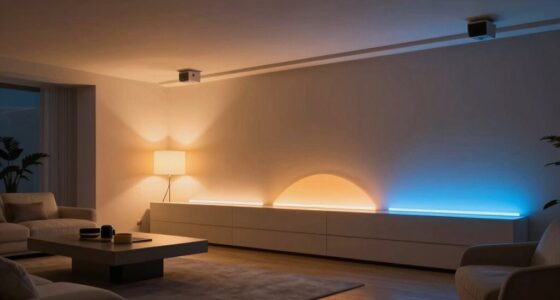

Having fewer gadgets in your bedroom and establishing better routines can markedly improve your sleep. Gadgets like smartphones and tablets create constant stimulation that makes it hard to relax and wind down. Too many devices turn your space into a hub of activity, disrupting your sleep hygiene. By reducing gadget use, setting a regular schedule, and creating a calm environment, you help your body recognize when it’s time to rest. Keep exploring to discover tips that can transform your sleep experience.
Key Takeaways
- Excess gadgets create stimulation, disrupting the winding-down process essential for quality sleep.
- Reducing screen time before bed prevents blue light from suppressing melatonin production.
- A clutter-free, gadget-free bedroom fosters a calm environment conducive to restful sleep.
- Establishing consistent routines supports circadian rhythms and improves sleep quality.
- Proper light, temperature, and noise management enhance sleep environment and overall sleep hygiene.
In today’s tech-heavy world, bedrooms often become cluttered with gadgets that disrupt sleep rather than enhance it. It’s tempting to fill your space with all the latest devices—smartphones, tablets, smart speakers—but these can interfere with your sleep hygiene more than you realize. Instead of creating a restful retreat, your bedroom becomes a hub of constant stimulation, making it hard to wind down at night. That’s why cutting back on gadgets and focusing on better routines is vital for improving your sleep quality.
One of the most effective ways to create a calming environment is by incorporating smart lighting thoughtfully. Instead of leaving harsh, bright lights on before bed, switch to smart lighting options that mimic natural sunset and sunrise. These lights can gradually dim as you approach bedtime, signaling to your body that it’s time to wind down. Conversely, in the morning, they can brighten gradually to help you wake naturally. Smart lighting helps reinforce your sleep hygiene by aligning your exposure to light with your natural circadian rhythms, making it easier to fall asleep and wake refreshed.
Smart lighting mimics natural sunset and sunrise to help reset your circadian rhythm and improve sleep quality.
Beyond lighting, it’s essential to establish a routine that minimizes screen time before bed. The blue light emitted by most gadgets suppresses melatonin, the hormone responsible for regulating sleep, making it harder for you to fall asleep. Set a “tech curfew” at least an hour before bedtime, and use that time for relaxing activities like reading a book, journaling, or practicing mindfulness. Removing screens from your bedroom entirely can make a significant difference, as it reduces the temptation to check notifications or scroll through social media, which only prolongs your wakefulness. Additionally, maintaining good indoor air quality can support more restful sleep by reducing allergens and irritants that disturb breathing during the night. Incorporating air purifiers or natural ventilation can further improve this environment, ensuring better overall sleep hygiene. Furthermore, paying attention to sleep environment factors like temperature and noise levels can significantly impact your ability to rest well.
Creating a sleep-friendly environment isn’t just about what you avoid—it’s also about what you incorporate. Keep your bedroom cool, dark, and quiet, and use blackout curtains or a sleep mask if needed. Establishing a consistent sleep routine, going to bed and waking up at the same time every day, reinforces your body’s natural clock and improves overall sleep quality. This routine signals to your brain that the bedroom is a sanctuary for rest, not work or entertainment. Implementing light management strategies can significantly enhance your sleep environment by supporting your circadian rhythms and promoting relaxation. Incorporating knowledge about circadian rhythms can help you optimize your sleep schedule and create a more harmonious sleep environment.

Philips SmartSleep Wake-up Light, Colored Sunrise and Sunset Simulation, 5 Natural Sounds, FM Radio & Reading Lamp, Tap Snooze, HF3520/60
- Clinically Recommended: Supports healthy sleep and wake routines
- Personalized Settings: Customizable sunrise, sunset, and sounds
- Smart Features: Includes FM radio, tap snooze, auto dimming
As an affiliate, we earn on qualifying purchases.
As an affiliate, we earn on qualifying purchases.
Frequently Asked Questions
How Can I Gradually Reduce Gadget Use Before Bed?
You can gradually reduce gadget use before bed by starting a nightly tech detox an hour before sleep. Turn off screens and avoid social media, replacing those moments with relaxing activities like reading, stretching, or listening to calming music. Set a reminder to stay consistent, and over time, your body will adapt to these calming routines. This shift helps improve your sleep quality and creates a more peaceful bedtime environment.
What Are Effective Bedtime Routines for Better Sleep?
Imagine dimming your lights and sipping herbal tea as you settle into a cozy, gadget-free sleep environment. Your effective bedtime routine includes relaxation techniques like deep breathing or gentle stretching, helping your body unwind. Consistency matters—going to bed and waking up at the same time signals your body it’s time to rest. This calm, prepared space promotes better sleep, ensuring you wake refreshed and ready for the day ahead.
Are There Specific Gadgets That Disrupt Sleep More Than Others?
Yes, gadgets emitting blue light, like smartphones, tablets, and laptops, disrupt your sleep the most. Blue light suppresses melatonin, making it harder to fall asleep and stay asleep. To improve your sleep, avoid using these devices at least an hour before bed. Instead, opt for relaxing routines that don’t involve screens, helping your body wind down naturally and reducing sleep disruption caused by blue light exposure.
How Does Screen Time Affect Sleep Quality?
Screen time negatively impacts your sleep quality because blue light from devices suppresses melatonin production, making it harder to fall asleep. Excessive screen use before bed disrupts your sleep hygiene, leading to restless nights and poor rest. To improve sleep, limit screen exposure at least an hour before bedtime, and consider using blue light filters. Prioritizing better routines and reducing gadget use helps your body prepare for restful, restorative sleep.
Can Routine Changes Improve Sleep in Just a Few Days?
Changes in your routine can improve sleep in just a few days, like turning a ship around quickly. By optimizing your sleep environment—dim lights, cool temperature—and establishing consistent morning habits, you signal your body it’s time to rest. Reducing screen time before bed and sticking to a relaxing routine helps reset your internal clock fast. These small tweaks make a noticeable difference in a short time, promoting better sleep quickly.
Conclusion
Reducing gadgets and establishing better routines in your bedroom can markedly improve your sleep quality. Did you know that over 70% of people check their phones right before bed? This habit can disrupt your sleep cycles and leave you feeling tired. By creating a gadget-free zone and sticking to calming routines, you’ll wake up refreshed and ready for the day. Small changes can make a big difference in reclaiming your restful, restorative sleep.