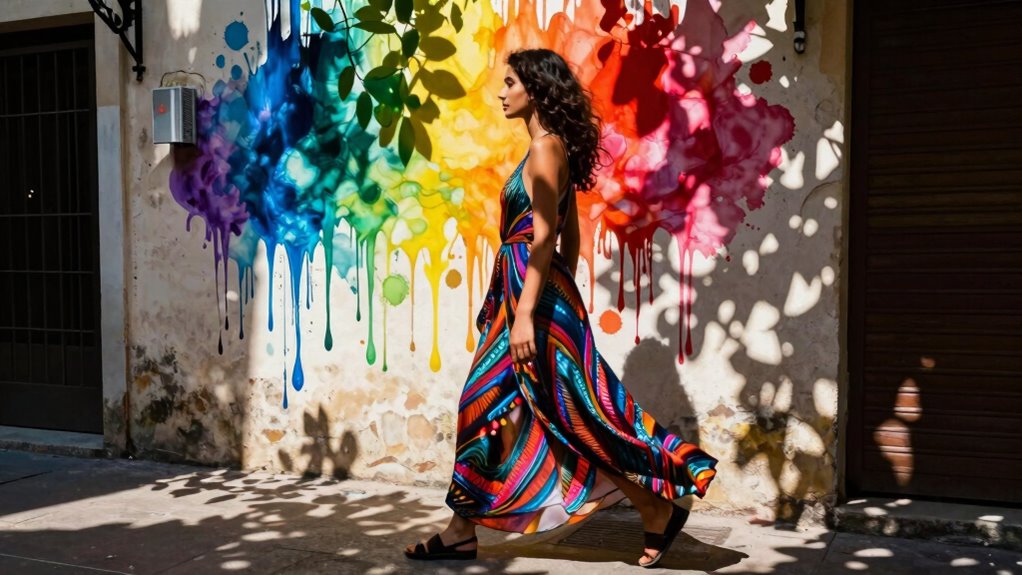

To use color drenching without regret, plan your color palette carefully and test colors beforehand to see how they bleed and blend. Choose complementary or analogous colors to create harmony or contrast, and be mindful of saturation levels to avoid overwhelming your work. Work swiftly and confidently, maintaining a tidy workspace and clean brushes to keep control. Experiment and take notes to improve with each attempt, so your bold effects always enhance your piece—there’s more to discover if you keep exploring.
Key Takeaways
- Plan your color palette carefully, choosing harmonious or contrasting colors to control mood and impact.
- Test colors on scrap paper to observe bleeding, blending, and saturation before applying to your main work.
- Use high-quality, absorbent paper and clean brushes to prevent muddying and ensure smooth color drenching.
- Work swiftly and confidently to manage wetness and avoid over-saturation or unintended blending.
- Keep detailed notes of your techniques and outcomes to refine your approach and minimize regrets.

Color drenching is a powerful technique that can completely transform your watercolor paintings by adding vibrant, intense hues. When you master this method, you can create stunning, eye-catching pieces that capture attention and evoke emotion. To do this effectively, understanding color theory is essential. Color theory guides you in selecting complementary or analogous colors to produce harmonious effects or bold contrasts. It helps you anticipate how colors will interact when soaked into paper, making sure your drench enhances your composition instead of overwhelming it. Before you plunge in, plan your palette carefully. Decide which colors will dominate and which will serve as accents, and consider how these choices will impact the overall mood of your work.
Master color theory to create vibrant, balanced watercolor paintings that evoke emotion and enhance your composition.
When you approach color drenching, it’s tempting to go all in with bright, saturated colors. But restraint is key. You don’t want to regret your decision once the paint dries and the colors settle into their final state. To avoid this, test your colors on a scrap piece of paper first. Observe how they bleed and blend when wet, then dry. This step helps you gauge whether the saturation level and hue intensity match your vision. Remember, the more you understand about color theory, the better you’ll be at predicting how colors will behave once drenched. You’ll learn how warm and cool tones interact, which can make or break your composition. Developing a color palette before beginning can help maintain control and consistency throughout your work.
In addition to color knowledge, consider your hair maintenance as part of your artistic process. Just like maintaining healthy hair involves proper care and avoiding damage, managing your watercolor materials and workspace guarantees the best results. Use quality paper with good absorption, and keep your brushes clean to prevent muddying your colors. Protect your workspace from dust and debris, just as you’d avoid harsh chemicals in hair maintenance. When applying color drenching, work swiftly and confidently, much like applying a nourishing hair treatment. Rushing can lead to uneven washes or unwanted streaks, so preparing your colors, workspace, and technique beforehand can help you work more efficiently and with greater control. Being aware of color interactions can help you make more informed decisions during your process.
Finally, don’t be afraid to experiment, but do so with a plan. Keep notes on what works and what doesn’t, so you can refine your technique over time. With practice, you’ll learn how to use color drenching without regrets, creating bold, dynamic artworks that truly stand out. Just remember: understanding color theory, maintaining your supplies, and working intentionally will help you achieve the vibrant effects you desire without ending up disappointed.
high quality watercolor paper for color drenching
As an affiliate, we earn on qualifying purchases.
As an affiliate, we earn on qualifying purchases.
Frequently Asked Questions
Can Color Drenching Damage My Hair or Skin?
Color drenching can potentially damage your hair or skin if not done carefully. It may cause color fade over time, especially with frequent washing, and might irritate sensitive skin. To avoid issues, make sure you do a patch test to check for skin sensitivity and use quality products designed for vibrant colors. Proper aftercare, like moisturizing hair and protecting skin, helps minimize damage and keeps your color looking fresh.
How Often Should I Reapply Color Drenching Treatments?
You should reapply color drenching treatments every 4 to 6 weeks for maximum color longevity. This frequency balances vibrant results with minimal damage. Remember, proper application techniques—like applying evenly and avoiding over-processing—help preserve your hair’s health. An interesting statistic: 70% of hair damage is linked to over-treatment. So, sticking to a regular schedule ensures your color stays fresh without risking harm.
Is Color Drenching Suitable for All Hair Types?
Color drenching isn’t suitable for all hair types, especially if your hair has high porosity or fine texture. It can lead to uneven color or damage if your hair struggles to hold the pigment properly. If your hair has low porosity, the intense color might take longer to process. Always consider your hair’s porosity and desired color intensity before trying color drenching, and consult a professional if unsure.
Can I Combine Color Drenching With Other Hair Treatments?
They say, “Don’t put all your eggs in one basket,” but you can safely combine color drenching with other hair treatments if you plan carefully. Focus on treatment compatibility and color blending to prevent damage or uneven results. Always consult your stylist before mixing treatments, especially if you’re considering highlights, glosses, or deep conditioning. Proper coordination guarantees vibrant color and healthy hair, letting you enjoy bold looks without regrets.
How Do I Correct a Color Drenching Mistake?
If you’ve made a color drenching mistake, act quickly with a color correction. Book an appointment with a professional stylist to minimize damage and guarantee proper correction. Avoid trying DIY fixes, which could worsen the issue or cause damage. To prevent damage, always follow professional advice, and use nourishing treatments afterward. Remember, prompt, expert intervention is your best chance to correct the color while protecting your hair’s health.
Conclusion
Just like the painter who knows when to add that final bold stroke, you’ll master color drenching by understanding its power and limits. Use it thoughtfully, respecting your canvas’s natural tones, and you’ll avoid the regret of overindulgence. Remember, even Van Gogh’s daring strokes created masterpieces—so trust your judgment and embrace the process. With patience and practice, you’ll wield color drenching like a true artist, transforming your space without looking back in remorse.