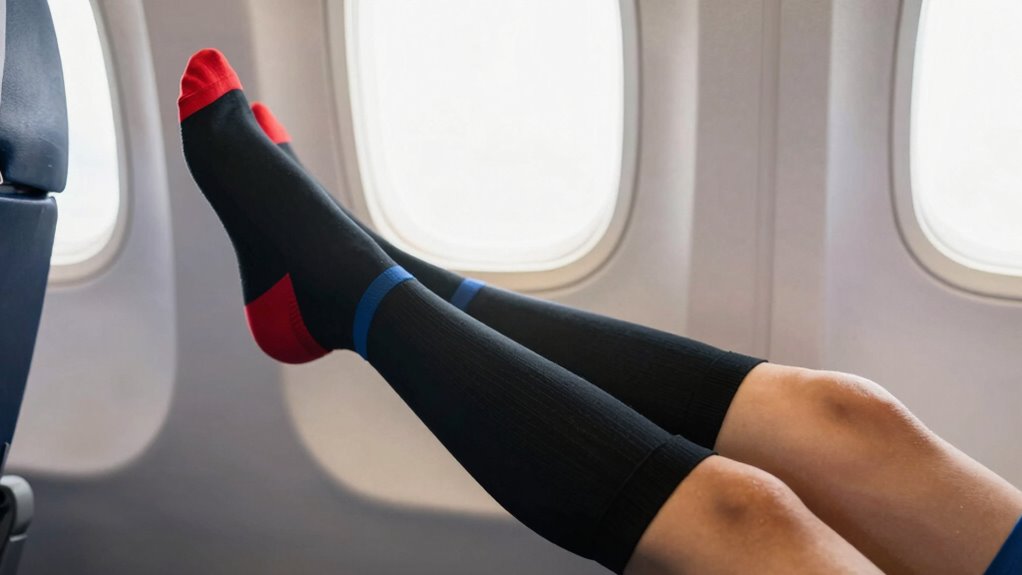
Wearing compression socks during travel days offers proactive support by improving blood flow, reducing swelling, and preventing discomfort before issues develop. They help keep your legs energized and decrease fatigue, making your journey more comfortable. Unlike recovery-only use, these socks encourage continuous circulation and venous health, which is essential during long periods of inactivity. If you want to discover more ways to stay comfortable and healthy on the go, keep exploring this topic further.
Key Takeaways
- Compression socks promote blood circulation during travel, preventing pooling and discomfort before issues arise.
- They support venous health proactively, reducing the risk of deep vein thrombosis during extended inactivity.
- Unlike recovery use, compression socks maintain optimal blood flow and leg support during the journey itself.
- They help prevent swelling, fatigue, and stiffness, keeping legs comfortable and energized throughout travel days.
- Easy to wear and proactive, compression socks encourage habits that improve travel comfort and leg health.

Travel days can be tough on your legs, especially during long flights or road trips. Sitting for extended periods slows down blood circulation, increasing the risk of swelling, discomfort, and even blood clots. That’s where compression socks come in. They provide targeted compression therapy that promotes healthy blood flow, helping you stay comfortable and safe during your journey. Unlike recovery days, when you’re already resting, your legs often need extra support during travel to prevent issues before they start. Wearing compression socks applies graduated pressure, which encourages blood to flow more efficiently from your legs back to your heart. This can considerably reduce swelling and fatigue, keeping you more energized throughout your trip.
Compression socks support healthy blood flow during travel, reducing swelling, fatigue, and discomfort on long journeys.
When you wear compression socks during travel, you’re actively supporting your blood circulation. The gentle pressure they provide helps prevent blood from pooling in your lower extremities, a common problem during long periods of immobility. Improved circulation means less stiffness and soreness after hours of sitting. Plus, better blood flow can decrease the likelihood of developing deep vein thrombosis (DVT), a serious condition linked to blood clots. For frequent travelers or those with pre-existing circulation issues, compression therapy with these socks becomes an essential part of travel health. Additionally, understanding how circulation benefits from compression socks can motivate you to make them a travel essential.
Wearing compression socks during travel also encourages muscle support, reducing the risk of cramps and discomfort. Compared to recovery days, when your legs are already at rest and less prone to circulation problems, wearing compression socks during travel takes on a preventative role. It’s about actively maintaining ideal blood flow, rather than aiding recovery after the fact. Regular use of compression socks can also improve overall venous health, further supporting your circulatory system during long journeys. Incorporating these socks into your travel routine can also help maintain overall leg health, especially during extended periods of inactivity. You don’t need to wait until discomfort or swelling appears; by proactively donning compression socks, you can enjoy more comfortable, less stressful travel days. They’re easy to slip on and don’t interfere with your activity, making them a convenient solution for busy travelers.
Moreover, the benefits extend beyond just physical comfort. When your legs feel good, your overall mood and energy levels stay higher. You’re less likely to feel sluggish or irritable after a long journey. The sustained blood circulation also helps prevent fatigue and keeps your muscles from stiffening up, which means you arrive at your destination ready to go instead of feeling drained. For those who travel often for work or leisure, compression socks for travel days become a simple yet effective way to support your legs and improve your travel experience.
As an affiliate, we earn on qualifying purchases.
Frequently Asked Questions
Can Compression Socks Prevent Deep Vein Thrombosis During Long Flights?
Yes, compression socks can help prevent deep vein thrombosis during long flights by enhancing blood flow and reducing blood clot risk. They apply graduated pressure, which supports circulation in your legs and keeps blood moving smoothly. Wearing compression socks during travel is an effective way to promote clot prevention, especially on extended journeys. Just make sure they fit well and are designed for travel to maximize their benefits.
Are Compression Socks Suitable for All Types of Travel?
Yes, compression socks are suitable for all types of travel. They’re stylish and align with current fashion trends, making them a versatile accessory. You’ll find compression sock materials that are breathable, moisture-wicking, and comfortable for long journeys, whether you’re on a flight, train, or road trip. Wearing them can help improve circulation and reduce fatigue, making your travel experience more comfortable and health-conscious.
How Tight Should Compression Socks Be for Travel Comfort?
Think of compression socks like a gentle hug for your legs—they should feel snug but not constrictive. For travel comfort, choose a compression level between 15-20 mmHg, which offers effective support without discomfort. Make certain the sock fit is snug but allows easy movement and doesn’t cause pinching or pressure marks. When properly fitted, your compression socks will keep your legs energized and reduce swelling during long journeys.
Can I Wear Compression Socks With Any Footwear While Traveling?
Yes, you can wear compression socks with most footwear while traveling, thanks to their fashion versatility and footwear compatibility. Choose low-profile, seamless designs that fit comfortably inside your shoes, whether you’re wearing sneakers, loafers, or dress shoes. Opt for neutral colors to match different outfits, and make sure your compression socks aren’t too tight to avoid discomfort. This way, you stay comfortable and stylish during long travel days.
How Soon Before Travel Should I Put on Compression Socks?
You should put on compression socks about 30 minutes before your travel begins. This timing aligns with current fashion trends favoring functional yet stylish accessories, and material choices like breathable, moisture-wicking fabrics guarantee comfort. Wearing them early helps promote circulation during your journey, reducing swelling and fatigue. Confirm your socks fit well and match your travel outfit for a seamless look that supports your health and style needs.
Conclusion
So, next time you’re hitting the road or taking a long flight, don’t underestimate the power of compression socks. They turn your tired, swollen legs into the stuff of legends, making travel days feel like breezy walks in the park. Forget about jet lag and fatigue—these socks are your secret weapon to conquer travel like a superhero. Slip them on, and watch your legs defy exhaustion, transforming your journey into a smooth, effortless glide!