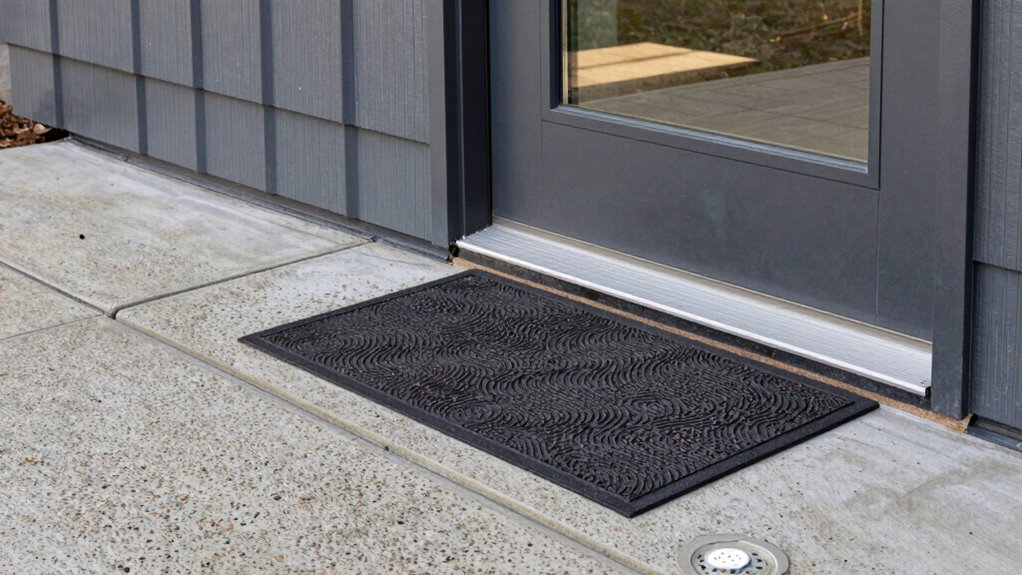

To improve wet weather safety at your home entry, focus on installing a waterproof outdoor mat with a non-slip backing to trap moisture and debris. Pair it with rain-resistant footwear to keep your feet dry and maintain good traction. Make certain proper drainage around the doorway to prevent water pooling, and keep walkways clutter-free. These layered measures reduce slip risks and protect everyone. For more tips on creating a safer entry, keep exploring these essential safety strategies.

Give the gift of listening to the book lover on your list
- Choose a 1-, 3-, 6- or 12-month membership
- They pick the audiobooks they love
- Easy to send by email
Key Takeaways
- Place large, non-slip outdoor mats at every entry to trap moisture and debris effectively.
- Use rain-resistant footwear to maintain traction and dry feet during wet weather.
- Ensure proper drainage around entryways to prevent water pooling and reduce slip hazards.
- Regularly clean and dry mats to maintain their effectiveness and safety.
- Keep walkways clutter-free to prevent water accumulation and improve overall safety.
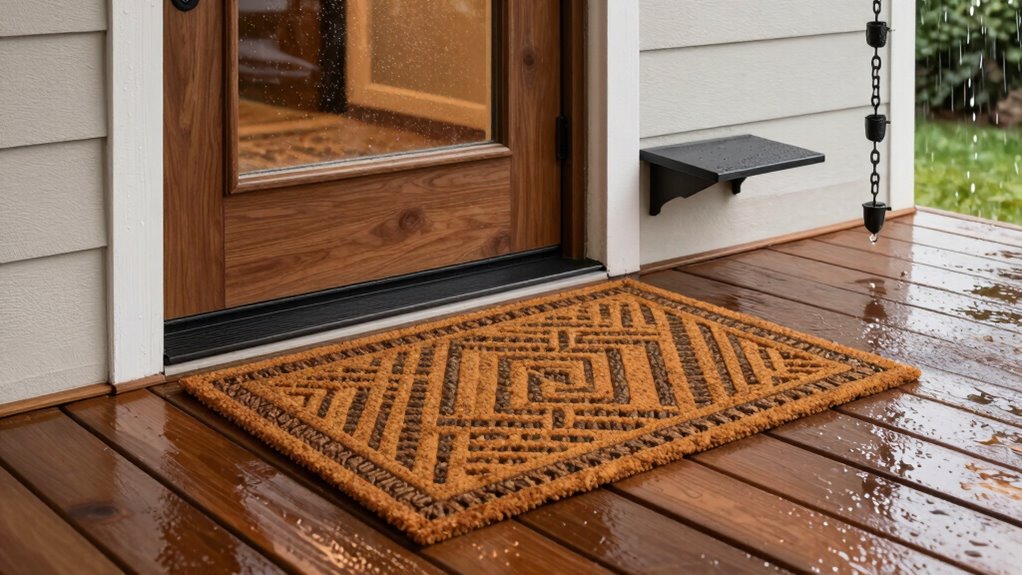
Wet weather can create hazardous conditions that increase the risk of slips and falls, especially when entering buildings or vehicles. To protect yourself and others, paying attention to your entryway is essential. One of the most effective strategies is wearing rain resistant footwear. These shoes are designed to repel water, helping you stay dry and maintaining better traction on wet surfaces. When paired with proper outdoor mat placement, rain resistant footwear becomes even more effective at preventing slips. An outdoor mat, especially one with a textured surface, acts as a first line of defense, trapping moisture and debris before they reach your interior floors.
Positioning a sturdy outdoor mat at every entry point is a simple yet critical step. Make sure the mat is large enough to accommodate your entire foot and has a non-slip backing. This prevents the mat from sliding when wet, reducing the risk of falls. Regularly cleaning and drying the mat is equally important. If it becomes saturated or dirty, it loses its effectiveness and can even become a slip hazard itself. Keep a supply of clean, dry mats nearby so you can swap them out as needed, especially during extended periods of rain. Additionally, choosing mats made from non-slip materials can further enhance safety during wet conditions.
Wearing rain resistant footwear combined with a well-placed outdoor mat creates a layered defense against slipping hazards. As you approach your home or office, step onto the mat to wipe your shoes or boots, removing excess water and mud. This simple step minimizes water transfer onto your floors, preventing puddles and slick spots inside. It’s especially essential during heavy rain, when moisture buildup can be rapid and unpredictable. If you have guests or family members, remind everyone to use the mat and wear appropriate footwear to stay safe. Incorporating proper drainage around entryways also plays a crucial role in preventing water pooling and reducing slip hazards. Proper drainage helps direct water away from walkways, reducing the likelihood of dangerous water pooling.
Another tip is to keep walkways clear of clutter and ensure good drainage around entryways. Water pooling creates even more slip hazards, so addressing these issues goes hand in hand with proper footwear and mat placement. When you combine these measures, you create a safer, more manageable entry process during wet weather. It’s about taking proactive steps to reduce hazards before they cause an accident. Small investments in quality rain resistant footwear and sturdy outdoor mats can make a significant difference in preventing slips and falls, giving you peace of mind every time you enter or leave your home during rainy days.
Products Worth Considering

Ring Alarm 8-Piece Home Security System Kit

eufy Security Essential 7-Piece Alarm System

Ring Alarm 5-Piece Home Security Kit
As an affiliate, we earn on qualifying purchases.
Frequently Asked Questions
How Often Should I Inspect My Home Entry for Safety?
You should inspect your home entry for safety at least once every few months, especially during wet weather. Check that your entryway lighting works properly to prevent slips and falls. Make sure your rug placement is secure and slip-resistant to avoid accidents. Regular inspections help you spot potential hazards early, keeping your entry safe during rain or snow. Stay proactive, and you’ll maintain a safer, more reliable entryway year-round.
Are There Specific Materials Best for Wet Weather Entryways?
For wet weather entryways, you should choose weather-resistant doors made from materials like fiberglass or steel, which resist moisture and corrosion. Pair these with non-slip mats to prevent slips and falls in wet conditions. Regularly clean and dry the mats, and guarantee your door seals are intact to keep moisture out. These choices enhance safety and durability, keeping your entryway secure and slip-free during rainy or snowy days.
What Maintenance Is Required to Keep the Entry Safe?
You need to regularly clean your entrance lighting and door hardware to keep your entry safe. Check that lighting fixtures work properly and replace bulbs as needed, guaranteeing clear visibility during wet weather. Lubricate door hardware to prevent rust and sticking, especially in damp conditions. Keep the entryway dry by clearing debris and leaves, which can cause slipping hazards. Consistent maintenance ensures a safe, welcoming entrance regardless of weather.
How Can I Prevent Ice Buildup at the Entrance?
To prevent ice buildup at your entrance, regularly use ice melting products like calcium chloride or rock salt to keep the area clear. Additionally, place slip-resistant mats at your door to provide traction and reduce slipping risks. Be proactive by clearing snow promptly, ensuring proper drainage, and sealing cracks where water can seep in and freeze. These steps help maintain safety during icy conditions.
Are There Budget-Friendly Options for Improving Entry Safety?
Yes, you can improve entry safety without breaking the bank. Consider affordable upgrades like adding non-slip mats or adhesive strips on your steps and porch. You can also do DIY safety projects, such as installing better lighting or securing loose handrails. These simple, budget-friendly solutions make your home safer during wet weather, reducing the risk of slips and falls without needing expensive renovations.
Conclusion
By paying attention to your entryway in wet weather, you set the stage for safety and peace of mind. Keep the area clear, dry, and well-lit, so you’re not caught off guard by slips or puddles. Think of your entry as the first line of defense—a small change can make a big difference. When you prioritize this space, you’re not just avoiding trouble; you’re keeping your home and loved ones safe, rain or shine.