
Finding the best large button phones for seniors involves balancing simplicity, sound quality, and ease of use. The ideal phone should feature large, clearly labeled buttons, loud ringtones, and straightforward operation, especially for those with visual or hearing impairments. The top choices include the Serene Innovations Amplified Big Button Landline for its excellent amplification and photo buttons, and the VTech SN5147 for its combination of amplified sound and modern features. The main tradeoffs revolve around price, complexity, and specific needs like hearing aid compatibility or visual aids. Keep reading to explore these options in detail and find the best fit for your loved one’s needs.
Key Takeaways
- Amplification and loud ringtones are critical for hearing-impaired users, ranking high in importance across top models.
- Photo buttons and large displays significantly improve usability for seniors with visual or cognitive challenges.
- Corded models tend to offer more straightforward operation, but cordless options add flexibility and modern features.
- Price varies widely, with some high-end phones offering premium features, while budget models focus on core functionalities.
- Most top picks balance ease of use with durability, but tradeoffs include fewer advanced features or higher costs.




More Details on Our Top Picks
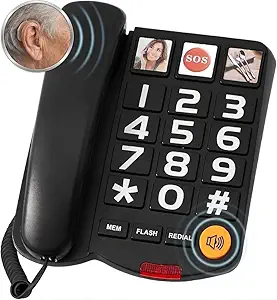
Serene Innovations Amplified Big Button Landline Phone for Seniors with Dementia – 26dB Home Phone with Photo Buttons – Hearing Impaired Telephone
This corded landline stands out for its straightforward setup and specialized visual aids, making it ideal for users with memory and visual impairments. Unlike the VTech SN5147, which offers a cordless option and more advanced features, the Serene phone’s simplicity and photo buttons provide a more tactile experience for those who struggle with small buttons or remembering numbers. The phone’s big photo buttons and loud ringer—up to 85 dB—are designed to cut through noise and assist users with hearing difficulties, while its line-powered operation means no batteries to worry about. The tradeoff is that it lacks wireless mobility and advanced call management features. This pick makes the most sense for seniors with dementia or severe visual impairments needing a simple, loud, and visual contact device.
Pros:- Big, easy-to-see photo buttons for quick dialing
- Loud ringer with adjustable volume up to 85 dB
- Power line-powered, no batteries needed
Cons:- Limited to corded operation, reducing mobility
- No caller ID or modern digital features
- No screen display or additional speed dial options
Best for: Seniors with memory loss, visual impairments, or hearing difficulties who need a straightforward, non-electrical powered phone with visual cues.
Not ideal for: Users seeking mobility or advanced call features, as this model is strictly corded and basic in functionality.
- Power Source:Phone line powered, no batteries
- Amplification:26 dB
- Ring Volume:85 dB
- Buttons:Big photo buttons
- Operation:Corded landline
- Dimensions:7 x 5 x 3 inches
- Weight:1.87 pounds
- Memory:Speed dial with photos
- Caller ID:No
Bottom line: Perfect for seniors who prioritize simplicity, visual aids, and a loud ring over mobility or extra features.
VTech SN5147 Amplified Corded/Cordless Senior Phone with Answering Machine, Big Buttons, 90dB Extra-Loud Ringer, 50dB Audio Assist, Call Blocker
This hybrid system offers a reliable corded base with cordless mobility, making it versatile for different home layouts. Compared to the Serene phone, the VTech SN5147 provides a cordless handset, allowing seniors to move around while maintaining connection, and includes a 22-minute digital answering machine—something the Serene lacks. Its large, backlit display and oversized buttons make dialing easier, especially for users with arthritis or low vision, while the 90 dB ringer and 50 dB Audio Assist guarantee loud, clear calls. The call blocker and photo speed dial add convenience and security. However, its complexity may be overwhelming for users who prefer minimal features. This model is ideal for seniors who want a feature-rich, reliable system with mobility and call management options.
Pros:- Corded base with cordless handset for mobility
- Extra-large backlit display and big buttons
- Call blocker and photo speed dial for security
Cons:- More complex interface may be difficult for some seniors
- Higher price point compared to basic models
- Requires power during outages for cordless handset
Best for: Seniors or families looking for a versatile, feature-packed phone with mobility and call blocking capabilities.
Not ideal for: Users seeking a simple, purely corded, no-frills device, as this unit includes multiple advanced features and a cordless handset.
- Number of Handsets:1 cordless + 1 corded
- Ring Volume:90 dB
- Audio Assist:50 dB
- Answering Machine:22 minutes
- Display:Large backlit
- Call Blocking:Up to 1,000 numbers
- Operation:Corded and cordless
- Speakerphone:Yes
- Caller ID:Yes
Bottom line: Best suited for seniors who desire a balance of mobility, advanced features, and ease of use in one system.
This corded phone excels at delivering maximum loudness with a 110 dB ringer and hearing aid compatibility, making it suitable for users with significant hearing loss. In comparison to the Serene phone, it offers a more intense ringer and hearing aid compatibility, but lacks photo buttons and digital features. The large buttons and visual indicator lights make dialing and recognizing incoming calls straightforward, while the three photo memory keys facilitate quick, hassle-free calling for those with cognitive challenges. The main tradeoff is that it’s strictly corded and does not include modern digital features like caller ID or answering machine. This model is especially appropriate for users with severe hearing loss or visual impairments needing maximum loudness and simplicity.
Pros:- 110 dB extra-loud ringer with visual indicator
- Hearing aid compatible
- Large, tactile buttons and visual alerts
Cons:- No cordless mobility or digital features
- Limited to basic calling functions
- Requires a landline connection and power from the line
Best for: Seniors with profound hearing impairments or visual deficits requiring a very loud, hearing aid-compatible, corded phone.
Not ideal for: Those seeking mobility or advanced call features, since this is a basic, corded device with no extra functions beyond loudness and visibility.
- Ring Volume:110 dB
- Hearing Aid Compatibility:Yes
- Buttons:Large with photo speed dial
- Operation:Corded line
- Dimensions:8.2 x 6.7 x 2.75 inches
- Weight:600 grams
- Memory:3 photo speed dial buttons
- Extra Features:Visual flashing light
- Caller ID:No
Bottom line: Ideal for users with severe hearing and visual impairments who need a very loud, simple, corded phone with visual cues.
Big Button Phone for Seniors, Corded Landline Telephone with Handsfree Function and 9 Groups of Memory, One-Touch Dialling, Suitable People with Vision Disorders/Hearing Damage (EX-LD-858HF)
This corded phone offers a robust set of features, including nine memory buttons, hands-free calling, and adjustable volume, making it highly functional for users with low vision or hearing impairments. In comparison to the Serene phone, which is simple and visual, the Excelltel model provides a more versatile experience with multiple memory groups and a hands-free speakerphone. Its large buttons and adjustable sound make it accessible for users with vision or hearing challenges, while the no-battery requirement simplifies operation. The main limitation is its lack of cordless mobility and modern features like caller ID or digital answering. This pick suits seniors needing a combination of large buttons, memory, and hands-free calling within a corded setup.
Pros:- Nine memory groups with two-button access
- Hands-free speakerphone functionality
- Adjustable handset volume
Cons:- No cordless mobility
- No caller ID or digital answering features
- Limited to corded operation
Best for: Seniors with low vision or hearing impairments who need multiple memory buttons and hands-free operation in a reliable corded phone.
Not ideal for: Those who want mobility or cordless convenience, as this is a primarily stationary, corded device.
- Memory Buttons:9 groups of 2
- Ring Volume:Adjustable
- Speakerphone:Yes
- Operation:Corded
- Dimensions:8.2 x 6.7 x 2.75 inches
- Weight:600 grams
- Additional Features:SOS emergency button
- Caller ID:No
- Answering Machine:No
Bottom line: Great for seniors who prioritize multiple memory options, hands-free calling, and loud volume in a dependable corded phone.
This traditional corded phone emphasizes visual clarity with its extra-large, tilt-backlit display and oversized buttons, making it suitable for users with low vision. Compared to the Excelltel model, the AT&T CD4930 offers added caller ID and a digital answering system with 25-minute recording capacity—great for those who want to manage messages easily. The large display reduces eye strain, and the big buttons make dialing straightforward. However, it lacks cordless mobility and the advanced audio features of the VTech SN5147. Its simplicity and visual aids make it an excellent choice for seniors who need clear visuals and message storage without extra complexity. This model is ideal for seniors seeking visual ease and message management in a reliable corded phone.
Pros:- Extra-large, tilt-backlit display
- Big, high-contrast buttons
- 25-minute digital answering system
Cons:- No cordless handset
- Limited to basic call functions
- No Bluetooth or advanced features
Best for: Seniors who prioritize visual clarity, message recording, and caller ID in a dependable corded phone.
Not ideal for: Those wanting cordless mobility or extensive digital features beyond caller ID and answering capability.
- Display:Extra-large tilt-backlit
- Buttons:Big high-contrast
- Answering System:25 min
- Caller ID:Yes
- Operation:Corded
- Dimensions:8.25 x 4.11 x 7.83 inches
- Weight:3.3 pounds
- Memory:Call log and message storage
- Additional Features:Tilt-backlit display
Bottom line: Best suited for seniors who need clear visuals, message storage, and caller ID in a simple, corded design.
Large Key Wired Telephone, Adjustable Ringing Tone, and earpiece Volume, The earpiece can be Adjusted to Ultra-high Volume, which is Helpful for Those
This wired phone stands out for its simplicity and ultra-high volume capabilities, making it ideal for seniors with severe hearing loss or visual impairments. Compared with the VTech SN1117, it offers a more straightforward, no-frills design without additional features like photo speed dial or Bluetooth. Its large buttons, adjustable ring tone, and high-volume earpiece ensure clear communication even in noisy environments. The built-in power supply means connectivity remains during outages, a critical advantage over cordless options. The tradeoff is that it lacks modern features such as caller ID, call memory, or display, which could be limiting for those needing quick access to stored contacts. This pick makes the most sense for users prioritizing clarity, durability, and reliability over advanced functions.
Pros:- Ultra-high volume adjustable earpiece for hearing-impaired users
- Large, easy-to-press oversized buttons
- Continuity of service during power failure
Cons:- No caller ID or display features
- Limited to basic landline functionality, no extra features
Best for: Seniors with significant hearing or vision impairments who need a dependable, simple device, especially during power outages.
Not ideal for: Those seeking modern features like caller ID, call storage, or a display, or users preferring cordless mobility.
- Button size:1.0 inches wide
- Volume control:Adjustable earpiece and ring tone
- Power source:Corded electric
- Dimensions:7.87 x 6.5 x 3.34 inches
- Weight:1.1 pounds
- Answer system:Digital
Bottom line: Ideal for seniors who need a straightforward, durable phone with maximum volume and reliability during outages.
Uvital Big Button Phone for Seniors, Corded Landline Phone with 9 One-Touch Dialing Big Buttons, Hands-Free Calling, Loud Ringer, Easy to Use for Visually Impaired Telephone for Seniors
This model makes the most sense for seniors who want quick access to frequently called numbers without fuss. Its 9 large, customizable buttons simplify calling, especially for those with memory issues, and the 10 groups of two-button memory further streamline emergency contacts. The loud ringer (up to 120dB) and 98dB hands-free volume ensure calls are heard in noisy settings, outperforming many basic phones like the large key wired model. However, it does not support caller ID or a display, which limits the ability to identify incoming callers visually. The absence of a power source other than the landline connection means it’s reliable during power outages, but it also lacks modern smart features. This phone suits users who prioritize ease of use, loud volume, and visual alerts over advanced digital features.
Pros:- Large, customizable buttons with photo options
- Very loud ringer and hands-free volume
- No external power needed, reliable during outages
Cons:- No caller ID or visual display
- Limited to basic dialing with no additional digital features
Best for: Seniors with severe hearing impairments or visual difficulties who need quick, one-touch dialing and loud alerts.
Not ideal for: Those needing caller ID, call logging, or a display, or who want a cordless setup.
- Number of buttons:9 large programmable buttons
- Ringer volume:Up to 120dB
- Handset volume:Up to 98dB
- Display:None
- Power source:Landline only
- Memory:10 groups of two-button memory
Bottom line: Best for seniors requiring simple, loud, and reliable landline calling with minimal complexity.
This phone is designed for seniors who need very loud volume and large buttons for easy dialing. Its 1.06 x 1.18-inch buttons are comparable in size to coins, making them highly visible for users with poor eyesight. The ringer and handset can be adjusted to extremely high volumes (110dB+ and 80dB+ respectively), outperforming many basic models like the wired or cordless phones with moderate volume controls. Its corded design ensures consistent operation without power dependency, ideal during outages. The main tradeoff is the lack of caller ID, display, or memory features, which limits quick access to contacts. It’s perfect for users prioritizing loud, simple, and reliable operation over digital functions or mobility.
Pros:- Extra-large, highly visible buttons
- 110dB+ loud ringer and 80dB+ handset volume
- Corded for reliable power during outages
Cons:- No caller ID or display
- Limited to basic calling functions, no memory or speed dial
Best for: Seniors with profound visual impairments and hearing difficulties who need maximum volume and large buttons for safety and ease of dialing.
Not ideal for: Users seeking digital features, caller ID, or cordless flexibility.
- Button size:1.06 x 1.18 inches
- Ringer volume:110dB+
- Handset volume:80dB+
- Display:None
- Power source:Corded landline
Bottom line: Ideal for visually and hearing-impaired seniors who need a straightforward, loud, and durable landline phone.
VTech SN1117 Corded Senior Phone for Elderly with 8 Photo Speed Dial, High-Contrast Large Buttons, Talking Digits, Visual Ringer
This phone excels for seniors who benefit from visual and auditory cues. Its 8 photo speed dial buttons enable instant calling to loved ones, while talking digits and high-contrast large buttons assist those with low vision or arthritis. Compared to models like the large key wired phone, the SN1117 offers added features like talking digits and a visual ringer with flashing alerts, boosting accessibility. The full corded design ensures reliable operation during power outages, and adjustable volume provides comfort. Its main drawback is the limited number of speed dial buttons, which might not cover all contacts for some users. Nonetheless, it combines simplicity with helpful accessibility features, making it suitable for users with memory or vision challenges.
Pros:- 8 photo speed dial buttons for quick calling
- Talking digits and adjustable volume
- Bright flashing visual ringer
Cons:- Limited to 8 speed dial contacts
- Corded design restricts mobility
Best for: Seniors needing visual, auditory, and memory aids, especially those with low vision or arthritis.
Not ideal for: Those wanting a cordless phone or more than 8 speed dial contacts.
- Speed dial buttons:8 with photo options
- Talking digits:Yes
- Visual alert:Flashing light
- Power source:Corded
- Buttons:High-contrast large
Bottom line: Best for seniors who rely on visual cues, memory aids, and consistent power during outages.
This cordless phone makes the list for users who want a blend of large buttons, a big display, and advanced features in a mobile package. The 2-handset design offers flexibility, and the large 2.1-inch display makes caller information easy to read. Features like a flashing favorites key, flashlight, call block, volume boost, and talking caller ID provide accessibility and convenience. Compared with the wired models, it offers mobility, but it’s slightly more complex to operate due to the additional features. The volume boost and call blocking make it suitable for seniors with hearing impairments or those overwhelmed by robocalls. The tradeoff is the increased complexity, which may be a challenge for some users who prefer minimal functions. Overall, it’s a versatile choice for tech-savvy seniors seeking a feature-rich cordless phone.
Pros:- Large 2.1-inch display and big buttons
- Features like call block, flashlight, and talking caller ID
- Two cordless handsets for mobility
Cons:- More complex operation due to multiple features
- Higher cost compared to basic models
Best for: Seniors comfortable with technology who want a cordless phone with large display, call blocking, and volume boosting.
Not ideal for: Seniors preferring simple, no-frills, corded phones or minimal feature sets.
- Display size:2.1 inches
- Number of handsets:2
- Features:Call block, flashlight, talking caller ID, volume boost
- Caller ID:Yes
- Power source:Cordless
- Additional functions:Favorites key, call block, flashlight
Bottom line: Best for seniors who want a feature-rich, cordless phone that combines large visuals with advanced accessibility options.

How We Picked
Products were evaluated based on key factors such as sound amplification, button size and clarity, ease of setup, and overall build quality. We prioritized phones that directly address common senior needs like hearing aid compatibility, visual aids, and simple dialing. Additional considerations included user interface simplicity, reliability, and value for money. The ranking reflects a balance between affordability and feature set, aiming to identify options suitable for different types of seniors—from those needing basic phones to those requiring advanced accessibility features.Factors to Consider When Choosing Best Large Button Phones For Seniors
Choosing the right large button phone for a senior involves more than just size; it requires understanding how features support daily use and accessibility. Here are key factors to help guide your decision beyond product specifications.Sound Amplification and Hearing Aid Compatibility
For seniors with hearing impairments, phones with high amplification levels and compatibility with hearing aids are vital. Look for models with adjustable volume, extra-loud ringtones, and clear speakerphones. These features directly affect the usability and comfort of making calls, reducing frustration and missed calls. Budget options often provide basic amplification, while premium models may include noise reduction and multiple tone settings, but consider whether these extras are necessary for your loved one’s specific needs.
Button Size and Labeling
Large, tactile buttons with high-contrast labels make dialing easier for those with visual impairments or cognitive challenges. Some phones include photo buttons, which simplify calling frequently dialed contacts. Avoid models with small or crowded buttons, which can cause accidental dialing. Remember, the goal is to minimize errors and make the device as intuitive as possible, especially for users unfamiliar with modern smartphones.
Display and Visual Aids
A large, high-contrast display with backlighting helps seniors see caller information clearly, especially in low light. Some models include talking caller ID or digit announcements, which can be a game-changer for those with severe visual impairments. While these features add convenience, they can also increase the device price and complexity. Decide how much assistance your loved one needs and choose accordingly.
Ease of Use and Setup
Simplicity is key; look for phones with straightforward menus, minimal setup, and easy-to-access speed dial buttons. Avoid devices with complicated features or excessive customization options that might confuse users. It’s often better to opt for a model with dedicated, one-touch speed dial buttons for emergency contacts, providing peace of mind without added complexity. Consider whether the phone is easy to mount or place in accessible locations around the home.
Durability and Maintenance
Choose phones built for longevity, with sturdy construction and easy-to-clean surfaces. Some models are designed to withstand drops or spills, which is practical for everyday use. Also, check if the device requires frequent charging or battery replacements, as low-maintenance options reduce ongoing hassle. Remember, a well-built phone with minimal fuss is crucial for ensuring consistent reliability over time.
Frequently Asked Questions
Are amplified phones compatible with all hearing aids?
Most amplified phones are designed to be compatible with hearing aids, especially those that feature telecoil (T-coil) compatibility. However, compatibility can vary depending on the hearing aid model. It’s advisable to check the phone’s specifications and consult with the hearing aid provider to confirm compatibility, especially if your loved one relies heavily on hearing aids. Using a telecoil setting can significantly improve sound clarity and reduce background noise during calls.
How important is it to get a phone with photo buttons?
Photo buttons greatly simplify calling for seniors with cognitive or visual impairments by allowing them to recognize contacts through familiar images. They reduce the risk of dialing the wrong number and help build confidence in using the phone independently. If the senior has trouble remembering names or navigating complex menus, phones with photo buttons are a smart choice, though they may come at a slightly higher price or require custom setup.
Should I prioritize a corded or cordless phone?
Corded phones often offer a more straightforward experience, with fewer features to confuse users, making them ideal for those who prefer simplicity. Cordless phones add mobility and flexibility but may introduce complexity with multiple handsets and pairing procedures. For users with mobility issues or those who need to move around while on calls, cordless models are better, but ensure they have large buttons and clear displays to compensate for added features.
What additional features should I consider beyond large buttons?
Additional features like flashing visual alerts, talking caller ID, and adjustable ringtones can enhance usability significantly. These aids help seniors with sensory impairments and improve safety, especially for emergency use. However, too many features can complicate operation, so weigh how much assistance your loved one needs against the potential for added complexity. Prioritize simplicity if they prefer minimal fuss or advanced accessibility if they need comprehensive support.
Is it worth paying more for premium models with extra features?
Premium models often include advanced features such as multiple photo speed dials, digital answering systems, and enhanced hearing aid compatibility. If your loved one relies heavily on these features or has specific needs, investing in a higher-end model can be worthwhile. However, for basic calling needs, a simpler, less expensive phone might be more appropriate, reducing the risk of confusion and making operation more intuitive.
Conclusion
The best overall choice for most seniors is the VTech SN5147 because of its balance of amplification, ease of use, and modern features. If affordability is the primary concern, the Uvital Big Button Phone offers straightforward functionality at a lower price. For those with significant hearing or visual impairments, models like the Extra-Loud Landline Phone or the Serene Innovations Amplified Phone provide critical amplification and visual aids. Premium options like the Panasonic Cordless Phone suit users who want a mix of advanced features and simplicity. Tailoring your choice based on the user’s specific needs ensures they stay connected confidently and comfortably in 2026.