
TL;DR
A House Beautiful report outlines four winter adjustments for houseplant care, based on advice from Mark Sage, B&Q’s horticulture expert. The recommendations are to move plants toward brighter light while avoiding drafts and radiators, reduce watering and feeding, group plants to support humidity, and wipe dust from leaves every one to two weeks.
House Beautiful has published four winter-care habits for houseplants, drawing on advice from Mark Sage, B&Q’s horticulture expert. The guidance says to adjust routines as daylight and plant growth decline: provide suitable light without exposing plants to cold drafts, water and feed less, group plants to support humidity, and clean dust from leaves.

Get decor and gifts delivered free with Prime
- Fast, free delivery on millions of items
- Prime Video, Amazon Music and more included
- Member-only deals all year
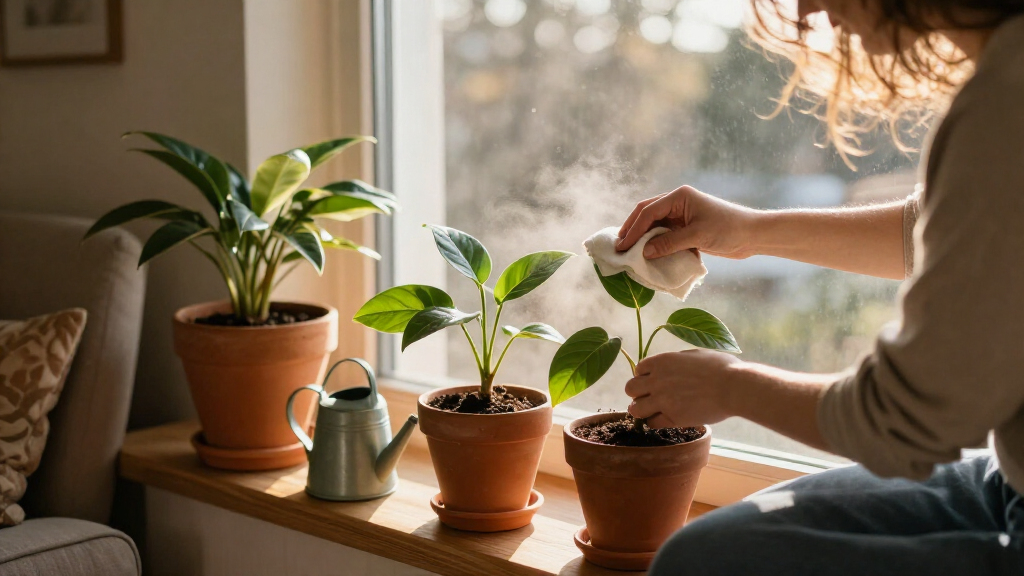
Sage advises moving plants closer to a bright window as autumn and winter bring darker days, while keeping them away from cold drafts and radiators. He says those conditions can contribute to yellowing leaves and root problems. Where natural light is limited, he suggests considering a plant light. Rotating larger plants can also help prevent growth from leaning toward a single light source.
As growth slows, plants generally need less water and feeding, Sage says. He recommends allowing soil to dry between waterings to help prevent root rot, and says winter is not the time for regular repotting. His advice is to give plants a final dose of feed toward the end of autumn rather than continuing to fertilize through the colder months.
Two other habits address indoor conditions and light. Grouping plants can help create a more humid microclimate, particularly when central heating dries indoor air. Sage also recommends wiping leaves with a microfiber cloth every one to two weeks so dust does not interfere with plants making use of limited daylight. He says an occasional gentle shower with lukewarm water can remove dust and pests, but warns that water that is too cold or too warm may harm plants.
Four Adjustments for Winter Conditions
The advice matters because a summer routine may not suit plants when light, temperature and indoor humidity change. Continuing to water or feed at the same rate as during active summer growth can leave soil wet for longer, while placing a plant beside a radiator or in a draft may expose it to conditions Sage warns can cause damage.
The recommendations are practical rather than a guarantee of plant health. Houseplants differ in their needs, and the source does not provide species-by-species instructions. Still, checking soil before watering, choosing a suitable light position and keeping leaves clean are straightforward ways to respond to seasonal changes without adding more care than a resting plant needs.
Products Worth Considering

Philips Hue Festavia 130-Foot Indoor/Outdoor Smart String Lights, 500 LEDs

Philips Hue Iris Smart LED Table Lamp (White)

Samsung 65-Inch Class M70H Series 4K Mini LED Smart TV (2026)
As an affiliate, we earn on qualifying purchases.
Why Indoor Care Changes Seasonally
The report focuses on a seasonal shift: as autumn and winter arrive, days become darker, temperatures fall and indoor heating can make air drier. Many houseplants grow more slowly during this period, according to Sage, so they may use less water and fertilizer than they do when actively growing.
The article’s four habits are drawn from Sage’s recommendations to House Beautiful; they are not presented as the result of a new scientific study or a formal trial. Its advice applies broadly to houseplants, with particular reference to tropical varieties and the conditions they may encounter indoors.
“It’s always a good idea to move them closer to a bright window as darker days hit, but make sure to avoid cold drafts and radiators.”
— Mark Sage, B&Q’s horticulture expert, speaking to House Beautiful
Advice Varies by Plant and Home
The report does not specify a publication date, name particular plant species for each recommendation, or give exact watering schedules. It also does not establish that every houseplant should be treated identically; individual needs and household conditions vary. Readers should treat the recommendations as general seasonal guidance rather than a substitute for care instructions tailored to a plant’s species and environment.
The article does not quantify how much grouping plants changes humidity or how much additional light a plant lamp should provide. It also does not give product recommendations or measurements for shower-water temperature, beyond advising that it should be lukewarm.
Check Conditions as Winter Progresses
The recommended next step is to adjust care gradually and keep observing plants as the season changes: assess available light, keep plants clear of drafts and radiators, check soil before watering, and inspect leaves for dust. The report sets no later milestone or follow-up announcement. Its suggested routine is to continue leaf cleaning every one to two weeks and scale watering and feeding to slower growth rather than following a fixed summer schedule.
Key Questions
How often should I wipe houseplant leaves in winter?
Sage recommends wiping leaves with a microfiber cloth every one to two weeks to clear dust and help plants use available light.
Should I water houseplants less in winter?
The report says plants generally need less water as growth slows. Sage recommends letting soil dry between waterings to help prevent root rot, rather than following the same schedule used during summer.
Where should I place houseplants during colder months?
Move plants closer to a bright window if they need more light, but keep them away from cold drafts and radiators, Sage advises. A plant light may be an option where natural light is limited.
Does grouping houseplants help in winter?
According to Sage, grouping plants can create a more humid microclimate, which may help when indoor heating makes the air drier.
Source: housebeautiful.com