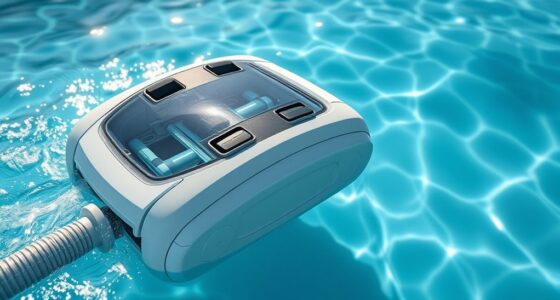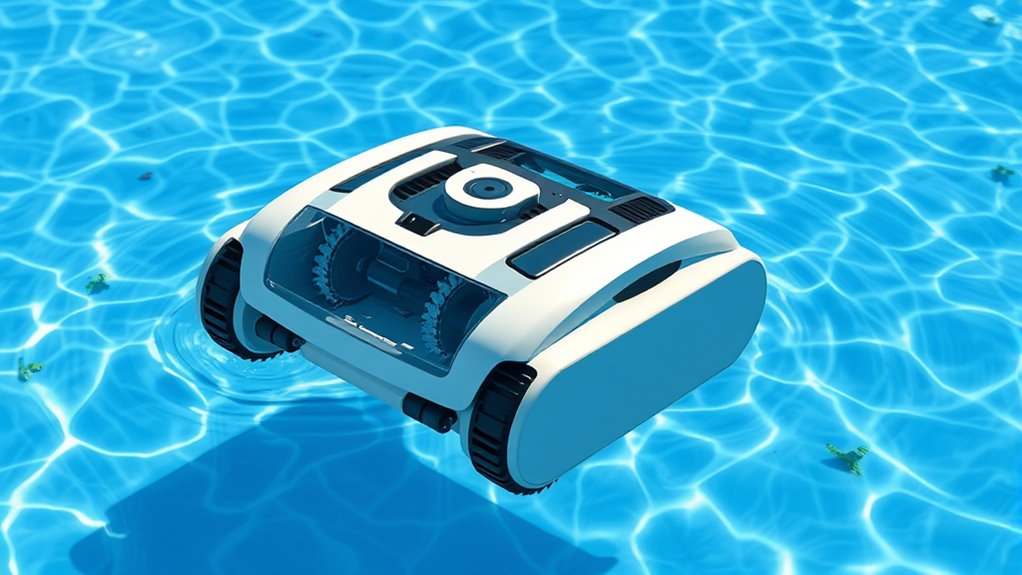
Robotic pool cleaners work by using sensors and algorithms to navigate your pool autonomously. They detect obstacles, walls, and waterline features while following systematic cleaning paths. Equipped with brushes and suction systems, they scrub surfaces and collect debris into filters or bags. Powered by rechargeable batteries or power cords, they operate for a set time before recharging. To discover how these features work together for a spotless pool, keep exploring!

Get decor and gifts delivered free with Prime
- Fast, free delivery on millions of items
- Prime Video, Amazon Music and more included
- Member-only deals all year
Key Takeaways
- They use sensors and algorithms to navigate and systematically cover all pool surfaces, including floors, walls, and waterlines.
- Brushes or scrubbers dislodge dirt and algae from surfaces, aiding debris removal.
- Suction systems collect debris into filters or bags, preventing recirculation of dirt.
- Powered by rechargeable batteries or cords, they operate autonomously for set durations before recharging.
- Regular maintenance of filters and brushes ensures optimal cleaning performance.

You are trained on data up to October 2023.
Frequently Asked Questions
How Often Should I Run My Robotic Pool Cleaner?
You should run your robotic pool cleaner at least once a week to keep your pool spotless. Regular use helps prevent debris buildup and maintains water quality. Follow maintenance tips like cleaning the filter and checking for obstructions to extend its lifespan. Technological advancements now allow for smarter, more efficient cleaners that adapt to your pool’s needs, making maintenance easier and more effective. Adjust cleaning frequency based on pool usage and environmental factors.
Can Robotic Pool Cleaners Clean Algae Effectively?
Robotic pool cleaners can handle algae removal effectively, especially with models equipped for surface scrubbing. They use brushes and high-efficiency filters to scrub and vacuum algae from surfaces and floors. While they work well for light to moderate algae buildup, stubborn algae might require chemical treatments first. Regular use keeps your pool cleaner and algae-free, ensuring clearer water and less manual cleaning effort.
Are Robotic Pool Cleaners Safe for All Pool Types?
Robotic pool cleaners are generally safe for all pool types, but you should check the manufacturer’s guidelines. They efficiently clean various pool surfaces and handle debris removal, making them versatile. You might need to adjust settings based on your pool’s material to prevent damage. As long as you use the right model for your pool and follow instructions, robotic cleaners will help keep your pool clean without issues.
How Long Do Robotic Pool Cleaners Typically Last?
On average, robotic pool cleaners last about 3 to 5 years, but with proper maintenance tips, you can extend their lifespan. Regularly clean filters and check for wear to avoid costly repairs. A cost comparison shows that investing in a durable model might cost more upfront but saves money long-term. You’ll appreciate the longevity and efficiency, ensuring your pool stays pristine without frequent replacements.
Do Robotic Pool Cleaners Require Professional Installation?
You don’t need a professional to install a robotic pool cleaner, as most models are designed for easy setup. Simply connect the power supply, place it in your pool, and let the advanced cleaning technology do the work. This makes pool maintenance more convenient and efficient. With minimal effort, you benefit from thorough cleaning, keeping your pool sparkling without the hassle of manual cleaning or complicated installations.
Conclusion
Think of robotic pool cleaners as your pool’s diligent little guardians, tirelessly patrolling every nook and cranny. They’re like tiny underwater robots with a mission—keeping your pool sparkling without you lifting a finger. With their clever sensors and smart navigation, they dance across the surface like graceful swimmers, turning a dirty lake into a crystal-clear oasis. Embrace these high-tech helpers, and watch your pool shine brighter than a starry night, effortlessly and beautifully.
Fall Picks
fall essentials
As an affiliate, we earn on qualifying purchases.