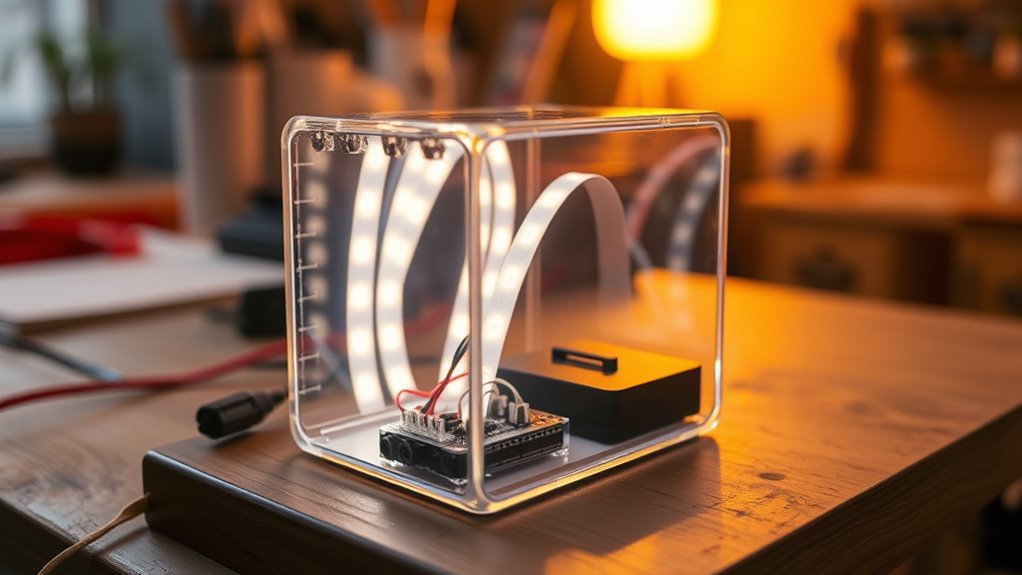

You can create a circadian-friendly dawn simulator for around $25 using affordable dimmable LED strips, a microcontroller like Arduino or ESP8266, and basic wiring tools. Program the microcontroller to gradually brighten the LEDs over 30 to 60 minutes, mimicking a natural sunrise to wake you gently. This setup supports your sleep-wake cycle, boosts alertness, and improves sleep quality. Continue with this guide to learn step-by-step instructions to build your own sunrise simulation system.
Key Takeaways
- Use affordable dimmable LED strips and a microcontroller like Arduino to create a gradual sunrise effect.
- Program the microcontroller to increase brightness over 30-60 minutes, simulating natural dawn.
- Select LED strips capable of full-spectrum or adjustable color temperature to support circadian rhythms.
- Connect components with basic wiring and power supplies, keeping costs around $25.
- Place the setup near your bed to gently wake you and reinforce your sleep-wake cycle naturally.
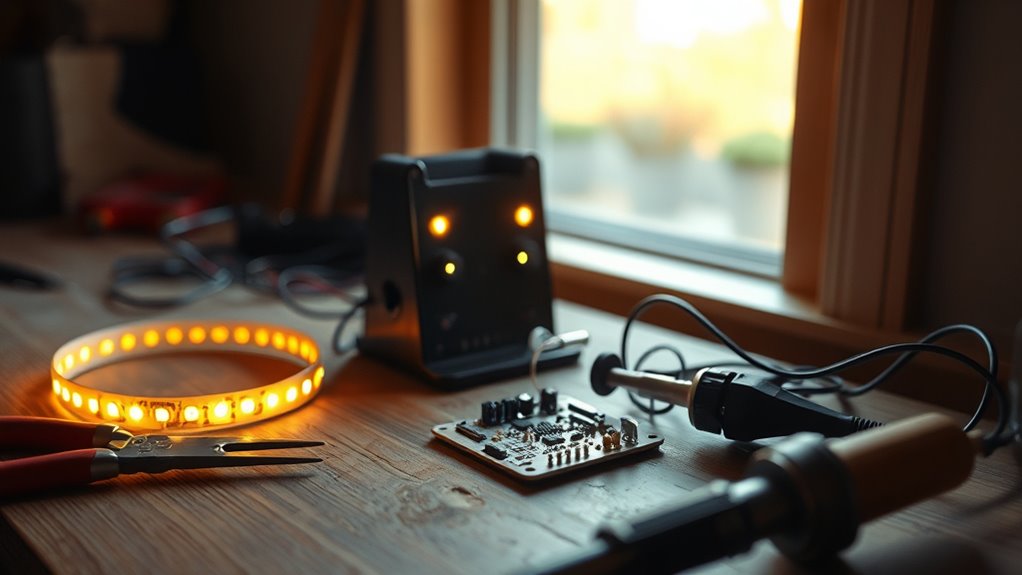
Have you ever wondered how to optimize your home’s lighting to support your natural sleep-wake cycle? Creating a circadian-friendly environment doesn’t have to be complicated or expensive. With a few simple materials and a bit of DIY effort, you can build a dawn simulator that gradually brightens your room in the morning, helping you wake up naturally and improve your sleep quality. The key lies in understanding the light spectrum and how it influences your body’s internal clock. During the early morning hours, exposure to light rich in blue wavelengths signals your brain that it’s time to wake up, boosting alertness and setting your circadian rhythm for the day. Conversely, as evening approaches, reducing blue light helps your body prepare for sleep.
To craft a dawn simulator for around $25, you’ll need a few basic components: a dimmable LED strip, a microcontroller like an Arduino or ESP8266, a power supply, and some basic wiring tools. The LED strip should be capable of emitting a full spectrum of light, especially in the blue and white range, to mimic natural sunrise conditions. You can find affordable LED strips online that are suitable for this purpose. The microcontroller allows you to program the gradual increase in brightness, simulating dawn over a set period—typically 30 to 60 minutes. When you set the timer, the LEDs will slowly brighten, morphing from dim to full brightness, effectively signaling your body to wake up naturally.
By controlling the light spectrum and brightness, you influence not just how you wake but also the quality of your sleep. Exposure to a carefully calibrated light spectrum during the morning helps reinforce your circadian rhythm, leading to deeper, more restful sleep at night. It’s important to set the sunrise simulation to start gradually, so you don’t wake up abruptly, which can cause grogginess or disrupt your sleep cycle. The programming process involves simple coding, often available through open-source communities, making it accessible even if you’re new to electronics.
Once assembled, place your dawn simulator where it can cast light across your bed or bedroom. As the LEDs brighten gradually, you’ll experience a more natural wake-up, free from jarring alarms. Over time, this simple device can enhance your sleep quality and help you feel more energized during the day. Achieving a circadian-friendly lighting environment with this DIY project isn’t just cost-effective—it’s a personalized way to support your overall health and well-being by aligning your home lighting with your body’s natural rhythms.
As an affiliate, we earn on qualifying purchases.
Frequently Asked Questions
Can I Customize the Light Color Spectrum for Different Moods?
Yes, you can customize the light color spectrum for different moods. With light color customization, you have the flexibility to select various colors to match your mood or setting. By adjusting the spectrum, you open up numerous mood lighting options, whether you want calming blues or energizing reds. This personalized approach enhances your environment, making your space more comfortable and tailored to your emotional needs.
What Safety Precautions Should I Follow During DIY Assembly?
When assembling your DIY project, always prioritize electrical safety by unplugging power sources before handling components. Use insulated tools to prevent shocks and work in a dry, clutter-free area to avoid accidents. Follow instructions carefully, especially when connecting wires or handling delicate components. Keep a fire extinguisher nearby, and wear safety glasses if soldering. These precautions safeguard you from electrical hazards and ensure your build is safe and successful.
Is This Dawn Simulator Compatible With Smart Home Systems?
You might wonder if your dawn simulator can connect to your smart home system. Compatibility depends on the components you use; some DIY setups can integrate with smart home platforms for seamless control. To enable voice control and smart home integration, consider adding compatible smart switches or modules. Keep in mind, you may need to program or configure these devices to work together, but with the right setup, you can enjoy easy, automated control.
How Energy-Efficient Is the DIY Circadian Lighting Setup?
Imagine you’re in a Victorian manor—your energy savings now hinge on your DIY setup. This circadian lighting is quite energy-efficient, with low power consumption that helps you cut costs. Since you control the brightness gradually, you avoid unnecessary energy use, making it a sustainable choice. Overall, your DIY dawn simulator offers impressive power savings, helping you enjoy natural lighting benefits without draining your wallet or the environment.
What Are Common Troubleshooting Tips for Setup Issues?
When troubleshooting setup issues, start by checking for light flickering, which could mean loose connections or incompatible components. Make certain your wiring is secure and correct. To prevent power surges, add a surge protector or use a resistor if needed. Double-check your power source and switch connections. Also, verify your LED or light strip specifications align with your control system to avoid flickering and ensure smooth operation.
Conclusion
So, now you’re basically a lighting wizard who’s hacked the sun itself—at a tiny fraction of the cost. Who needs fancy, overpriced dawn simulators when you’ve got your trusty DIY setup? Just imagine impressing your friends with your “scientific” sleep routine and saving enough cash for that extra latte. Congrats! You’ve just turned a simple circuit into a morning miracle—because why rely on nature when you can craft your own sunrise?