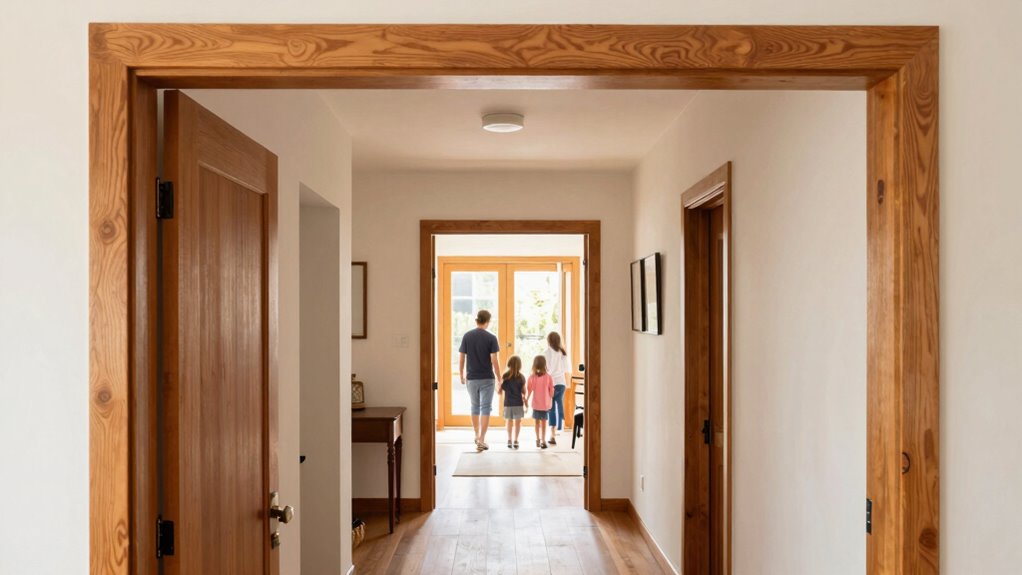

Doorway width matters more than most families think because it directly affects safety, accessibility, and daily comfort. Narrow doorways can make it difficult for someone using a wheelchair, walker, or crutches to pass through easily, especially during emergencies. They also limit independence and can cause frustration when moving furniture or hosting guests. Planning for wider openings now guarantees safety, future needs, and better home functionality. Keep exploring to discover how improving doorway width can transform your home.

Get decor and gifts delivered free with Prime
- Fast, free delivery on millions of items
- Prime Video, Amazon Music and more included
- Member-only deals all year
Key Takeaways
- Adequate doorway width ensures safety and accessibility for individuals with mobility challenges during daily activities and emergencies.
- Wider doorways support independence and accommodate future needs, reducing costly modifications later.
- Properly sized openings improve home functionality by easing furniture movement and improving traffic flow.
- Building codes set standards that promote safety, accessibility, and property value when followed during design.
- Larger doorways create inclusive living spaces, enhancing safety, convenience, and adaptability for all household members.

The width of a doorway might seem like a small detail, but it plays a crucial role in safety, accessibility, and functionality. When you’re designing or renovating your home, it’s easy to overlook this seemingly minor measurement. However, doorway width concerns can considerably impact your daily life, especially if you or someone in your family has mobility challenges or if you anticipate changes in your household’s needs. Ensuring that doorways are wide enough isn’t just about meeting building codes—it’s about creating a space that’s safe, inclusive, and practical for everyone.
Many people underestimate how much doorway width affects accessibility considerations. For example, narrow doorways might be fine for daily use but can become major obstacles when someone uses a wheelchair, walker, or crutches. If the openings aren’t wide enough, it limits independence and could even pose safety risks during emergencies. You don’t want to find yourself in a situation where a family member or visitor can’t comfortably pass through a doorway because it’s too narrow. That’s why it’s crucial to think beyond the standard measurements and consider future needs or potential mobility issues.
In addition to personal accessibility, doorway width concerns also influence the overall functionality of your home. Wider doorways make moving furniture and large appliances easier, which can be especially helpful when you’re redecorating or hosting guests. They also facilitate smoother traffic flow between rooms, reducing congestion in busy areas. When doorways are too narrow, you might find yourself constantly maneuvering around furniture or feeling cramped, which diminishes the comfort and usability of your space. Moreover, doorway width standards can serve as a helpful guideline in planning your home’s layout effectively. Considering building codes early in your design process can help you avoid costly modifications later on. Additionally, wider doorways can contribute to the overall home’s value by making the space more appealing and adaptable. Recognizing the importance of home safety can further motivate you to prioritize these measurements during renovation or construction.
Furthermore, accessibility considerations go hand-in-hand with safety. In emergency situations, quick and easy egress can be lifesaving. Narrow doorways can slow down evacuation or cause delays that put you or your loved ones at risk. Making sure your doorways meet or exceed recommended widths ensures everyone can exit swiftly and safely if needed. Additionally, considering safety regulations during planning can help prevent costly modifications later on.
Ultimately, paying attention to doorway width concerns isn’t just about meeting code requirements; it’s about creating a home that’s safe, accessible, and adaptable for years to come. Whether you’re planning a new build or updating an existing space, prioritize wider doorways to enhance convenience and safety. It’s a small adjustment that makes a big difference—one that can improve your family’s quality of life now and in the future.
As an affiliate, we earn on qualifying purchases.
Frequently Asked Questions
Can Doorway Width Affect Home Resale Value?
Yes, doorway width can affect your home’s resale value. Wider doorways enhance doorway aesthetics, making your home look more modern and accessible, which appeals to buyers. However, increasing doorway width might raise construction costs, so weigh the investment against potential returns. Buyers often see wider doorways as a sign of better accessibility and flow, boosting your home’s appeal and resale value over time.
How Do Doorways Impact Wheelchair Accessibility?
Doorways directly impact wheelchair accessibility by guaranteeing enough space for easy navigation. You should look at doorway thresholds, which can create barriers if raised or uneven, and choose door frame materials that are sturdy and smooth for smooth wheelchair passage. Wider doorways, ideally at least 32 inches, allow for comfortable movement, making your home more accessible and accommodating for wheelchairs. Proper design ensures safety and independence.
Are Standard Doorway Sizes Sufficient for Large Furniture?
Sure, your standard doorway might seem fine until you try to squeeze in that massive new sofa. Unfortunately, most homes aren’t ready for custom doorway options or architectural design considerations that accommodate large furniture. You’ll need wider, thoughtfully planned doorways to avoid furniture gymnastics. Ignoring this can turn your house into a frustrating maze, proving that good design isn’t just about looks but about making life easier for everyone.
Does Doorway Width Influence Home Security?
Yes, doorway width can influence your home security considerations. A wider doorway makes it easier for intruders to force entry or carry out quick escapes, especially if the door and frame aren’t sturdy. Conversely, narrower doorways can act as a deterrent and give you more control over who enters. So, when planning security measures, consider how doorway width impacts both ease of access for family and security against unwanted visitors.
Can Wider Doorways Reduce the Risk of Injury?
Wider doorways can substantially reduce injury risk by allowing easier, safer passage for everyone. You might think it’s unnecessary, but increased doorway width enhances doorframe safety and prevents accidents, especially for those with mobility challenges or carrying bulky items. By choosing wider doorways, you lower the chance of bumps, scrapes, or falls. It’s a smart move for injury prevention, creating a safer, more accessible home for all your family members.
Conclusion
Remember, a wider doorway welcomes more than just furniture; it welcomes freedom, accessibility, and comfort. It’s the threshold where convenience meets safety, where your home’s openness begins. Don’t overlook the power of that simple measurement—because a wider doorway isn’t just an opening; it’s a passage to a more functional, more welcoming space. When you choose wisely, you’re not just building doorways—you’re creating doorways to a better, more adaptable life.
Halloween Picks
halloween
As an affiliate, we earn on qualifying purchases.