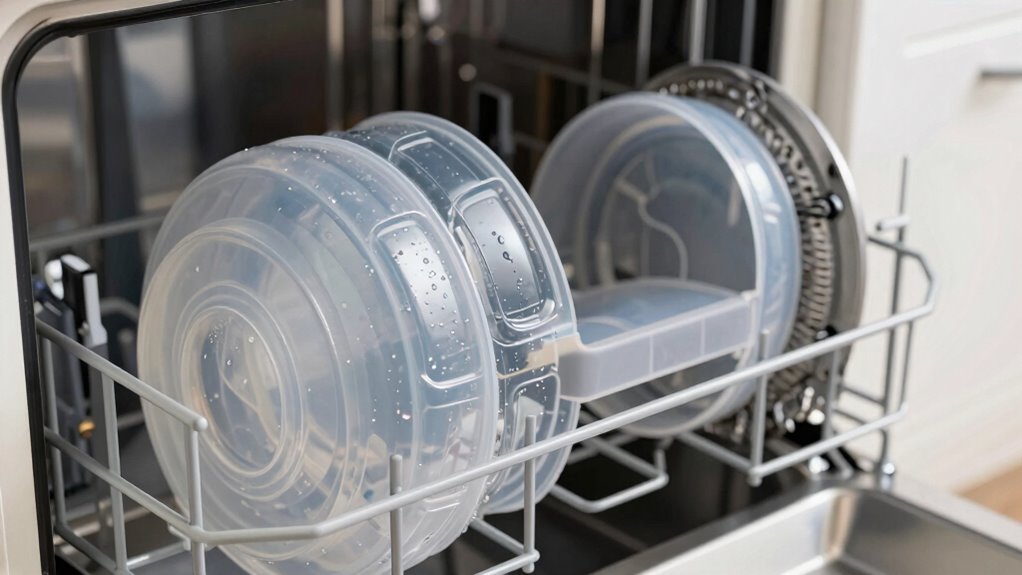

If plastics stay wet after your dishwasher cycle, it’s often due to improper placement, such as overcrowding or placing plastics on the lower rack where airflow is blocked. Choosing a cycle with a dedicated drying phase or adding extra drying time helps. Using rinse aids and ensuring the heated dry setting is activated can also improve plastic dryness. Keep in mind these tips, and you’ll discover more ways to enhance your drying results.

Get decor and gifts delivered free — and shop member deals
- Fast, free delivery on millions of items
- Access to Prime Big Deal Days deals on October 6–7
- Prime Video, Amazon Music and more included
Key Takeaways
- Plastics are more prone to retaining water because they cool faster and have uneven surfaces, hindering water runoff.
- Properly placing plastics on the top rack with adequate spacing improves airflow and drying efficiency.
- Using cycles with a dedicated drying phase, heated dry setting, or extra drying time enhances plastic dryness.
- Rinse aids reduce water surface tension, helping plastics shed water more effectively.
- Avoid overcrowding and cramming plastics, as restricted airflow prevents thorough drying.

Have you ever wondered why your dishes often come out wet after running the dishwasher? It’s frustrating to load your dishes perfectly, choose an energy efficient cycle, and still end up with damp plastics and glassware. The good news is, a few simple adjustments can make a big difference in how well your dishwasher dries. One common culprit is how you place your dishes inside. Dishwasher rack placement plays an essential role in ensuring proper drying. If plastics or cups are crammed into tight spots or stacked improperly, air can’t circulate around them effectively, leaving surfaces damp. To improve drying, make sure lightweight plastics and cups are positioned on the top rack, where air flows more freely. Avoid overcrowding, as this blocks airflow and traps moisture. Instead, leave enough space between items so hot air can reach all surfaces.
Another key factor is the cycle you choose. Many dishwashers offer energy efficient cycles designed to save power and water, but these cycles often prioritize conservation over drying performance. While energy efficiency is great, it can sometimes mean the dishwasher doesn’t run a dedicated drying phase or uses lower heat to save energy. If you notice plastics stay wet after an eco-friendly cycle, consider selecting a cycle with a drying phase or manually adding extra drying time if your dishwasher allows it. Some models even have a “sanitize” or “extra dry” setting that increases heat and air circulation, helping plastics dry more completely.
Choose cycles with dedicated drying or add extra drying time for better plastic dryness.
Additionally, you might want to utilize the dishwasher’s drying features to your advantage. Many dishwashers include a heated dry option or a condensation drying feature. If your dishwasher has a heated dry setting, make sure it’s turned on. This increases the temperature inside the unit, helping to evaporate residual moisture. For models with condensation drying, ensure the door is slightly ajar after the cycle ends to let moisture escape and improve drying efficiency. Understanding drying technology can help you make the most of these features and optimize your results.
Finally, you can boost drying results by using rinse aids. Rinse aids lower surface tension, helping water slide off surfaces more easily. This is especially helpful for plastics, which tend to hold onto water more stubbornly than glass or ceramic dishes. By properly placing your dishes, choosing the right cycle, and utilizing your dishwasher’s drying features and rinse aids, you’ll find that your plastics come out much drier, saving you from unnecessary hand-drying and frustration.
As an affiliate, we earn on qualifying purchases.
Frequently Asked Questions
Can Adding a Rinse Aid Improve Plastic Drying?
Adding a rinse aid can markedly improve plastic drying in your dishwasher. Rinse aid helps water slide off plastics more easily, reducing spots and lingering moisture. It promotes faster evaporation, leaving your plastics dry and streak-free. To enhance plastic drying, simply add rinse aid to your dishwasher’s dispenser regularly. This small step makes a noticeable difference in preventing plastics from staying wet and improves your overall dishwashing results.
Does the Dishwasher’s Drying Cycle Affect Plastic Dryness?
Yes, the dishwasher’s drying cycle impacts how dry plastics come out. Longer, heated drying cycles use less energy and water, improving plastic dryness. However, energy efficiency and water consumption are balanced; shorter cycles save resources but may leave plastics wet. To optimize both, choose a cycle with a heated dry option, and consider using rinse aid to help plastics dry faster and more thoroughly, reducing water spots and dampness.
Are There Specific Plastics That Dry Better Than Others?
Certain plastics, like polypropylene and polyethylene, dry more efficiently because of their low porosity and smooth surfaces. You’ll notice these plastics tend to stay wet less often after the cycle. To improve drying efficiency, avoid placing absorbent plastics or those with textured surfaces in the dishwasher’s drying zone. Using rinse aids and opting for plastics labeled as dishwasher-safe also helps increase drying success and reduce wetness.
How Does Load Placement Impact Plastic Drying Results?
Think of load placement as your secret weapon in plastic drying. Proper loading patterns and strategic plastic positioning guarantee hot air circulates freely around each item. Keep plastics on the top rack, leaning slightly forward, so airflow reaches all surfaces. Avoid overcrowding, which traps moisture. By arranging plastics thoughtfully, you help your dishwasher’s drying cycle work smarter, not harder, leaving your plastics dry and sparkling every time.
Can Adjusting Dishwasher Temperature Improve Plastic Drying?
Adjusting your dishwasher temperature settings can boost drying efficiency, especially for plastics. Increasing the temperature helps plastics release moisture more effectively, reducing wetness after the cycle. Check your user manual for recommended settings, and try raising the temperature slightly during the drying phase. Just be cautious not to set it too high, as excessive heat might damage delicate plastics. Proper temperature adjustments make your plastics dry faster and come out cleaner.
Conclusion
Now that you know why plastics stay wet after washing, you’re practically a dishwasher superhero! Just remember, leaving plastics slightly ajar or using a rinse aid can turn your drying woes into a thing of the past. With these simple tricks, you’ll wipe out damp plastics faster than a lightning bolt strikes. Say goodbye to soggy surprises and hello to perfectly dry dishes—your kitchen will thank you for this game-changing upgrade!
Evergreen bestsellers Picks
bestsellers
As an affiliate, we earn on qualifying purchases.