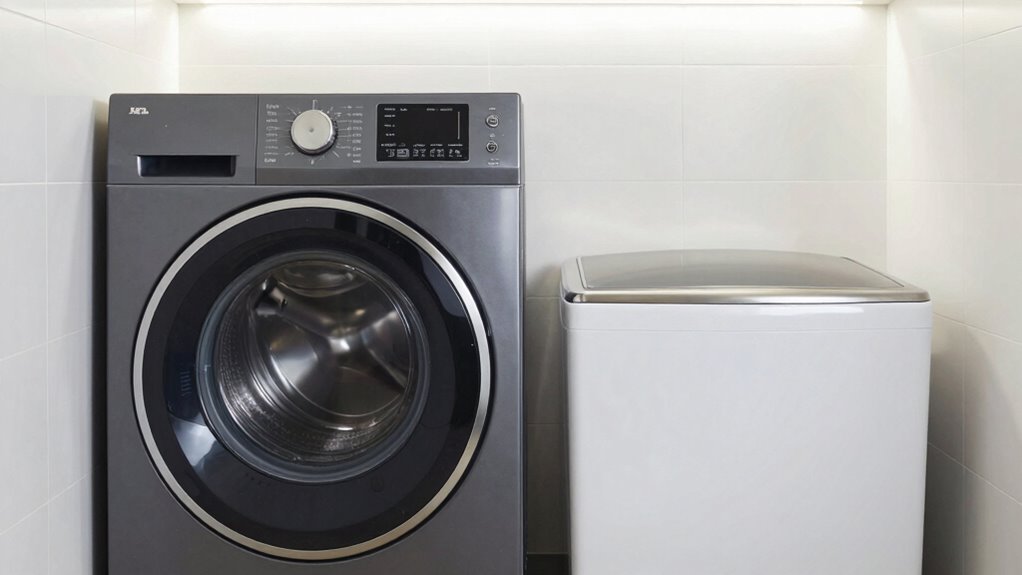

If you’re choosing between front-load and top-load washers, you’ll find that front-load models save more water and energy thanks to their efficient tumbling action that uses less water per cycle. They also typically have higher energy ratings, reducing your utility bills over time. Top-load washers may offer quicker cycles and easier access, but their efficiency isn’t as high. To discover which option best fits your needs, explore the key differences that could make a big difference in your household.

Get decor and gifts delivered free with Prime
- Fast, free delivery on millions of items
- Prime Video, Amazon Music and more included
- Member-only deals all year
Key Takeaways
- Front-load washers use less water per cycle, promoting water conservation and reducing utility bills.
- They generally have higher energy efficiency ratings due to lower water heating requirements.
- Top-load washers typically offer quicker wash cycles, providing convenience for fast laundry needs.
- Modern front-load models incorporate eco-friendly features and meet strict efficiency standards.
- The choice depends on balancing water and energy savings with ease of use and cycle speed preferences.
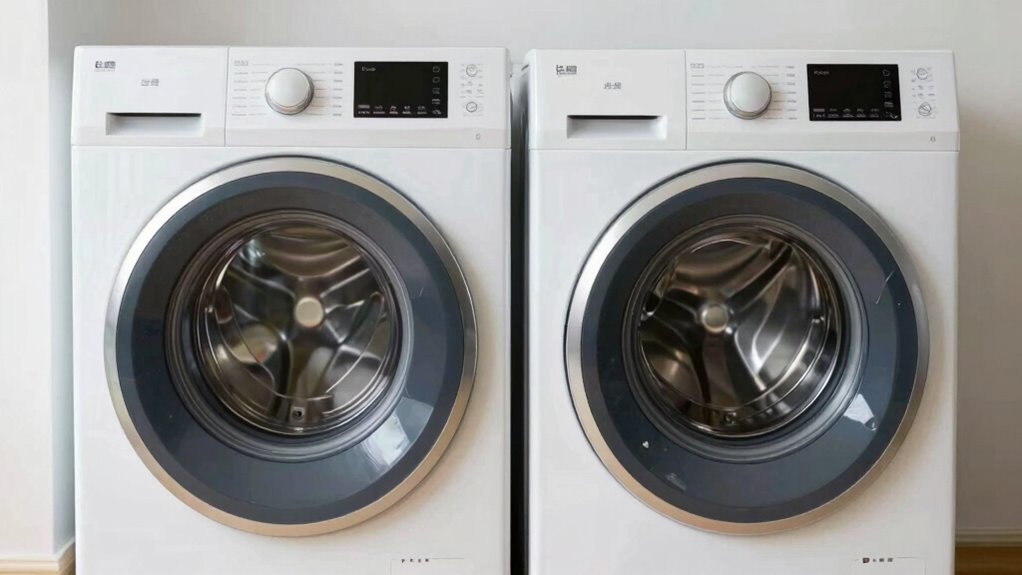
Front-load washers typically use less water per cycle compared to top-load models. This is because their design allows them to tumble clothes in a smaller amount of water, which not only conserves water but also reduces the energy needed to heat that water. If you’re looking to lower your water bills and minimize water waste, a front-loader might be the better option. They’re especially advantageous if your household does frequent laundry or if water conservation is a priority for you. Since less water is used, the energy required to heat water decreases, further reducing your overall energy consumption. Over time, this efficiency can lead to noticeable savings on your utility bills.
Front-load washers use less water per cycle, saving energy and reducing utility bills.
On the other hand, top-load washers often have quicker wash cycles, which can appeal if you need laundry done fast. However, they tend to consume more water and energy per load. Although some newer models have improved water efficiency, they generally still lag behind front-loaders in this regard. If minimizing energy and water use is a key consideration, top-load washers may not be the most suitable choice. That said, they are usually more straightforward to load and unload, which can be a convenience factor for many users.
Another aspect to evaluate is the energy efficiency ratings of the models you’re interested in. Modern front-load washers often come with high Energy Star ratings, meaning they meet strict standards for energy and water efficiency. These models are designed to do more with less, making them a smart investment if you’re conscious of your environmental impact. Conversely, traditional top-load washers may not have as many eco-friendly features but can still be effective if you choose newer, energy-efficient models.
Additionally, the technology in front-load washers often incorporates advanced engineering that enhances their water and energy savings, making them a more sustainable choice in the long run. Ultimately, your choice hinges on balancing these efficiency factors with your household’s laundry habits. If water and energy savings are top priorities, a front-load washer is usually the better pick. If you value quick cycles and easier access, a top-load might suit you better. Either way, understanding how each type performs in terms of energy consumption and water efficiency helps you make a decision that benefits both your wallet and the environment.
energy efficient front load washer
As an affiliate, we earn on qualifying purchases.
As an affiliate, we earn on qualifying purchases.
Frequently Asked Questions
Which Washer Type Is More Environmentally Friendly?
You’ll find that front-load washers are more environmentally friendly because they use less water and energy compared to top-load models. Their efficient design means you save on water usage and reduce energy consumption, helping you lower your carbon footprint. Plus, they often have longer-lasting performance, making them an eco-conscious choice overall. So, if you’re aiming to be greener, a front-load washer is the better option for sustainable laundry habits.
How Long Do Front-Load and Top-Load Washers Typically Last?
Think of your washer as a trusty steed on your laundry journey. Front-load washers usually last around 10-15 years, while top-loads often reach 8-12 years. This durability comparison shows front-loads are the more resilient choice, given their robust build and fewer moving parts. With proper maintenance, you can extend your washer’s lifespan, ensuring it stays a dependable partner through many laundry seasons.
Are There Significant Maintenance Differences Between the Two Types?
You’ll find maintenance differs mainly in cleaning and mold prevention. Front-load washers require regular gasket cleaning and using HE detergent to prevent mold buildup. Top-load washers are easier to sustain, but you should still check for debris and use appropriate detergent. Both types benefit from occasional cleaning cycles. Staying on top of these tasks keeps your washer running smoothly, extends its lifespan, and ensures your laundry stays fresh.
Do Washers Differ in Noise Levels During Operation?
You’ll notice that front-load washers tend to produce less noise during operation, thanks to their design and advanced sound insulation. Top-load washers can be louder, especially during the spin cycle, as their sound levels are less contained. If noise is a concern, a front-load model might be your best choice, providing quieter washer noise and a more peaceful laundry experience.
Which Washer Type Offers Better Stain Removal?
You’ll find that front-load washers typically offer better stain removal because they use less detergent and longer wash cycle durations, allowing for more thorough cleaning. Their tumbling action gently lifts stains without damaging fabrics. Top-load washers might be quicker but often require more detergent and shorter cycles, which can result in less effective stain removal. For tough stains, a front-load washer is generally your best choice.
Conclusion
Choosing between front-load and top-load washers depends on your priorities. While front-loads are more energy-efficient and gentle on clothes, they often cost more upfront. However, their savings on utilities can outweigh the initial expense over time. If you’re worried about mold or maintenance, modern models have improved greatly. Ultimately, consider your budget, space, and laundry habits to pick the best fit—both options offer benefits, so you’ll find a solution that suits your needs.
Fall Picks
fall essentials
As an affiliate, we earn on qualifying purchases.