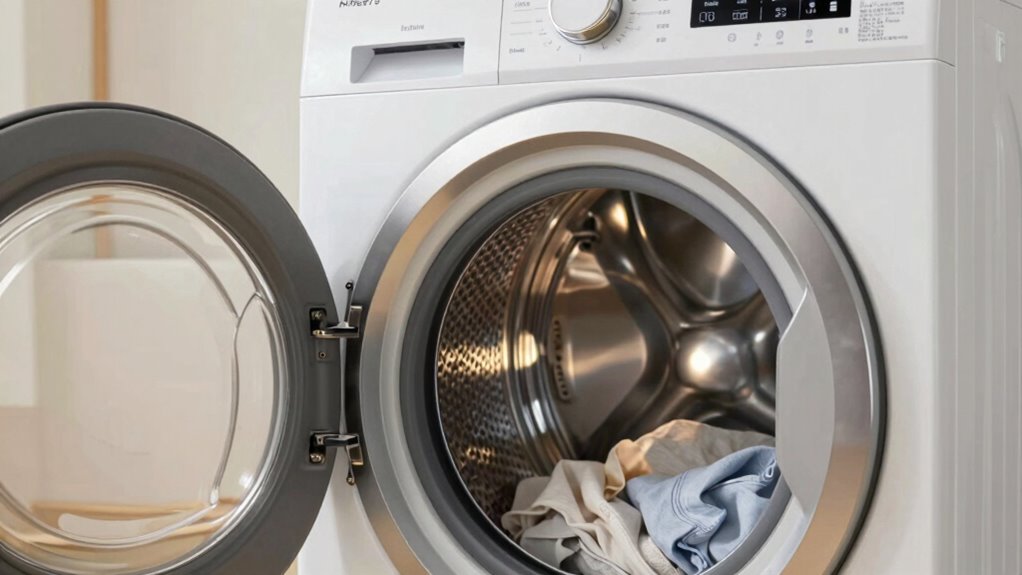

Heat pump dryers save energy because they recycle heat and dry clothes at lower temperatures, which reduces electricity use. This eco-friendly approach is gentler on fabrics, helping prevent damage and shrinking. However, because they operate at cooler temperatures, the drying process takes longer than traditional models. While they may be slower, their energy efficiency and fabric care benefits make them a smart choice for eco-conscious households. To discover more about how they work and their advantages, keep exploring further.
Key Takeaways
- Heat pump dryers use a refrigeration cycle to dry clothes at lower temperatures, reducing energy consumption.
- Recycling heat within the system minimizes power usage, making them more energy-efficient than traditional dryers.
- Longer drying cycles result from lower temperatures, but they save energy and are gentler on fabrics.
- The energy-efficient operation leads to lower electricity bills and a smaller carbon footprint.
- Their quiet, gentle drying process makes them ideal for delicate fabrics and eco-conscious households.
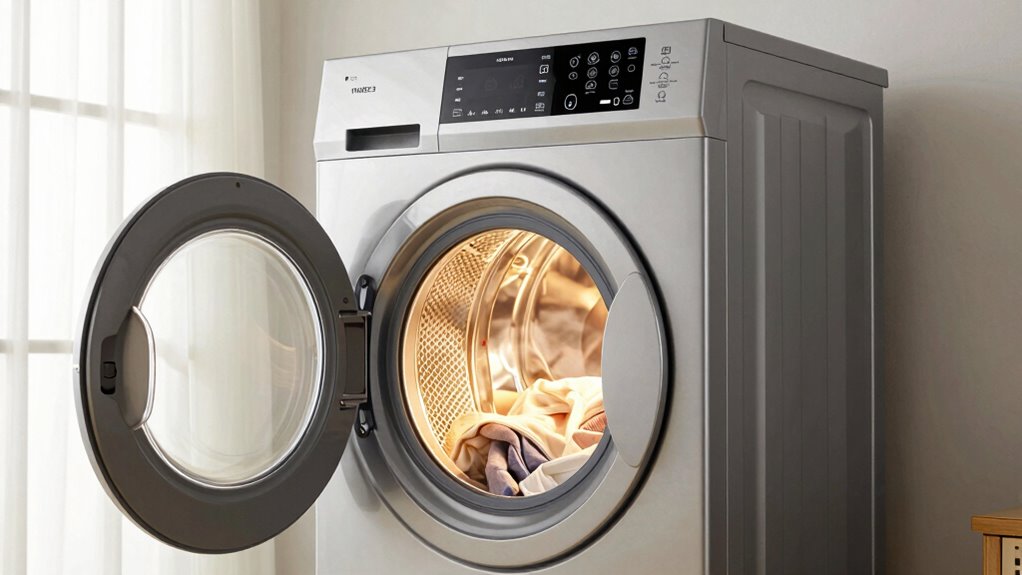
Heat pump dryers are an innovative and energy-efficient alternative to traditional tumble dryers. If you’re looking to cut down on your energy bills and reduce your environmental impact, these appliances can be a smart choice. Unlike conventional dryers that rely on high heat and continuous airflow, heat pump dryers use a refrigeration cycle to dry clothes at lower temperatures. This process consumes less electricity, making them more energy-efficient and cost-effective over time. When it comes to energy efficiency, heat pump dryers stand out because they recycle heat within the system, which means they use considerably less power to get your laundry dry. This eco-friendly feature not only helps you save money but also lessens your carbon footprint.
However, this efficiency does come with a trade-off: drying time. Since heat pump dryers operate at lower temperatures and use a gentler drying process, they typically take longer to dry clothes compared to traditional models. But don’t see this as a drawback; many users find that the extended drying time is a small price to pay for the savings on energy and the gentle care given to delicate fabrics. Plus, the longer cycle often results in less wear and tear on your garments, extending their lifespan. If you’re someone who values efficiency and sustainability over speed, a heat pump dryer could be ideal for your household. Additionally, energy-efficient appliances are increasingly becoming standard in eco-conscious homes, further emphasizing their benefits.
Another benefit to keep in mind is that because heat pump dryers operate at lower temperatures, they are safer for delicate fabrics and less likely to cause shrinkage or damage. This makes them suitable for a wider range of clothing, including wool or silk. Moreover, these dryers tend to be more quiet during operation, adding to their appeal for household use where noise can be a concern. Despite the longer drying times, many users appreciate the consistent quality of drying and the ability to dry clothes overnight without worrying about excessive energy use.
energy-efficient heat pump dryer
As an affiliate, we earn on qualifying purchases.
As an affiliate, we earn on qualifying purchases.
Frequently Asked Questions
How Do Heat Pump Dryers Compare Cost-Wise to Traditional Dryers?
You’ll find that heat pump dryers cost more upfront than traditional dryers, mainly due to their advanced technology. However, their energy savings over time make them more economical overall. While the initial investment is higher, you’ll save on electricity bills, which offsets the cost in the long run. So, even with a higher initial price, heat pump dryers can be a smarter, more cost-effective choice over time.
Are Heat Pump Dryers Suitable for All Fabric Types?
Ever wondered if heat pump dryers suit all fabric types? They generally handle most fabrics well, offering good drying efficiency for cotton, synthetics, and delicate items. However, be cautious with bulky or heavy fabrics like towels or rugs, which may dry more slowly. While they’re versatile, for ideal results, always check the manufacturer’s fabric compatibility guidelines to guarantee your clothes stay in top condition.
What Maintenance Do Heat Pump Dryers Require?
You need to regularly clean the filter to keep your heat pump dryer running efficiently and prevent lint buildup. It’s also important to inspect and clean the vent to guarantee proper airflow and safety. Additionally, check for any blockages or damage in the vent system periodically. Proper maintenance, including filter cleaning and vent inspection, helps prolong your dryer’s lifespan and keeps it operating at peak performance.
Do Heat Pump Dryers Operate Effectively in Cold Climates?
Yes, heat pump dryers operate effectively in cold climates. They’re designed to recycle heat efficiently, so their drying performance remains consistent even when outdoor temperatures drop. You might notice slightly longer drying times in extremely cold conditions, but overall, their drying efficiency stays high. This makes them a reliable option for colder regions, helping you save energy without sacrificing the quality of your laundry.
How Much Longer Do Heat Pump Dryers Typically Take to Dry Clothes?
You’ll notice heat pump dryers take roughly 30-50% longer to dry clothes compared to traditional models, sometimes stretching to two or even three times as long. This longer drying time is a small price to pay for their incredible energy efficiency, saving you a significant amount on electricity bills. While it might seem like a delay, your clothes will still come out perfectly dry, just with less energy wasted.
Conclusion
So, while heat pump dryers may take a bit longer, they’re like the tortoise in the race—slow and steady wins the energy-saving race. You’ll save money on your bills and help the planet, all without sacrificing your fresh laundry. Think of it as giving your clothes a gentle spa day while being kind to your wallet. Embracing this tech means you’re making a smart choice, turning everyday chores into eco-friendly victories.