Heat pumps work by transferring heat between indoors and outdoors using refrigerant in a cycle powered by thermodynamic principles. In heating mode, they absorb heat from outside air and move it inside, while in cooling mode, they remove heat from inside your home. This process makes them much more energy-efficient than traditional heating methods. To understand how they optimize comfort and save energy, keep exploring how these systems operate step by step.
Key Takeaways
- Heat pumps transfer heat between indoor and outdoor spaces using a refrigerant cycle, providing efficient heating and cooling.
- They operate by absorbing heat from outside air in winter and releasing indoor heat in cooling mode, relying on thermodynamic principles.
- The refrigerant cycle involves evaporation, compression, condensation, and expansion to move heat effectively.
- Modern heat pumps optimize energy use through components like compressors and expansion valves, reducing electricity consumption.
- They offer energy-efficient alternatives to traditional heating methods, lowering utility bills and environmental impact.
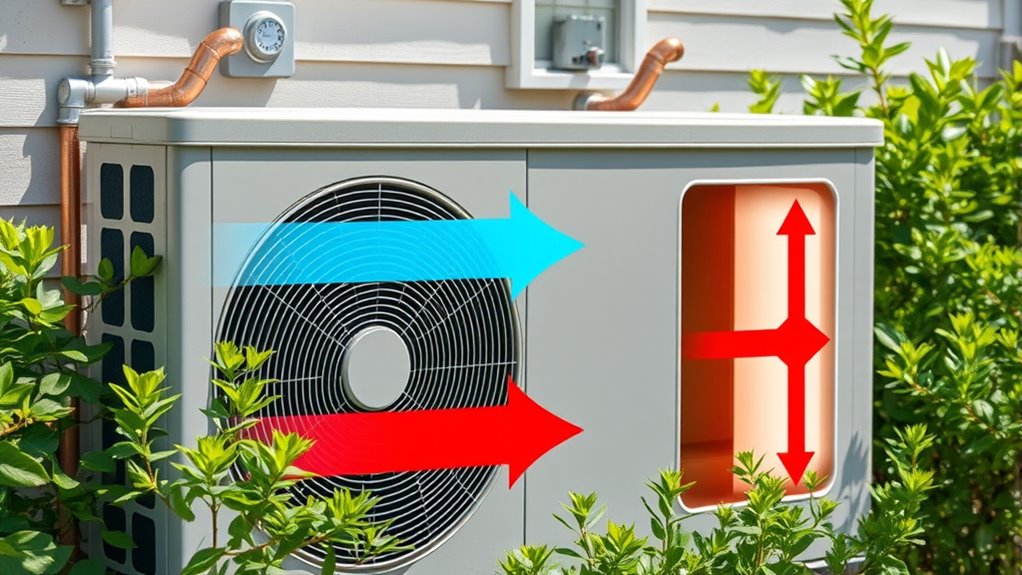
Heat pumps are innovative systems that transfer heat from one place to another, providing efficient heating and cooling for your home. At the core of this process lies the refrigerant cycle, which is driven by fundamental thermodynamic principles. When you set your heat pump to heating mode, it extracts heat from the outside air, even in cold weather, and moves it indoors. Conversely, in cooling mode, it pulls heat from inside your home and releases it outside. This cycle relies on a refrigerant—a special fluid that absorbs and releases heat as it circulates through the system.
Heat pumps transfer heat efficiently by cycling refrigerant through thermodynamic processes.
The refrigerant cycle operates on a series of stages governed by thermodynamic principles. First, the refrigerant, in its low-pressure, low-temperature state, passes through an evaporator coil inside your home. As the refrigerant absorbs heat from the indoor air, it evaporates into a gas. This process is driven by the thermodynamic principle that heat naturally flows from a warmer area to a cooler one, allowing the refrigerant to pick up heat efficiently. The gaseous refrigerant then travels to the compressor, which compresses the gas, raising its pressure and temperature markedly. This compression follows the ideal gas law, where increasing pressure results in higher temperature, making it capable of releasing heat more effectively.
Next, the high-pressure, high-temperature refrigerant moves through the condenser coil outside your home. Here, it releases the heat it carried inside, warming the air or water in your heating system. As it loses heat, the refrigerant condenses back into a liquid, completing the cycle. The liquid then passes through an expansion valve, which reduces its pressure and temperature, preparing it to re-enter the evaporator and repeat the process. This continuous cycle enables your heat pump to maintain consistent indoor temperatures with minimal energy use.
What makes heat pumps particularly energy-efficient is their ability to transfer heat rather than generate it through resistance. By harnessing thermodynamic principles and the refrigerant cycle, they can provide heating or cooling by moving existing heat rather than creating it from scratch. This process consumes considerably less energy compared to traditional heating systems, translating into lower utility bills and a smaller environmental footprint. Understanding the refrigerant cycle and thermodynamic principles helps you appreciate how heat pumps deliver reliable, cost-effective comfort throughout the year. Additionally, advancements in projector technology have led to more energy-efficient systems that can be integrated into smart home setups, further reducing energy consumption.
Frequently Asked Questions
What Are the Main Types of Heat Pumps Available?
You can choose from two main types of heat pumps: geothermal systems and air source models. Geothermal systems tap into the stable underground temperature, offering highly energy-efficient heating and cooling. Air source models extract heat from the outside air, even in cold weather, making them versatile and popular. Both types help you save energy, reduce costs, and maintain comfortable indoor temperatures year-round.
How Do Heat Pumps Perform in Extremely Cold Weather?
Imagine your heat pump as a resilient traveler braving winter’s harshest storms. In extremely cold weather, its cold weather performance can dip, but modern models stay efficient in winter by using advanced technology. They extract residual warmth from the air even at low temperatures, maintaining comfort while conserving energy. So, your heat pump continues to perform well, ensuring reliable heating when you need it most, despite the cold.
What Is the Typical Lifespan of a Heat Pump?
A typical heat pump lasts around 10 to 15 years if you keep up with regular maintenance tips. To maximize energy efficiency and extend its lifespan, change filters regularly, keep the outdoor unit clear of debris, and schedule professional inspections annually. Proper maintenance prevents issues, guarantees peak performance, and helps you get the most value from your investment over the years.
How Much Does a Heat Pump Installation Cost?
Thinking about installing a heat pump? Expect to spend between $3,500 and $8,000, installation costs included. But don’t worry—financing options are plentiful, making it easier than ever to enjoy energy-efficient heating without draining your wallet upfront. Sure, it’s an investment, but in the long run, you’ll save on energy bills. So go ahead, upgrade and bask in the comfort of knowing you’re making a smart, eco-friendly choice.
Are Heat Pumps Suitable for Both Heating and Cooling?
Yes, heat pumps are suitable for both heating and cooling. Air source heat pumps efficiently transfer heat from outside to indoors for warmth, while geothermal heat pumps use the stable underground temperature for enhanced geothermal efficiency. This dual functionality makes them a versatile choice, providing effective climate control year-round. Whether you need to heat or cool your space, a heat pump can handle both with energy-efficient performance.
Conclusion
So, next time you marvel at your heat pump’s quiet efficiency, remember it’s just clever magic—minus the wands and robes. While fossil fuels party in the background, your heat pump happily taps into the universe’s free thermal energy, making you a hero of energy savings and environmental virtue. Who knew that a simple device could outsmart traditional heating? Embrace this marvel of modern engineering—your wallet and the planet will thank you, one cozy degree at a time.