Many believe single-hose portable ACs are just as effective, but dual-hose units actually work better because they prevent negative pressure inside the room, improving airflow and cooling efficiency. Single-hose models pull room air to cool the unit, which leads to higher energy use and less effective cooling. Dual-hose units bring in outside air and vent warm air simultaneously, offering faster, more efficient cooling with less energy. Keep exploring to discover how choosing the right type can save you money and boost comfort.
Key Takeaways
- Dual-hose units prevent negative pressure, improving cooling efficiency by maintaining better ventilation compared to single-hose models.
- Single-hose portable ACs often pull in unconditioned room air, causing higher energy use and less effective cooling.
- Dual-hose systems reduce strain on the compressor, leading to lower energy bills and longer unit lifespan.
- Faster cooling and more consistent temperatures are typical benefits of dual-hose units over single-hose designs.
- While dual-hose units may cost more initially, their greater efficiency and lower operating costs make them a better long-term investment.

Many people believe that portable air conditioners are a quick fix for cooling entire homes, but this isn’t always true. When choosing between single-hose and dual-hose models, understanding how each impacts ventilation efficiency and energy consumption is essential. Single-hose units draw air from the room, cool it, and then vent warm air outside through a single exhaust hose. While they may seem straightforward, they often struggle with ventilation efficiency because they create a slight negative pressure inside the room. This negative pressure pulls in unconditioned air through gaps in windows, doors, or other openings, which can reduce the overall cooling effectiveness. As a result, the unit has to work harder, increasing energy consumption and driving up your electricity bills.
Single-hose portable ACs create negative pressure, pulling in unconditioned air and reducing cooling efficiency.
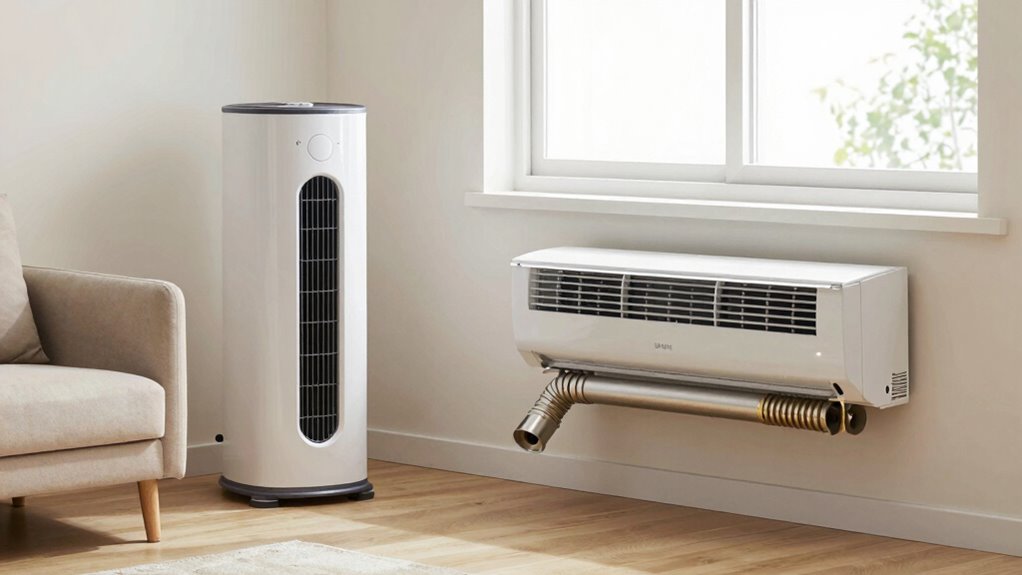
On the other hand, dual-hose portable air conditioners are designed to address this problem. They use one hose to bring in outside air to cool the condenser and another to vent warm air outside. This setup maintains a better balance of ventilation, preventing negative pressure from forming inside the room. Because of this, dual-hose units are generally more efficient at cooling a space and maintaining a consistent temperature. They don’t have to compensate for air leaks, so they work more efficiently, reducing energy consumption. This means you’ll likely find yourself running the unit for shorter periods, saving money in the long run.
Another advantage of dual-hose models is their improved ventilation efficiency. Since they don’t rely on pulling in room air for cooling, they don’t disturb the room’s natural airflow as much. This results in faster cooling and less strain on the compressor. Conversely, single-hose units tend to cycle on and off more frequently because they struggle to maintain the desired temperature, especially in hotter or more enclosed spaces. Over time, this increased cycling not only wastes energy but also wears out the unit faster, leading to higher maintenance costs. Additionally, understanding the importance of ventilation efficiency can help consumers make more sustainable choices with their cooling appliances.
If you’re concerned about energy consumption and want a more effective cooling solution, dual-hose portable air conditioners are generally the better choice. They operate more efficiently because they’re better at maintaining ventilation balance, which minimizes unnecessary strain on the compressor and reduces power usage. Although dual-hose models can sometimes be slightly more expensive initially, the savings on electricity bills and the improved cooling performance make them worth considering. Ultimately, understanding how each type handles ventilation efficiency can help you choose a portable AC that truly meets your needs without wasting energy or money.
Frequently Asked Questions
Can Portable AC Units Completely Cool Large Open Spaces?
You can’t expect a portable AC unit to completely cool large open spaces effectively. These units are designed for smaller areas, and their cooling efficiency drops substantially in large spaces. To improve comfort, consider units with dual hoses or additional fans. For ideal results, use portable ACs in areas where you can contain the airflow, or supplement with other cooling methods to achieve better temperature control across expansive spaces.
Are Dual-Hose Portable ACS More Energy-Efficient Than Single-Hose Models?
Yes, dual-hose portable ACs are generally more energy-efficient than single-hose models, boosting your cooling performance. They operate by independently exhausting hot air and drawing in fresh air, reducing internal pressure and energy loss. This setup minimizes the workload on the compressor, so you get more effective cooling while using less power. If you want better energy efficiency and cooling, choosing a dual-hose unit makes a noticeable difference.
How Often Should I Clean or Replace Portable AC Filters?
For peak performance, you should clean your portable AC filters regularly, ideally every two weeks during heavy use. Replace filters according to the manufacturer’s recommended schedule—usually every three to six months—to prevent buildup and maintain efficiency. Consistent filter maintenance minimizes mold and dust, maximizes airflow, and ensures cool comfort. Stay proactive with proper filter care, and your portable AC will keep your space cool and clean all season long.
Do Portable AC Units Produce Harmful Ozone or Chemicals?
Portable AC units generally don’t produce harmful ozone emissions or chemicals when used properly. Most models contain filters and cooling components that prevent the release of chemical concerns. However, it’s smart to make certain your unit is well-maintained and vented correctly. If you notice strange odors or emissions, stop using it and consult the manufacturer. Proper maintenance helps keep your air safe and free from harmful pollutants.
Can Portable ACS Be Used Effectively in Very Humid Environments?
Yes, you can use portable ACs effectively in very humid environments. To improve performance, focus on humidity management by using the unit’s dehumidifier function or integrating a separate dehumidifier. This helps prevent excess moisture buildup, making the space more comfortable. Keep in mind that proper ventilation and regular maintenance also enhance efficiency, ensuring your portable AC handles high humidity levels effectively.
Conclusion
So, when choosing between single-hose and dual-hose portable ACs, remember that single-hose units are generally more efficient and better at cooling your space. Did you know that about 60% of users find dual-hose models more effective? Don’t fall for myths—pick the right one to keep your home comfortable and energy-efficient. Making an informed choice now means fewer headaches later, so go with what truly works for your needs.