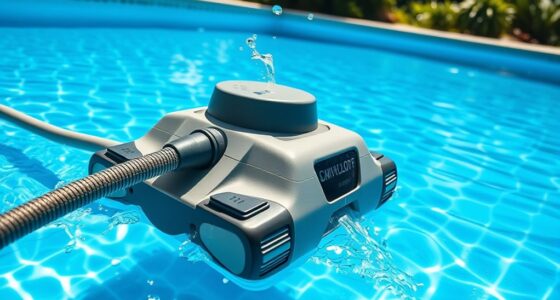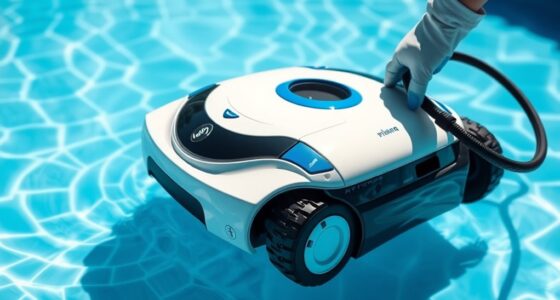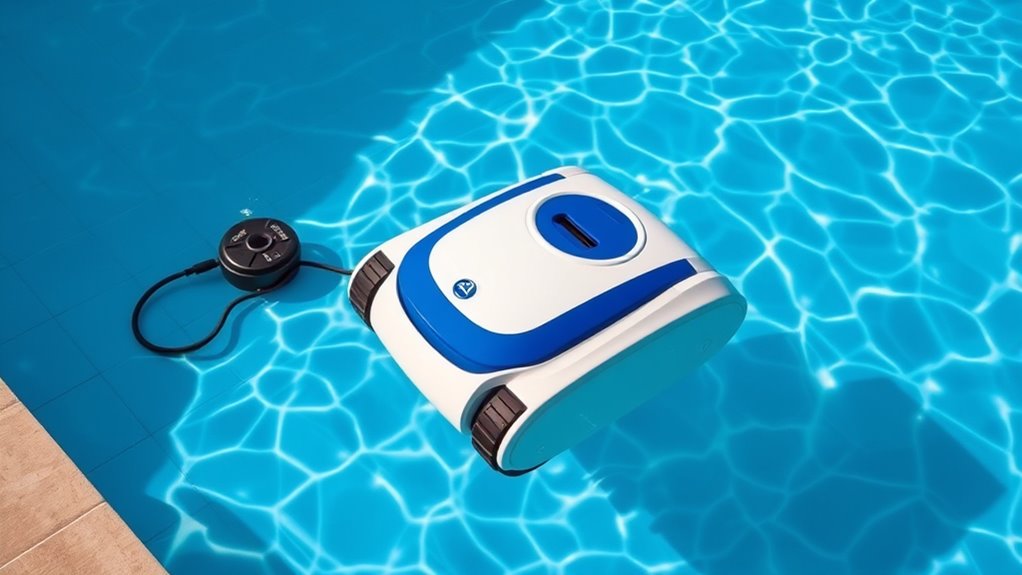

Yes, suction pool cleaners are being overtaken by robotic models as the preferred choice for effortless maintenance. Modern consumers value ease of use, smart features, and time savings, which robotic cleaners provide through programmable schedules and app controls. Advancements in robotics technology make these devices more affordable and reliable, leading to a decline in manual and suction cleaners. If you want to understand how this shift impacts your pool care options, stay tuned for more insights.

Get decor and gifts delivered free with Prime
- Fast, free delivery on millions of items
- Prime Video, Amazon Music and more included
- Member-only deals all year
Key Takeaways
- Market data shows a significant shift toward robotic pool cleaners due to consumer demand for ease and automation.
- Technological advancements have made robotic cleaners more affordable, reliable, and feature-rich, surpassing traditional suction models.
- Consumers prioritize time-saving and smart functions, favoring robotic cleaners over manual and suction options.
- Traditional suction pool cleaners are declining in popularity due to their manual operation and lack of advanced features.
- The ongoing evolution of robotics technology is reinforcing the dominance of robotic cleaners over suction-based systems.

As pool owners seek more efficient cleaning options, the market has seen a shift from traditional suction pool cleaners to advanced robotic models. This change reflects a broader trend toward automation and convenience, driven by evolving consumer preferences. Many pool owners used to rely on manual maintenance, spending hours scrubbing and vacuuming their pools. Today, however, the desire for effortless cleaning has pushed demand toward robotic solutions that handle the task with minimal intervention. You no longer need to adjust hoses, connect skimmers, or constantly monitor equipment; instead, you can simply set a robotic cleaner and let it do the work.
Pool owners now prefer robotic cleaners for effortless, minimal-maintenance pool cleaning.
Consumer preferences have played a significant role in this shift. Modern buyers prioritize time savings, ease of use, and high-tech features, which robotic cleaners readily provide. Unlike traditional suction models, which often require manual setup and regular maintenance, robotic cleaners operate independently with programmable schedules and smart navigation. This transition shows that users prefer products that reduce manual maintenance and streamline pool upkeep. As a result, many are willing to invest more upfront in robotic models because they see long-term benefits—less time spent on cleaning, fewer issues with equipment, and more consistent results. Additionally, advancements in robotics technology are making these devices more capable and reliable, further boosting consumer confidence.
The appeal of robotic cleaners also stems from their ability to adapt to different pool sizes and shapes, something that manual maintenance struggles to achieve efficiently. With programmable features, you can set your robot to clean at specific times, ensuring your pool stays spotless without daily effort. This aligns with consumer preferences for automation and smart home integration—features that traditional suction cleaners rarely offer. As technology advances, robotic cleaners are becoming more sophisticated, incorporating sensors and app control, further reinforcing their dominance in the market. Additionally, the integration of smart technology is making robotic cleaners more intuitive and user-friendly. Moreover, the decreasing cost of robotic components makes these devices accessible to a broader range of consumers, encouraging a market shift.
While manual maintenance is still a necessity for certain tasks like chemical balancing and filter cleaning, the role of suction pool cleaners is diminishing in everyday cleaning routines. Many consumers see suction models as outdated, mainly because they require more hands-on effort and often lack the advanced features found in robotic counterparts. Additionally, innovations in robotics technology are making robotic cleaners more accessible and affordable, encouraging more consumers to make the switch. As a result, the preference for robotic cleaners continues to grow, driven by the demand for less manual work and more efficient, user-friendly pool maintenance solutions.
Frequently Asked Questions
How Do Suction Pool Cleaners Compare in Energy Efficiency?
You might wonder how suction pool cleaners compare in energy efficiency. Generally, they have lower energy consumption than robotic models because they rely on your pool’s existing filtration system, making them more efficient in power use. In an efficiency comparison, suction cleaners tend to use less energy overall, especially for smaller pools or regular maintenance. However, robotic cleaners often offer better cleaning performance but can consume more power.
What Maintenance Do Robotic Pool Cleaners Require?
Did you know robotic pool cleaners typically need filter maintenance every 2-4 weeks? You’ll also need to monitor the battery life, replacing it every 1-3 years depending on usage. Regularly cleaning the filter guarantees peak performance, while keeping an eye on the battery prevents unexpected breakdowns. Overall, robotic cleaners require less manual effort but do need these simple maintenance steps to keep your pool spotless.
Are There Safety Concerns With Robotic Pool Cleaners?
You might wonder about safety concerns with robotic pool cleaners. Generally, they’re designed with power safety in mind, featuring automatic shut-off features and waterproof electronics. However, you should still make certain of proper installation, avoid tampering with the power cord, and keep children away while operating. By following manufacturer instructions, you minimize safety risks and protect your family, making robotic pool cleaners a safe and convenient cleaning solution.
Which Pool Cleaner Type Is More Cost-Effective Long-Term?
When comparing pool cleaners, you’ll find suction pool cleaners often offer a better long-term value due to their lower upfront costs and proven durability factors. They require less maintenance and tend to last longer with proper care. Robot cleaners, while more expensive initially, can save you time but might need more repairs over time. A thorough cost comparison shows suction models may be more cost-effective for ongoing use.
How Do User Preferences Influence Market Trends?
Oh, the thrilling dance of consumer behavior and brand loyalty shaping market trends—who knew your whims could sway technology? Your preferences, whether for the latest gadget or trusted brand, push companies to innovate or retreat. As you chase shiny new features or cling to familiar names, you dictate which products thrive or fade. So, your choices aren’t just personal—they’re the puppeteer strings controlling market evolution.
Conclusion
While robots are gaining popularity with their advanced features, suction pool cleaners still hold their ground for affordability and simplicity. You might think robots will completely replace them, but recent trends suggest both can coexist, each serving different needs. It’s unlikely robots will fully overtake suction models anytime soon, especially for budget-conscious users. So, instead of a complete switch, you’ll probably see a market where both options thrive, catering to diverse preferences and pool sizes.
Halloween Picks
halloween
As an affiliate, we earn on qualifying purchases.