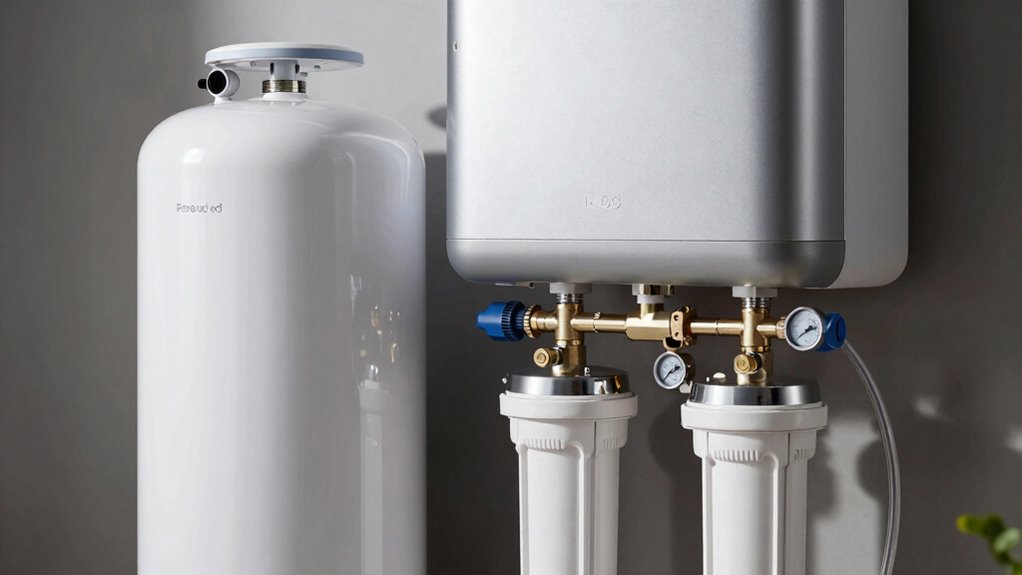

When choosing between tank and tankless reverse osmosis systems, you’ll notice that tank models often deliver higher water pressure instantly due to stored water, but they can be bulky and slow to refill. Tankless units save space and provide continuous filtration, yet they may experience a pressure drop during use, affecting flow rate. To understand how this pressure tradeoff impacts your water supply and long-term performance, keep exploring the details.

Get decor and gifts delivered free — and shop member deals
- Fast, free delivery on millions of items
- Access to Prime Big Deal Days deals on October 6–7
- Prime Video, Amazon Music and more included
Key Takeaways
- Tank systems provide steady water pressure due to stored water, while tankless units may experience pressure drops during high demand.
- Tankless reverse osmosis systems often have a pressure tradeoff, resulting in slightly lower flow rates compared to tank models.
- The pressure in tankless systems depends on incoming water pressure, which can affect filtration speed and water flow.
- Tank systems maintain consistent pressure regardless of usage, ensuring reliable flow but at the cost of larger size.
- Proper system sizing and water pressure management are essential to balance filtration efficiency and water pressure in tankless units.

Have you ever wondered how tap water gets purified to remove contaminants? It’s a fascinating process, especially when you consider the role of reverse osmosis systems. These systems use a semi-permeable membrane to filter out impurities, but the design of the unit—whether tank or tankless—can considerably impact your experience. When evaluating which system to choose, you’ll want to take into account factors like filtration efficiency and installation cost. These elements directly influence how well the system performs and how much you’ll spend upfront. Additionally, system durability plays a role in long-term satisfaction, as some units are built to withstand frequent use and environmental factors better than others.
reverse osmosis tankless water filter system
As an affiliate, we earn on qualifying purchases.
As an affiliate, we earn on qualifying purchases.
Frequently Asked Questions
How Long Does a Reverse Osmosis System Typically Last?
Your reverse osmosis system typically lasts about 8 to 15 years, depending on its system lifespan and durability factors. Regular maintenance, like replacing filters and membranes, extends its life. Tankless models might last longer due to fewer components that wear out. To guarantee durability, keep an eye on water quality, pressure levels, and follow manufacturer recommendations. Proper care helps maximize your system’s performance and longevity.
What Maintenance Is Required for Tankless RO Systems?
Think of your tankless RO system as a sleek sports car that needs regular tune-ups. You should replace filters every 6-12 months to maintain ideal filtration lifespan, and check for mineral buildup that can clog components. Flushing the system periodically helps prevent mineral deposits from accumulating and guarantees your water stays pure and fresh. Regular maintenance keeps your system running smoothly, delivering clean water without the pressure drops.
Can Reverse Osmosis Remove All Contaminants?
Reverse osmosis systems considerably improve water purity, but they can’t remove all contaminants. You’ll find they excel at removing common impurities like lead, chlorine, and bacteria, yet some chemicals, viruses, or dissolved gases might still pass through. To guarantee ideal contaminant removal, regular maintenance and filter replacements are essential. Rely on your system for high-quality water, but understand its limits in achieving absolute purity.
Which System Is More Energy-Efficient—Tank or Tankless?
A tankless reverse osmosis system is more energy-efficient because it only heats or processes water when you need it, reducing overall energy consumption. In contrast, tank systems store water and maintain pressure constantly, which uses more energy even when you’re not using water. So, if you want better system efficiency and lower energy use, a tankless setup is your best choice, especially for ongoing savings.
Are There Any Health Risks Associated With RO Systems?
Surprisingly, you might think reverse osmosis systems pose health risks, but they actually improve water taste and remove harmful minerals. While some worry about mineral removal, it’s vital to balance taste and health. Most concerns stem from over-filtering, which can strip beneficial nutrients. Rest assured, if installed and maintained properly, your system offers safe, clean water without risking your health—just enjoy invigorating pure, great-tasting water every day.
Conclusion
Choosing between tank and tankless reverse osmosis systems depends on your water needs and space. Did you know that tankless systems typically save up to 50% more water than traditional tanks? This efficiency means less waste and more consistent supply. Whether you prioritize space, convenience, or water conservation, understanding these tradeoffs helps you make the best choice. Ultimately, investing in the right system guarantees you enjoy cleaner water without sacrificing efficiency or comfort.
Evergreen bestsellers Picks
bestsellers
As an affiliate, we earn on qualifying purchases.