UV-C technology in air purifiers can effectively neutralize many airborne bacteria and viruses by disrupting their DNA or RNA, reducing pathogens in your environment. It’s a powerful addition, especially during flu seasons or in spaces with high air hygiene needs. However, UV-C isn’t a miracle cure—it won’t remove dust, pollen, or chemical pollutants on its own, and proper safety and maintenance are essential. If you keep exploring, you’ll discover how to get the best results while staying safe.
Key Takeaways
- UV-C light neutralizes microorganisms by damaging their DNA or RNA, reducing airborne pathogens effectively.
- It works best when combined with other filters like HEPA for comprehensive air purification.
- UV-C air purifiers are safe if equipped with proper safety features; direct exposure can harm skin and eyes.
- They cannot remove dust, pollen, chemical pollutants, or particulate matter alone.
- Proper maintenance and adherence to manufacturer guidelines are essential for safety and optimal performance.
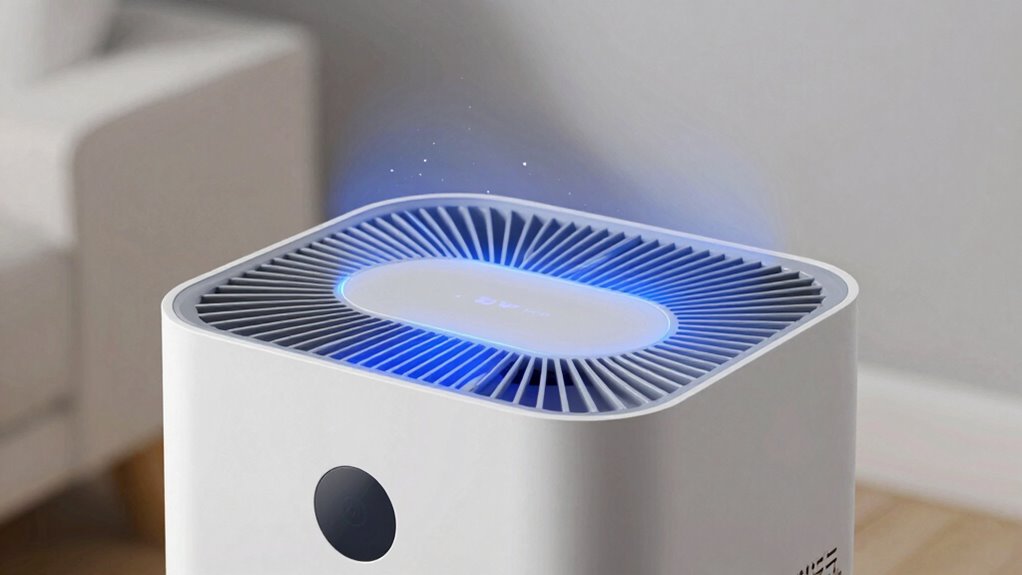
Have you ever wondered how air purifiers remove harmful germs and viruses from the air you breathe? One powerful method involves UV-C technology, which uses ultraviolet light to neutralize microorganisms. UV-C light is a specific wavelength that can disrupt the DNA or RNA of bacteria and viruses, rendering them inactive and unable to cause infection. When integrated into air purifiers, UV-C lamps work by illuminating the air as it passes through the device, helping to notably reduce airborne pathogens. This process is especially useful during flu seasons or in environments where maintaining air hygiene is essential. However, it’s important to understand the safety considerations associated with UV-C technology. UV-C light can be harmful to your skin and eyes if exposed directly, so reputable air purifier manufacturers design units with safety features that prevent UV-C exposure to users. Typically, the UV-C lamps are enclosed within the device’s chamber, guaranteeing that only the air passing through the purifier is exposed to the light. Some models also include safety sensors that turn off the UV-C lamps when the device is opened or tampered with. Despite these safety measures, you should always follow manufacturer instructions carefully. Never attempt to modify or open a UV-C air purifier while it’s operating, as unshielded UV-C light can cause skin burns or eye injuries. Additionally, UV-C lights degrade over time, so replacing lamps as recommended is vital for maintaining safety and effectiveness. It’s also worth noting that UV-C technology isn’t a standalone solution; it works best when combined with other filtration methods like HEPA filters, which trap larger particles, and activated carbon filters, which absorb odors and chemicals. UV-C can’t remove dust, pollen, or particulate matter, so it’s essential to choose a device that combines multiple features for thorough air cleaning. While UV-C in air purifiers can considerably reduce airborne germs, it’s not a miracle cure-all. It doesn’t eliminate all viruses or bacteria instantly, and some microorganisms may be more resistant. Plus, UV-C doesn’t address issues like chemical pollutants or allergens. When considering an air purifier with UV-C technology, prioritize safety features and confirm it’s certified by relevant health authorities. Proper use and maintenance are key to maximizing benefits and minimizing risks. To conclude, UV-C technology can be a valuable tool in your fight against airborne germs, but always handle it with care, respect safety considerations, and use it as part of a broader approach to indoor air quality. Additionally, understanding the limitations of UV-C can help set realistic expectations for its performance.
Frequently Asked Questions
How Long Does UV-C Air Purification Last Before Needing Replacement?
Your UV-C bulb lifespan typically lasts around 9 to 12 months before needing replacement. You should check your air purifier’s manual for recommended replacement frequency, as it varies by model and usage. Over time, the UV-C bulb’s effectiveness decreases, so replacing it on schedule ensures peak air purification. Regular checks and timely replacements keep your device functioning efficiently and help maintain a healthier indoor environment.
Are UV-C Air Purifiers Safe for Children and Pets?
UV-C air purifiers can be safe for children and pets if you choose models with proper safety features. Look for units with child safety locks and enclosed UV-C bulbs to prevent direct exposure. Pet protection is also important; verify the purifier operates quietly and doesn’t emit harmful ozone. Always follow manufacturer instructions, and supervise usage to keep your little ones and furry friends protected while enjoying cleaner air.
Can UV-C Eliminate All Airborne Viruses Effectively?
Think of UV‑C light as a vigilant guardian, but it can’t catch every airborne virus. Its effectiveness varies with virus resistance and exposure time, so it won’t eliminate all pathogens. Some viruses have built-in defenses, making them harder to neutralize. While UV‑C markedly reduces airborne virus levels, it’s not foolproof. You should combine it with other measures for all-encompassing protection, knowing it’s a powerful but imperfect shield.
Do UV-C Air Purifiers Produce Harmful Ozone?
UV-C air purifiers can produce some ozone during operation, especially if they lack proper ozone control. Ozone formation may pose health risks, such as respiratory irritation or aggravating asthma. To minimize these risks, choose devices with ozone filters or low ozone emission standards. Always use UV-C purifiers in well-ventilated spaces, and follow manufacturer instructions to guarantee safety and reduce potential health hazards.
What Maintenance Is Required for UV-C Air Purifiers?
Sure, maintaining your UV-C air purifier is a breeze—just don’t forget the basics. You’ll need to replace the UV C bulb before its lifespan ends, usually around 9-12 months, or when it stops glowing brightly. Also, follow the filter replacement schedule to keep it working efficiently. Regular cleaning and timely part swaps guarantee your device keeps fighting germs without turning into a fancy paperweight.
Conclusion
Just as the myth of Icarus warns us about overreaching, remember that UV-C in air purifiers isn’t a cure-all. It can help reduce airborne germs, but it’s not a silver bullet for all indoor air issues. Use it wisely, combining it with good ventilation and cleanliness. Think of UV-C as a helpful guide, like Daedalus’s wings—powerful, but requiring careful handling to avoid unintended consequences. Stay informed and balanced in your approach.