If you’re choosing between compressor and thermoelectric wine and beverage fridges, consider your environment and storage needs. Compressors offer better temperature stability and handle larger quantities, making them ideal for serious collectors or variable environments. Thermoelectric units are more energy-efficient and better for small-scale use in stable settings. To find out which cooling method suits your situation best and how performance differs, keep exploring the details below.

Get decor and gifts delivered free with Prime
- Fast, free delivery on millions of items
- Prime Video, Amazon Music and more included
- Member-only deals all year
Key Takeaways
- Compressor fridges provide superior temperature stability, ideal for preserving wine and beverages in variable environments.
- Thermoelectric units are energy-efficient and suitable for small-scale storage but less effective in hot conditions.
- Compressor systems handle larger quantities and fluctuating temperatures better than thermoelectric models.
- Thermoelectric fridges are quieter and more eco-friendly, making them ideal for casual or limited use.
- Choice depends on storage size, environment stability needs, and prioritization of energy savings versus temperature consistency.
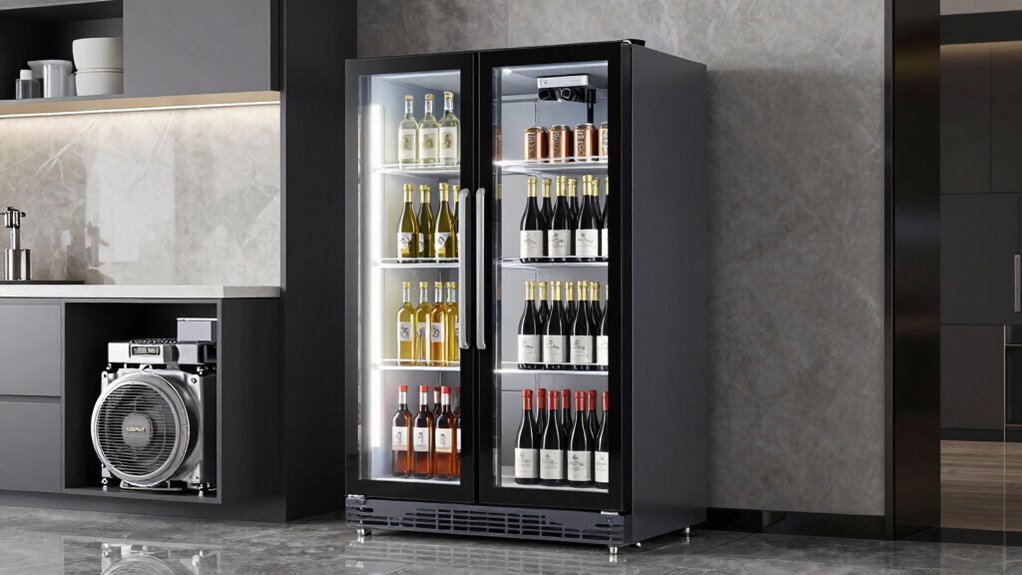
If you’re serious about preserving the quality of your drinks, investing in a wine or beverage fridge is one of the smartest choices you can make. One of the key factors to consider when choosing between compressor and thermoelectric cooling is how each system impacts temperature stability and energy efficiency. Your fridge’s ability to maintain a consistent temperature directly influences the taste and longevity of your beverages. Compressor-based units excel at this, as they can handle larger temperature fluctuations and maintain precise settings even in warm or variable environments. This means your wine or drinks stay at a steady temperature, ensuring ideal flavor and preservation. Thermoelectric fridges, on the other hand, tend to be less effective at maintaining a stable temperature over time, especially if the ambient temperature rises markedly. They are more sensitive to external heat, which can cause fluctuations that might compromise your drinks’ quality. Additionally, understanding the cooling mechanisms involved can help you select the best fridge for your needs. Energy efficiency is another critical consideration. Thermoelectric fridges generally consume less power, making them a more eco-friendly and cost-effective option for small-scale use. They generate less heat, which means they don’t require the same level of cooling power as compressor models. This can translate into lower electricity bills and a smaller environmental footprint. However, their energy efficiency diminishes in hotter environments or when used to store larger quantities of drinks. Compressor fridges, while typically more power-hungry, are designed with robust cooling systems that adapt well to different conditions. They can maintain a consistent temperature with less fluctuation, making them suitable for more serious wine collectors or those storing large quantities of beverages. Over time, their durability and ability to handle temperature stability in various environments can justify the higher energy consumption.
As an affiliate, we earn on qualifying purchases.
Frequently Asked Questions
Which Fridge Type Is More Energy-Efficient for Long-Term Use?
You’ll find that thermoelectric wine and beverage fridges are more energy-efficient for long-term use, thanks to their lower energy consumption. They don’t rely on compressors, which means less power is used overall, making them more cost-effective in the long run. However, if you need a fridge that maintains consistent temperatures and handles larger loads, a compressor fridge might be more suitable despite its higher energy use.
Can Thermoelectric Fridges Effectively Cool Wines in Hot Climates?
In hot climates, thermoelectric fridges struggle to effectively cool wines due to limited solar efficiency and heat dissipation. You might notice higher temperatures inside, which can compromise your wine’s quality. While they offer aesthetic considerations and are quiet, their cooling power diminishes in direct sunlight or high ambient temperatures. For consistent cooling, especially in hot environments, a compressor-based fridge is a more reliable choice.
Are Compressor Fridges Noisier Than Thermoelectric Models?
Yes, compressor fridges are noisier than thermoelectric models due to their mechanical parts and cooling mechanisms. The noise levels in compressor units can be noticeable, especially in quiet environments, because they rely on a compressor motor that cycles on and off. Thermoelectric fridges operate quietly because they use solid-state technology, which has no moving parts. If you want a quieter option, thermoelectric models are generally better suited.
How Do Maintenance Requirements Differ Between Compressor and Thermoelectric Fridges?
You’ll find that maintenance differs between compressor and thermoelectric fridges. With compressor models, you need to follow regular cleaning routines to prevent dust buildup and guarantee proper airflow, plus occasionally replace components like the compressor or filters. Thermoelectric fridges typically require less maintenance, mainly cleaning the exterior and ensuring vents stay clear. You won’t usually need component replacements, making thermoelectric models more convenient for low-maintenance use.
Which Fridge Type Offers Better Temperature Stability for Wine Preservation?
You want perfect wine preservation, but which fridge offers better temperature stability? Compressor fridges excel here, maintaining consistent temperatures despite temperature fluctuations and offering superior humidity control. They respond quickly to changes, ensuring your wine stays in ideal condition. Thermoelectric models, on the other hand, may struggle with temperature swings, risking spoilage. So, if stability is your priority, a compressor fridge is your best choice to keep your wine safe and perfect.
Conclusion
Choosing between compressor and thermoelectric wine and beverage fridges is like picking the perfect paintbrush for your masterpiece. Compressor units offer powerful cooling, ideal for larger collections, while thermoelectric models are quieter and more energy-efficient, perfect for casual use. Think of your fridge as the heartbeat of your space—pick the right one, and it’ll keep your drinks perfectly chilled, like a gentle breeze on a warm day. Your ideal fridge awaits to elevate your beverage game.
Columbus Day / Indigenous Peoples' Day Picks
long weekend sales
As an affiliate, we earn on qualifying purchases.