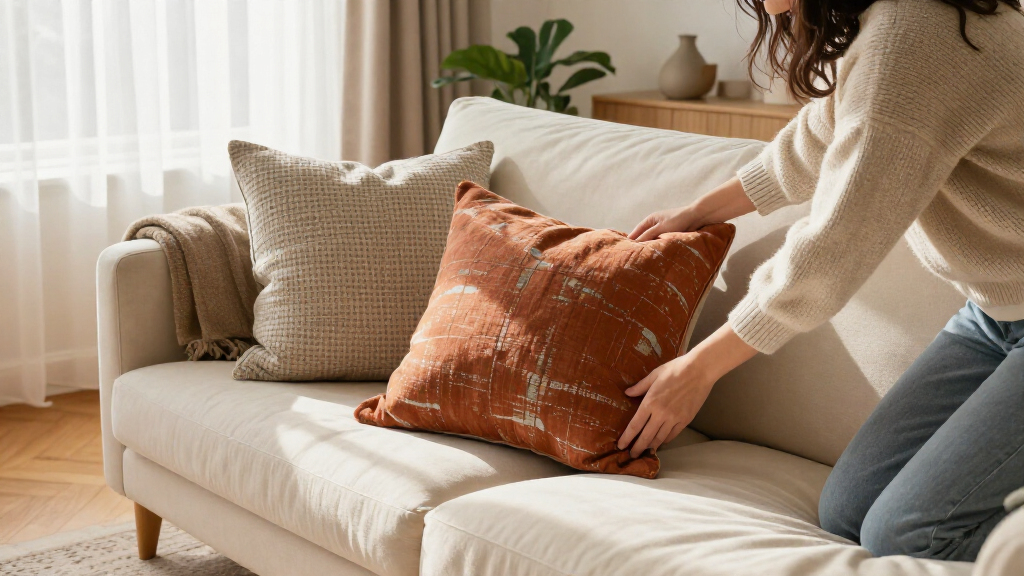

Choose and fit decorative throw pillow covers that match your pillow inserts and work with your room’s colors, textures, and everyday use. This guide is for beginners refreshing a sofa, bed, chair, or other seating area without replacing the inserts. Set aside about 30-45 minutes to measure, compare fabrics and colors, fit the covers, and adjust the final arrangement.

Get decor and gifts delivered free with Prime
- Fast, free delivery on millions of items
- Prime Video, Amazon Music and more included
- Member-only deals all year

MIULEE Blue Chenille Throw Pillow Covers, 18 x 18 Inches, Set of 4
- ✔ Material: 100% polyester chenille
- ✔ Color: Blue tones
- ✔ Pattern: Plain
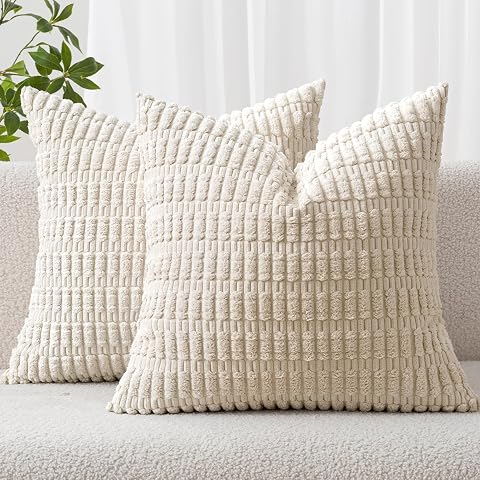
MIULEE Cream White Corduroy Throw Pillow Covers, 18 x 18 Inches, Pack of 2
- ✔ Material: 100% polyester corduroy
- ✔ Color: Cream white
- ✔ Pattern: Striped

MIULEE Olive Green Chenille Throw Pillow Covers, 18 x 18 Inches, Set of 2
- ✔ Material: 100% polyester chenille
- ✔ Color: Olive green
- ✔ Pattern: Plain
Difficulty: Beginner | Time: 30-45 minutes
What You’ll Need
Tools & Materials:
- Pillow inserts
- Soft tape measure or ruler
- Decorative pillow covers
- A clean, flat surface
Knowledge:
- Basic ability to measure and compare colors or fabrics
Check the care label on each cover before washing or ironing. If you are buying covers, measure the inserts you plan to use; advertised cover dimensions may describe the fabric laid flat, and sizing conventions can vary by maker.
MIULEE Blue Chenille Throw Pillow Covers, 18 x 18 Inches, Set of 4
When we want to change the look of several pillows together, the Blue Chenille Set of 4 offers the most coverage in this lineup. Its coordinated blue tones and plain pattern are easier to combine across a sofa or bed than the Cream White Corduroy pair, which makes a more noticeable statement through its stripes. The heavyweight polyester chenille is described as soft with a velvety feel, so it brings texture without adding a strong motif.The larger set is useful when we have four inserts ready, but it can be more than we need for a chair or a small accent. Like the other two options, it does not include pillow inserts, and handmade sizing can vary by 1–2 cm. Its care instructions are comparatively convenient: machine wash cold on gentle and tumble dry low. That makes it more practical to maintain than the Olive Green set, which excludes tumble drying. We should still avoid bleach and ironing, and expect blue tones to look somewhat different under changing light.
Pros:
- Set of four refreshes more pillows at once.
- Heavyweight polyester chenille has a soft, velvety feel.
- Hidden zippers keep the finish discreet.
- Gentle machine washing and low tumble drying are permitted.
Cons:
- Pillow inserts are not included.
- Handmade sizing may vary by 1–2 cm.
- Blue tones may look different across screens and lighting.
Best for: We want coordinated covers for several 18 x 18-inch sofa or bed pillows and prefer plain chenille in blue tones.
Not ideal for: We need only one or two covers, want a distinct stripe or pattern, or need covers that include inserts.
Bottom line: For a coordinated update across several pillows, this set gives us the broadest coverage and the most manageable care routine in the lineup.
“For a coordinated update across several pillows, this set gives us the broadest coverage and the most manageable care routine in the lineup.”
MIULEE Cream White Corduroy Throw Pillow Covers, 18 x 18 Inches, Pack of 2
The Cream White Corduroy pair is the most visually distinctive option here. Its striped boho design gives a sofa or bed a stronger texture cue than the plain blue and olive chenille covers, so we can use it when a neutral accent should still draw the eye. The cream shade can also sit comfortably alongside other colors, although screen and room lighting may affect how white it appears.Compared with the Blue Chenille set, this pair covers fewer pillows, so it suits a targeted accent rather than a full coordinated refresh. Its soft polyester corduroy has a different look from chenille’s plush surface: the ribbed stripes make the texture more apparent. The hidden zipper supports easy insertion and removal, and the covers can be hand washed or machine washed gently, with low tumble drying allowed. We should account for the 1–2 cm possible size variation and the fact that inserts are not included; avoid ironing per the care guidance.
Pros:
- Striped corduroy gives the covers more visible pattern and texture.
- Cream white is a flexible neutral accent.
- Hidden zipper makes covers easier to remove and insert.
- Gentle machine washing and low tumble drying are allowed.
Cons:
- Pillow inserts are not included.
- Hand-cutting and sewing may cause 1–2 cm size variation.
- The cream color may shift in appearance with lighting or screen settings.
Best for: We want two neutral covers with a visible striped texture for accent pillows on a sofa, bed or chair.
Not ideal for: We need four coordinated covers, prefer a plain chenille finish, or expect exact dimensions and color across different lighting.
Bottom line: Choose this pair when a subtle neutral palette needs more surface character than the plain chenille sets provide.
“Choose this pair when a subtle neutral palette needs more surface character than the plain chenille sets provide.”
MIULEE Olive Green Chenille Throw Pillow Covers, 18 x 18 Inches, Set of 2
For a restrained color change, the Olive Green Chenille pair brings a grounded accent without the bolder striped surface of the cream corduroy covers. Its plain chenille texture keeps the look quieter, while olive green adds more color than the blue set’s softer tonal range may suit for some rooms. This set also has construction details that distinguish it from the other chenille option: reinforced seams and a color-matched invisible zipper.Those details make it a considered pick for two accent pillows, but not the most convenient choice for anyone who wants the simplest laundry routine. Unlike the four-cover blue set, it is a smaller pair, and its care instructions say to avoid tumble drying and ironing. Gentle hand or machine washing is recommended. We should also remember that the inserts are separate and that the color can vary with lighting. Pick this set for its olive tone and reinforced seams; skip it if faster drying or a larger coordinated set matters more.
Pros:
- Soft chenille adds a plush, dimensional texture.
- Reinforced seams add a useful construction detail.
- Color-matched invisible zipper keeps the closure visually coordinated.
- Olive green offers a distinct earth-toned accent.
Cons:
- Pillow inserts are not included.
- Tumble drying and ironing are excluded from the care instructions.
- Color may vary under different lighting or screen settings.
Best for: We want two plain, plush chenille covers in olive green, with reinforced seams and a coordinated zipper.
Not ideal for: We need four covers, want a striped pattern, or rely on tumble drying for laundry convenience.
Bottom line: This pair suits a focused olive accent where seam reinforcement matters more than a low-effort drying routine.
“This pair suits a focused olive accent where seam reinforcement matters more than a low-effort drying routine.”
As an Amazon Associate we earn from qualifying purchases.
Before You Start
Gather the inserts and covers in one place. If the covers are new, check their labels for washing instructions before removing tags or laundering them. Keep pets, food, and drinks away from the work surface while you fit light-colored or delicate fabric. Plan the arrangement around how the seating area is used: pillows for a frequently used sofa need easy-care covers that are comfortable to lean against.
Step-by-Step Instructions
Step 1: Measure each pillow insert
Lay each insert flat and measure from seam to seam across its width and height. Record both measurements, and note the insert’s shape and thickness. Measure the insert rather than an old cover, since a stretched or undersized cover may not reflect the insert’s actual size.
Tip:If an insert is plump, gently compress it only enough to reach the seams; do not measure across a deep crease.
Check: You have a width and height for every insert, along with a note of any unusual shape or thickness.
Step 2: Choose a cover size and closure
Compare the insert measurements with the cover maker’s sizing guidance. For a tailored, full look, many people choose a cover about 1-2 inches smaller than the insert in both dimensions, but follow the maker’s guidance because fabrics and construction differ. Select a closure that suits your use: a hidden zipper gives a clean edge and easy removal, while an envelope closure avoids zipper hardware.
Tip:Check whether the stated size refers to the finished cover or the cut fabric. If the listing is unclear, ask the seller before ordering.
Check: The chosen cover is intended to fit your measured insert, and you know how it opens for removal.
Step 3: Match fabric to the room and routine
Choose a fabric that suits where the pillow will sit and how it will be used. Cotton and linen blends offer a relaxed look; velvet adds a plush surface; woven or textured fabrics add visual depth. For a high-use sofa or a home with children or pets, favor a removable, washable cover with a care label you can follow. Check the fabric in daylight if possible, since color can look different under warm lamps.
Tip:For sensitive skin or frequent lounging, consider how the fabric feels against your face and arms, not only how it looks.
Check: The fabric’s care needs and feel fit the pillow’s location and expected use.
Step 4: Plan a coordinated color and pattern mix
Pick one or two colors already present in the room, such as a rug, curtains, artwork, or upholstery. Build a small group around them with a mix of solids, patterns, and textures. For example, pair a larger patterned cover with a solid cover and a smaller textured accent. Vary pattern scale so that two busy designs do not compete at the same distance.
Tip:Lay fabric samples or covers beside the sofa in natural light before committing. A color that looks similar on a screen may read brighter or duller in the room.
Check: The covers share at least one color or visual element, while their patterns and textures remain easy to distinguish.
Step 5: Prepare the covers
Read each care label and remove packaging or loose tags. Wash a cover only if its label allows it, using the recommended water temperature and drying method. Close zippers before washing when instructed, and avoid mixing a new dark cover with light textiles if colorfastness is unknown. Smooth wrinkles according to the label before fitting.
Tip:Do not assume that every cover can be machine-washed or tumble-dried. Heat can shrink fabric or damage decorative trims.
Check: Each cover is clean and dry if washed, free of packaging, and ready to fit without visible care-label warnings being ignored.
Step 6: Insert the pillow without straining the seams
Open the cover fully and turn it partly inside out if that makes the corners easier to reach. Hold the insert by two corners, guide those corners into the far corners of the cover, then work the remaining corners into place. Ease the fabric around the insert a little at a time and close the zipper or envelope flap without forcing it.
Tip:If you must pull hard to close the cover, stop. The cover may be too small, the insert may be overfilled, or the corners may not be seated.
Check: The cover closes without excessive force, the insert fills the corners, and the seams lie flat without pulling.
Step 7: Shape and arrange the pillows
Fluff each pillow and gently push the filling toward the corners. Place larger pillows toward the back or ends of the seating area, then add smaller accents in front. Step back and adjust the spacing, height, and pattern placement. Keep enough clear space for people to sit or lie down comfortably.
Tip:On a bed, arrange pillows so they can be moved easily at bedtime. On a sofa, avoid covering the seat you use most.
Check: The pillows sit upright or at a comfortable angle, the covers look smooth, and the arrangement leaves the furniture usable.
Step 8: Review the fit and care information
Inspect the finished pillows from the front and sides. Check corners, seams, closures, and any decorative trim. Keep the care labels or product information where you can refer to them, and note which covers need gentle cleaning or professional care.
Tip:Rotate pillows occasionally so a sunny window or frequent seat does not fade or wear one cover more quickly than the others.
Check: Every cover is fully closed, sits evenly on its insert, and has a clear care plan.
Common Mistakes to Avoid
- Buying a cover based on the old cover’s size instead of the insert. — Measure each insert seam to seam and compare those measurements with the maker’s sizing guidance before buying.
- Choosing fabric based only on its appearance. — Check the care label and feel the material, especially for pillows used daily or in a home with children or pets.
- Forcing an insert into a cover that is too small. — Seat the corners gradually and stop if the zipper or seams strain. Recheck the measurements and use a better-fitting cover.
- Mixing patterns that compete or colors that clash in the room. — Repeat one or two room colors, vary pattern scale, and compare the covers in the room’s natural light.
Troubleshooting
Problem: The cover will not close around the insert.
Solution: Open it fully and reseat all four corners. If the fabric still pulls or the zipper strains, check the insert and cover measurements; use a larger cover or a smaller insert rather than forcing the closure.
Problem: The corners look empty or floppy.
Solution: Push the insert firmly into each cover corner and fluff the filling back toward the edges. If the insert remains too small for the cover, try a larger insert or a smaller cover that matches the maker’s sizing advice.
Problem: The cover wrinkles after fitting.
Solution: Smooth the fabric from the center toward the corners and reshape the insert. If creases remain, follow the label’s ironing or steaming instructions; avoid direct heat on delicate fabric.
Problem: The color looks different from the listing.
Solution: Compare the cover in daylight and under the room’s usual lighting. If it still does not work with the room, check the seller’s return terms and exchange it for a shade that repeats an existing room color.
What Success Looks Like
The finished covers fit their inserts without strained seams, sit evenly at the corners, and close fully. Their colors and textures relate to the room, the arrangement leaves seating usable, and each cover’s cleaning instructions are understood. The result should look intentional from across the room and feel comfortable when used.
Next Steps
Use the covers normally, then inspect them after the first few days for shifting, loose threads, or color transfer. Follow the care label when cleaning and rotate the pillows from time to time to spread wear and sun exposure. When the room changes or a cover wears out, repeat the measuring and color-matching process before buying a replacement.
Frequently Asked Questions
Should a throw pillow cover be smaller than the insert?
A slightly smaller cover can create a full, tailored look, but the right amount depends on the fabric, construction, and maker’s sizing guidance. Compare both measurements before choosing a size, and do not force an insert into a cover that strains its seams.
Can I use a square cover on a rectangular insert?
Use a cover shaped for the insert when possible. A square cover on a rectangular insert can bunch or leave gaps, while a rectangular cover on a square insert can distort the corners.
How many decorative pillows should I put on a sofa?
Start with a few pillows that leave the seats comfortable to use. Add or remove pillows based on the sofa’s size and how much seating space you want to keep clear; there is no fixed number that suits every room.
How often should I wash decorative pillow covers?
Follow the care label and clean covers when they become visibly soiled or need freshening. High-use pillows may need cleaning more often than decorative pillows that are rarely touched. Let covers dry as directed before putting them back on the inserts.