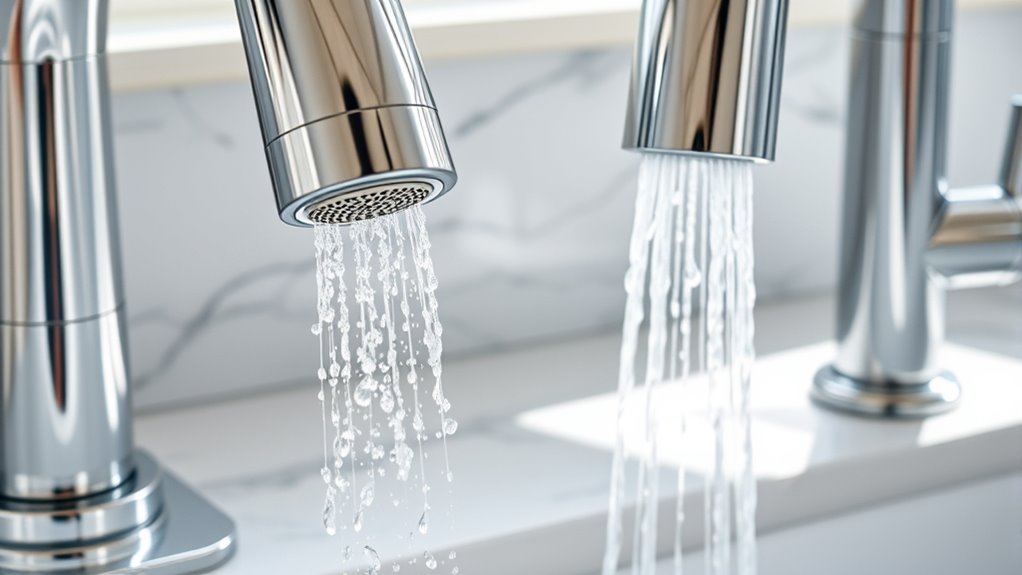

When selecting water-saving faucets, focus on flow rates of 1.5 GPM or lower to reduce water use without sacrificing performance. Aerators are key, as they mix air into the water stream to maintain pressure while cutting consumption. Choose faucets made from durable, eco-friendly materials for long-lasting use. Easy installation and compatibility with your sink are also important. Keep these tips in mind to optimize efficiency—more details can help you make the best choice.

Get decor and gifts delivered free with Prime
- Fast, free delivery on millions of items
- Prime Video, Amazon Music and more included
- Member-only deals all year
Key Takeaways
- Choose faucets with flow rates of 1.5 GPM or less to reduce water consumption without sacrificing performance.
- Ensure aerators are certified to effectively mix air and water, maintaining pressure while conserving water.
- Opt for eco-friendly materials like stainless steel or recycled components for durability and sustainability.
- Follow proper installation steps, including sealing threaded connections, to maximize efficiency and prevent leaks.
- Select modern designs that incorporate efficient aerators and flow rate features for optimal water-saving performance.
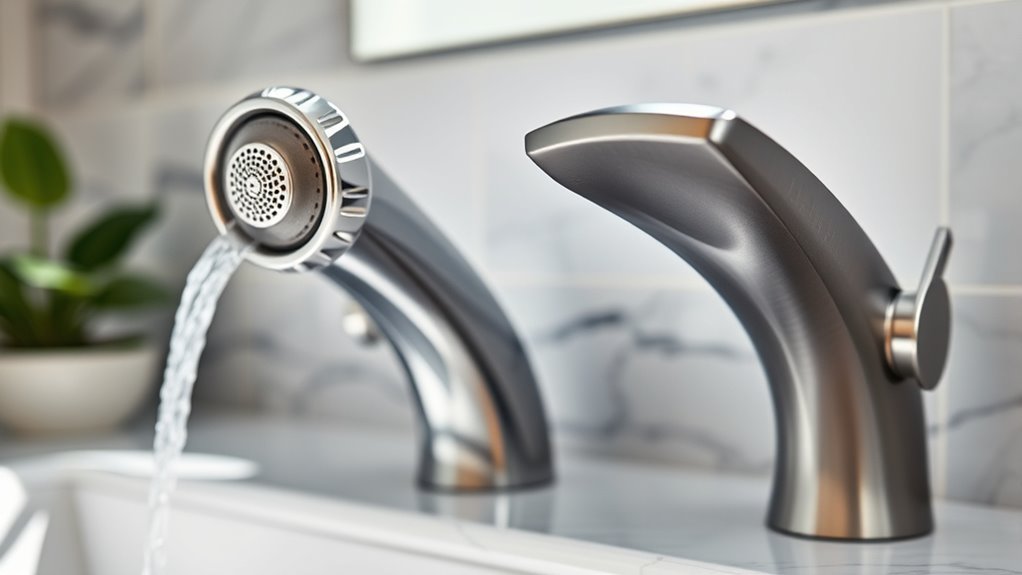
Choosing the right water-saving faucet can markedly reduce your household’s water consumption and utility bills. One of the key factors to consider is the flow rate, which determines how much water the faucet uses per minute. Low-flow faucets typically operate at 1.5 gallons per minute (GPM) or less, helping you save substantial amounts of water without sacrificing performance. When selecting a faucet, look for models with certified flow rates to guarantee efficiency. Additionally, pay attention to the aerators — small devices that mix air into the water stream — as they play a vital role in maintaining effective water flow while reducing overall usage. High-quality aerators can greatly cut down water consumption without diminishing water pressure, making your daily routines more eco-friendly.
Eco friendly materials are another essential aspect of choosing sustainable faucets. Opt for models made from durable, corrosion-resistant materials like stainless steel or brass with eco-conscious finishes. These materials tend to last longer, reducing the need for replacements and minimizing waste. Some manufacturers also produce faucets with recycled metal components or environmentally friendly coatings, further enhancing their sustainability. Selecting eco friendly materials not only benefits the environment but also guarantees you invest in a product that maintains its appearance and functionality over time.
Eco-friendly materials ensure durability and sustainability for long-lasting, environmentally conscious faucets.
When it comes to installation tips, simplicity is key. Many water-saving faucets are designed for straightforward installation, often fitting standard sink holes, which means you might be able to do it yourself without professional help. Before starting, guarantee your water supply is turned off to prevent leaks or water damage. Read the manufacturer’s instructions carefully, paying close attention to the positioning of aerators and seals. Proper installation is essential for maximum flow and water efficiency; a loose or improperly fitted aerator can cause leaks or reduce performance. Using a plumber’s tape on threaded connections can help create a more secure fit, preventing drips and maintaining water conservation efforts. Additionally, understanding the water flow rates and how they impact overall water use can lead to more informed choices and better conservation practices.
Finally, consider the overall design and compatibility with your existing fixtures. Many modern water-saving faucets are designed to complement various styles, from traditional to contemporary, making it easier to blend eco-conscious choices with your home’s aesthetic. By focusing on flow rates, aerators, eco friendly materials, and proper installation, you can select a water-saving faucet that not only conserves water but also enhances your home’s sustainability and efficiency. Making these informed choices helps you contribute to environmental preservation while enjoying reliable, efficient water use every day.
water-saving faucet with flow rate 1.5 GPM
As an affiliate, we earn on qualifying purchases.
As an affiliate, we earn on qualifying purchases.
Frequently Asked Questions
How Do I Measure My Current Faucet’s Flow Rate?
To measure your faucet’s flow rate, start with flow rate testing by placing a measuring cup under the faucet and turning it on fully. Time how long it takes to fill a specific volume, like one liter or one quart. For accurate results, clean the aerator beforehand, as mineral buildup can affect flow. Repeat the test a few times for consistency, then calculate the flow rate in gallons or liters per minute.
Are Low-Flow Faucets Suitable for All Household Uses?
Did you know that low-flow faucets can reduce water use by up to 30%? They’re generally suitable for most household plumbing needs, including kitchen and bathroom tasks. However, during heavy dishwashing or watering plants, you might find them less efficient. When considering faucet installation, check flow rates to make sure they meet your household’s needs. Low-flow faucets save water without sacrificing performance, making them a smart, eco-friendly choice for your home.
What Are the Maintenance Requirements for Aerators?
You should regularly clean your aerator to maintain ideal flow and water efficiency. Remove it and soak in vinegar to dissolve mineral buildup, then scrub gently with a brush. Doing this every few months helps extend the aerator’s lifespan and guarantees consistent performance. Proper cleaning routines prevent clogs, reduce wear, and keep your water-saving faucet functioning smoothly for years, saving you both water and money over time.
Do Water-Saving Faucets Affect Water Pressure Significantly?
Did you know that water-saving faucets can reduce water use by up to 30%? They might slightly affect water pressure, but modern faucet design minimizes this impact. Most models maintain adequate water pressure for daily tasks, thanks to optimized aerators and flow restrictors. So, while a slight dip in pressure might occur, the benefit of conserving water usually outweighs it, and you’ll still get a good flow for your needs.
Can I Retrofit Existing Faucets With Water-Saving Aerators Easily?
Yes, you can retrofit your existing faucets with water-saving aerators easily. To do this, check your faucet size and choose compatible aerators. Installation tips include turning off the water supply first and using pliers if needed. Cost comparison shows that aerators are affordable and save water over time. This simple upgrade improves efficiency without sacrificing performance, making it a smart, budget-friendly choice for conserving water.
Conclusion
By choosing water-saving faucets with the right flow rates and aerators, you’re planting seeds for a greener future. Think of these fixtures as the gentle rain that nurtures your environment, saving water without sacrificing performance. Make your choice wisely, and you’ll enjoy the benefits of a more sustainable home—like a small ripple that creates waves of positive change. Every switch to efficient fixtures is a step toward a healthier planet, one drop at a time.
Fall Picks
fall essentials
As an affiliate, we earn on qualifying purchases.