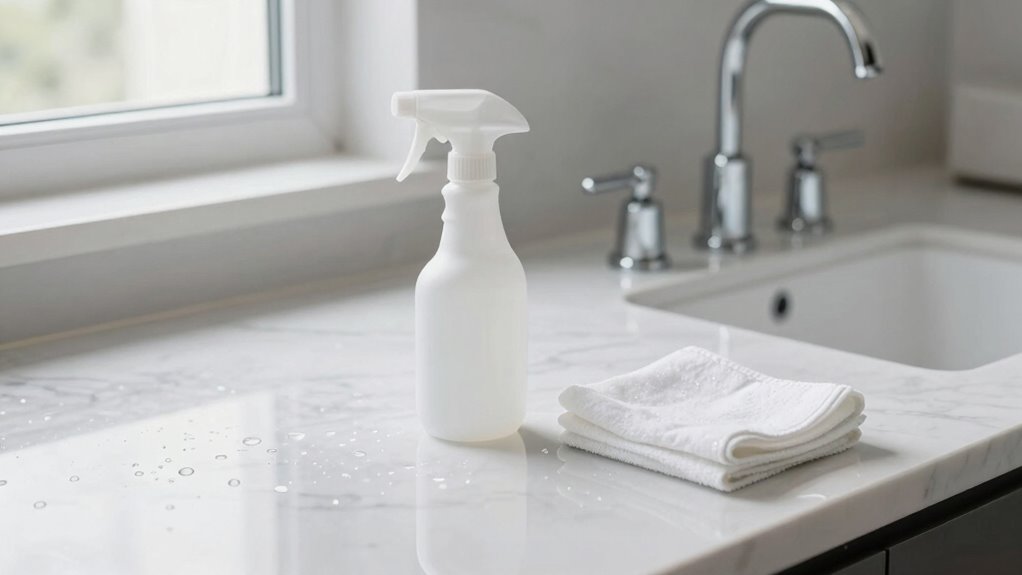

To keep high-touch surfaces cleaner without constant scrubbing, regularly disinfect them with wipes or sprays, especially after public outings or when you return home. Develop simple habits like wiping down doorknobs, light switches, and your phone daily using disinfectant cloths or sprays. Keep hand sanitizer handy and encourage others to do the same. Consistency is key, and small routine actions prevent buildup. For more tips, discover effective ways to maintain a hygienic environment with less effort.
Key Takeaways
- Regularly wipe high-touch surfaces with disinfectant wipes or sprays to prevent germ buildup.
- Use hand sanitizers after touching shared items like elevator buttons or door handles.
- Incorporate daily cleaning routines focusing on frequently touched areas without aggressive scrubbing.
- Educate household members or coworkers to maintain collective hygiene practices consistently.
- Keep portable disinfectant wipes or sprays handy for quick, on-the-spot surface disinfection.

High-touch surfaces like doorknobs, light switches, and smartphones can quickly become breeding grounds for germs if not cleaned regularly. To keep these surfaces safer without constant scrubbing, you should incorporate simple but effective habits into your routine. Hand sanitizers are a convenient tool you can use whenever you’re on the go or don’t have immediate access to soap and water. When you touch common surfaces, applying hand sanitizer with at least 60% alcohol helps kill germs quickly, reducing the risk of spreading bacteria or viruses. It’s especially useful after touching items like elevator buttons or grocery cart handles. Keep a small bottle handy in your bag or car so you can sanitize your hands frequently throughout the day.
Disinfectant wipes are another essential item for maintaining cleanliness without the hassle of deep cleaning every day. These wipes are pre-moistened with cleaning solutions that effectively eliminate germs on contact, making them perfect for quick surface disinfection. When you return home or arrive at work, wipe down high-touch areas like door handles, light switches, and your phone. This simple step *considerably* decreases microbial presence without the need for scrubbing or using harsh cleaning agents. Disinfectant wipes are portable, easy to use, and ideal for regular touch-ups, especially in busy environments.
In addition to using hand sanitizers and disinfectant wipes, developing a habit of quick, targeted cleaning can go a long way. For instance, dedicate a few minutes each day to wiping down frequently touched surfaces with a disinfectant cloth or spray. You don’t need to scrub vigorously; a gentle wipe that covers all surfaces is sufficient. Remember to focus on areas you touch often, like tabletops, remote controls, and keyboard keys. This ongoing maintenance prevents the buildup of germs and keeps your environment safer. Incorporating proper cleaning techniques can further enhance your efforts and ensure surfaces are effectively disinfected. Regularly practicing microbial control can also help in reducing the overall microbial load in your environment. Additionally, understanding how germs spread can help you identify the most critical surfaces to prioritize cleaning. Developing awareness of infection transmission methods can help you implement more targeted cleaning strategies. Being mindful of hygiene habits and staying informed about germ transmission can significantly improve your cleaning effectiveness.
Another smart strategy is to educate everyone around you to do the same. Encourage family members or coworkers to use hand sanitizers after touching shared surfaces and to wipe down items regularly. This collective effort creates a healthier space and reduces the chance of germs spreading. *Finally*, consider setting reminders or establishing routines, such as disinfecting your phone first thing in the morning or after leaving a public space. These small, consistent actions help maintain cleanliness and minimize the need for intensive cleaning sessions. By combining hand sanitizers, disinfectant wipes, and good habits, you can keep high-touch surfaces cleaner without constantly scrubbing, making your environment safer and more hygienic every day.
disinfectant wipes for high-touch surfaces
As an affiliate, we earn on qualifying purchases.
As an affiliate, we earn on qualifying purchases.
Frequently Asked Questions
How Often Should High-Touch Surfaces Be Cleaned?
You should clean high-touch surfaces daily, especially in busy areas, to prevent germs from spreading. The cleaning schedule depends on surface materials—plastic and metal need regular disinfection, while wood may require gentler methods. For high-traffic spots, consider cleaning multiple times a day. Consistent cleaning not only reduces bacteria but also maintains a healthier environment, making it easier to keep surfaces cleaner without constant scrubbing.
Are DIY Cleaning Solutions Effective for High-Touch Areas?
DIY disinfectants can be quite effective for high-touch areas if you use the right natural cleaning agents like vinegar, lemon juice, or hydrogen peroxide. Think of your DIY solutions as a gentle but reliable shield—capable of wiping away germs without harsh chemicals. While they might not replace commercial disinfectants in all cases, when used correctly, DIY cleaning solutions offer a safe and budget-friendly way to maintain cleanliness and reduce germs.
What Materials Are Safest for Cleaning Different Surfaces?
You should prioritize safe material selection and surface compatibility when choosing cleaning materials. Use gentle, non-abrasive cleaners like diluted vinegar or mild soap for delicate surfaces such as glass or polished metal. For plastic or painted surfaces, opt for alcohol-based wipes or solutions that won’t cause discoloration or damage. Always check manufacturer guidelines and test a small area first to make sure your cleaning method won’t harm the material.
Can Natural Disinfectants Replace Commercial Cleaners?
Yes, natural disinfectants can substitute for commercial cleaners for many high-touch surfaces. Eco-friendly alternatives like vinegar, hydrogen peroxide, and lemon juice are effective chemical-free disinfectants that kill germs without harsh chemicals. You can use these natural options regularly to keep surfaces clean and safe. Just guarantee proper dilution and contact time to maximize their disinfectant properties, making your cleaning routine safer for you and the environment.
How Do I Prevent Germs From Spreading on High-Touch Surfaces?
Ever wonder how you can stop germs from spreading? You should regularly disinfect high-touch surfaces to prevent surface contamination and reduce germ transmission. Use a reliable disinfectant and wipe down frequently-touched areas like doorknobs, light switches, and smartphones. Hand hygiene is essential, too—wash your hands often and avoid touching your face. These simple steps create a barrier against germs, helping keep your environment safer and healthier.
Conclusion
By incorporating simple daily habits, you can keep high-touch surfaces cleaner without turning into a perpetual scrubber. Think of these surfaces as the front door to your home’s health—treat them with regular care, and they’ll welcome guests without spreading germs. With just a little effort, you’ll prevent germs from taking hold, making your space a fortress of cleanliness. Remember, a little prevention goes a long way—like watering a plant to keep it thriving.