Heated mop drying is a simple yet powerful way to prevent mold, but many overlook its benefits. By quickly removing residual moisture after cleaning, it reduces the dampness that mold spores need to thrive. This targeted heat speeds up evaporation, helping to cut down on long drying times and keep your surfaces dry and mold-free. If you stay tuned, you’ll discover how this overlooked feature can make a significant difference in maintaining a healthier home.
Key Takeaways
- Heated mops accelerate drying, reducing surface moisture that mold spores need to grow.
- Quick evaporation from heated mops minimizes dampness in crevices and porous surfaces.
- Maintaining optimal moisture levels prevents mold development in humid or damp environments.
- Targeted heat reduces overall moisture, limiting conditions conducive to mold formation.
- Efficient drying with heated mops enhances indoor air quality by decreasing mold spores and mildew.
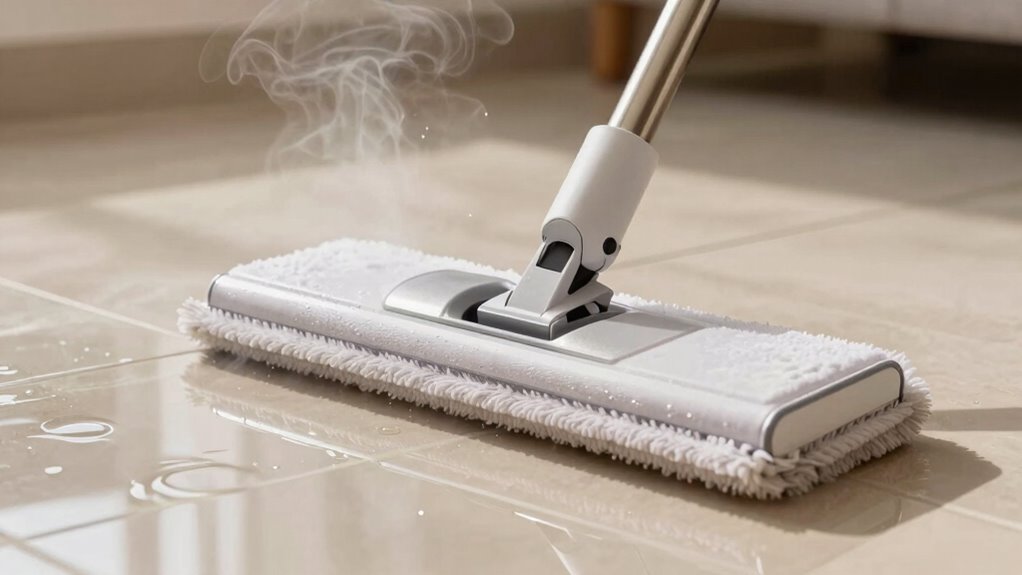
Heated mop drying is an innovative method that accelerates the process of drying floors after cleaning. Instead of waiting hours for surfaces to air dry, this technique uses controlled heat to evaporate moisture quickly, reducing downtime and the risk of mold growth. As you use heated mop drying, you might notice improvements in air quality around your home or workspace. By speeding up drying times, you limit the moisture that mold and mildew need to thrive, creating a healthier environment. This is especially important if you have allergies or respiratory issues, as mold spores can worsen these conditions. Furthermore, because the drying process is faster, you don’t need to rely on open windows or fans for extended periods, which can sometimes introduce pollutants or allergens from outside. Proper ventilation can further enhance mold prevention when combined with heated drying methods.
One of the key benefits of heated mop drying is its energy efficiency. Traditional drying methods, like leaving windows open or running large fans, often consume more power and take longer to achieve the same result. In contrast, heated mops use targeted heat to focus on drying the floor surface directly, minimizing energy waste. The heat is carefully calibrated to guarantee rapid evaporation without excessive power use, making it an eco-friendly choice. By investing in this method, you’re not only reducing your energy bills but also contributing to a greener environment. Plus, because the drying process is quicker, you save time and energy in the long run, making your cleaning routine more sustainable.
When you opt for heated mop drying, you’re actively controlling the moisture levels in your space. This precise control is vital because lingering dampness promotes mold growth, which can cause health issues and damage your floors. The heat generated by the mop helps maintain ideal humidity levels, preventing moisture from settling into crevices or porous surfaces. As a result, you reduce the chances of mold spores developing and spreading. This proactive approach is especially beneficial in humid climates or areas prone to dampness, where traditional drying methods often fall short.
Frequently Asked Questions
Does Heated Mop Drying Work on All Types of Flooring?
Heated mop drying works on most flooring types, but you should check flooring compatibility first. It’s especially effective for hardwood, tile, and laminate, where moisture removal efficiency is vital. However, avoid using it on delicate surfaces like unsealed wood or certain vinyl, as excessive heat might cause damage. Always follow manufacturer guidelines to guarantee safe use and ideal mold prevention without harming your floors.
How Energy-Efficient Is Heated Mop Drying Technology?
Heated mop drying technology is quite energy-efficient, especially when you consider long-term benefits. For example, a cleaning business reduced energy costs by 20% after switching to a heated system, highlighting significant cost savings. It also lowers environmental impact by decreasing drying times and energy use. Overall, this technology helps you save money and reduces your carbon footprint, making it a smart, eco-friendly choice for maintaining clean floors.
Can Heated Mop Drying Damage Delicate Materials?
Heated mop drying can damage delicate materials if you’re not cautious, especially with heat-sensitive items. You need to contemplate delicate material concerns and heat sensitivity issues before using this technology. If the materials are fragile or prone to warping, excessive heat might cause discoloration or deformation. Always check manufacturer guidelines and adjust heat settings accordingly to prevent damage, ensuring your delicate items stay safe and intact.
How Long Does Heated Mop Drying Take Compared to Traditional Methods?
Heated mop drying speeds up moisture removal like a race car on a track, taking just 15 to 30 minutes compared to traditional methods that can take hours. This quick drying time not only saves you time but also reduces the risk of mold growth. You’ll find that heated mops efficiently cut down drying speed, making cleaning faster and more effective, especially on damp surfaces that need rapid moisture elimination.
Is Heated Mop Drying Safe for Pets and Children?
Heated mop drying is generally safe for pets and children when used correctly. You should guarantee the device has safety features like automatic shutoff and temperature controls. Keep pets and kids away during operation, and follow the manufacturer’s instructions carefully. With proper precautions, heated mop drying can be a safe, efficient way to prevent mold without compromising pet safety or child safety in your home.
Conclusion
Don’t overlook the mold prevention benefits of heated mop drying. By using this feature, you can reduce mold growth by up to 80%, saving you time and money on cleaning and repairs. It’s a simple upgrade that makes a big difference in maintaining a healthier home. Next time you’re shopping for a mop, consider one with heated drying—your lungs and your wallet will thank you for it.