
Dust can hide in surprising spots around your home that you often overlook. You might forget to check inside your air vents, under kitchen appliances, or behind bookshelves. Even ceiling fan blades and window frame crevices trap dust when you least expect it. Don’t forget about underneath your bed or around indoor plants, where dust can quietly build up. Stay tuned to uncover more sneaky dust hideouts you might never have considered.
Key Takeaways
- Dust can accumulate inside air vents and ductwork, often overlooked during regular filter replacements.
- Hidden behind bookshelves and in narrow window frame crevices, where dust quietly builds up over time.
- Light fixtures and lampshades can harbor thick dust layers that reduce brightness and air quality.
- Underneath appliances like refrigerators, ovens, and small kitchen gadgets, often neglected during routine cleaning.
- Inside ceiling fan blades and motor vents, where dust easily collects and spreads throughout the home.
Inside Your Air Vents
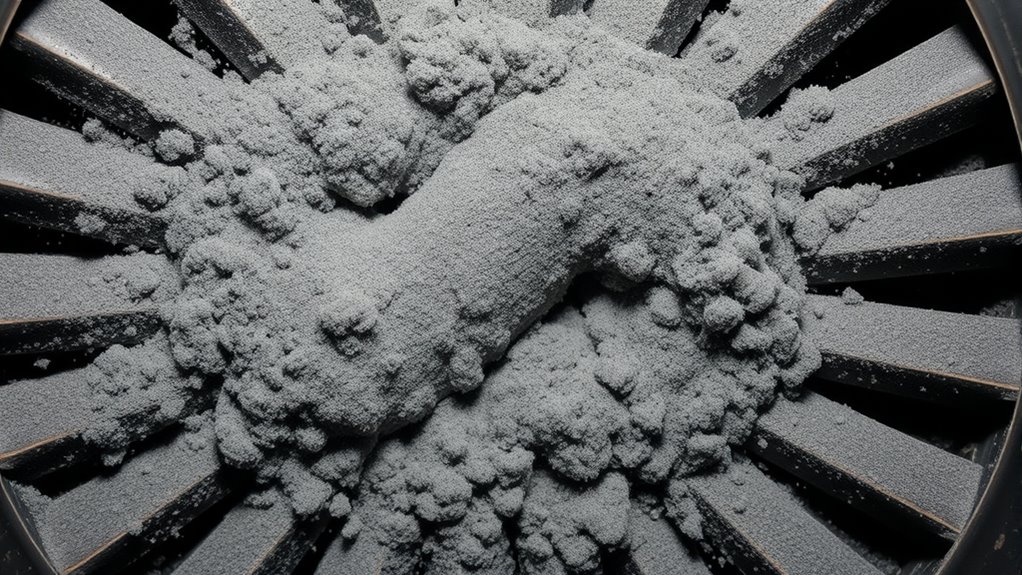
Air vents are common hiding spots for dust because they’re often overlooked during cleaning. Dust accumulates inside air vent filters, which trap particles but can become clogged if not regularly replaced or cleaned. When filters aren’t maintained, dust and allergens circulate through your home, reducing air quality. Duct cleaning is essential to remove built-up dust inside your HVAC system, including those hidden in the vents. If you neglect this, dust can settle deep within the ductwork, making it harder to remove later. Regularly replacing air vent filters and scheduling duct cleaning helps prevent dust buildup, improving indoor air quality and overall cleanliness. Proper filter maintenance is crucial for keeping dust and allergens at bay. Don’t forget: a clean air vent means fresher, healthier air circulating throughout your home.
Underneath Kitchen Appliances
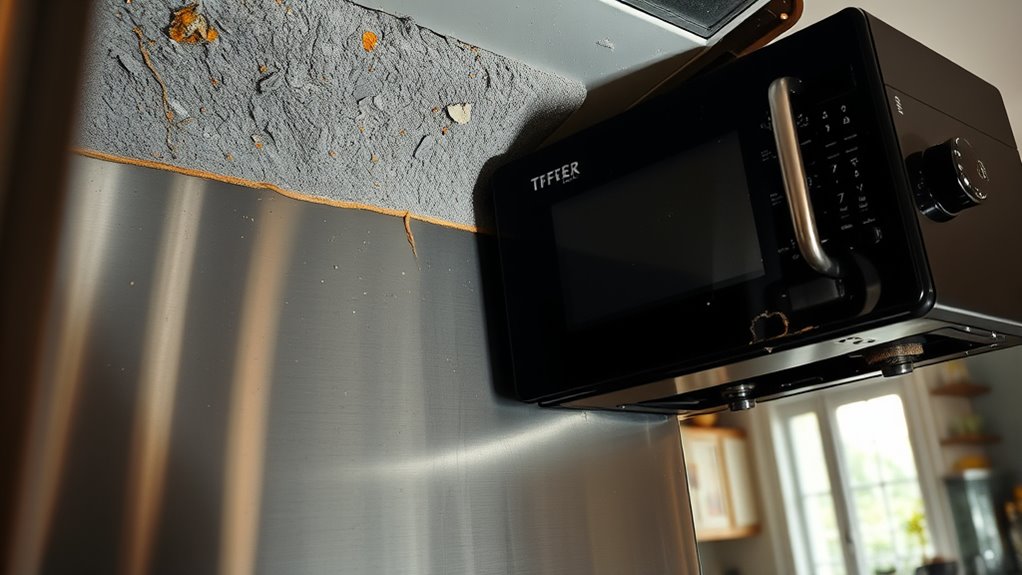
Dust often hides underneath kitchen appliances because it’s easy to overlook this area during regular cleaning. Neglecting this spot can lead to significant appliance dust buildup, affecting kitchen hygiene and appliance performance. To maintain proper kitchen appliance maintenance, check beneath appliances regularly. Here are four areas to focus on:
Dust hiding beneath appliances can impact hygiene and performance; regular cleaning is essential.
- Refrigerator and stove legs – wipe and vacuum these to prevent dust accumulation.
- Underneath microwave and oven – dirt can gather here, affecting operation.
- Behind dishwasher and refrigerator – dust and debris can hide in these tight spaces.
- Underneath small appliances – blender, toaster, and coffee maker bases often collect debris unnoticed. Regular cleaning of these areas can also help reduce dust buildup, which is beneficial for overall home air quality.
Cleaning underneath kitchen appliances helps reduce dust buildup and prolongs their lifespan. Regular attention ensures a cleaner, healthier kitchen environment.
The Top of Ceiling Fans

The top of your ceiling fan can hide a surprising amount of dust that you might overlook. This buildup can affect your home’s air quality and make your space feel less clean. Regularly wiping it down is easy and helps keep dust from circulating in your home. Using an air purifier with HEPA filters can further improve indoor air quality by capturing airborne particles that settle on surfaces.
Since ceiling fans are often mounted high and out of sight, they tend to gather a surprising amount of dust without you noticing. This hidden dust buildup can worsen dust allergy triggers and complicate air purifier maintenance. To keep your home healthier, pay attention to these areas:
- Blades and fan housing, where dust settles quickly.
- Motor vents, which trap airborne particles.
- Light fixtures attached to the fan, often overlooked.
- Remote controls and pull chains, collecting dust easily.
- The ventilation system, which can harbor dust that circulates throughout your home.
Regular cleaning of these spots minimizes dust accumulation and reduces allergen exposure. Neglecting this area can turn your fan into a dust reservoir, impacting air quality. Staying vigilant with these hidden spots helps keep your environment cleaner and more breathable.
Impact on Air Quality
Have you ever considered how the top of your ceiling fan can impact the air you breathe? Dust buildup here can release airborne allergens every time the fan spins, reducing indoor air quality. This dust contains particles that can aggravate allergies and affect respiratory health, especially for sensitive individuals. Keeping the fan blades clean minimizes these airborne irritants. Regular cleaning also helps prevent the accumulation of dust particles, which can be difficult to remove once they settle.
Easy Cleaning Tips
Cleaning the top of your ceiling fan doesn’t have to be complicated or time-consuming. With a few simple steps, you can keep dust from accumulating and improve air quality. First, turn off the fan and use a sturdy ladder or step stool. Then, follow these DIY cleaning tips:
- Use a microfiber cloth or pillowcase to wipe blades, trapping dust without spreading it.
- Attach a vacuum maintenance brush to your vacuum cleaner for quick dust removal.
- For stubborn grime, lightly dampen your cloth with a mild cleaner.
- Regularly clean the fan’s motor and mounting area with a dry cloth to prevent dust buildup.
- Performing routine Volkswagen Tuning upgrades can help reduce dust and debris buildup in your home by improving your HVAC system’s efficiency.
These easy tips keep your fan clean and help you maintain a dust-free environment with minimal effort.
Between the Couch Cushions

Your couch cushions can hide more than just comfort; they trap snack crumbs, pet hair, and dust mites. Over time, these hidden debris can worsen allergies and attract pests. Regularly cleaning between the cushions keeps your home healthier and dust-free. Incorporating vertical storage solutions can also help reduce clutter and prevent debris from accumulating in the first place.
Hidden Snack Crumbs
Even with regular vacuuming, snack crumbs can sneak into the tiny spaces between your couch cushions, creating hidden deposits that are easy to overlook. Over time, food debris accumulates, attracting pests and causing odors. To effectively clean these areas, follow these steps:
- Remove the cushions and shake them out to dislodge loose snack crumbs.
- Use a narrow attachment on your vacuum to reach into crevices and suck up hidden debris.
- Turn cushions over and inspect the underside for unseen food debris.
- Use a handheld brush or compressed air to loosen stubborn crumbs before vacuuming again.
- Regularly clean and maintain your upholstery to prevent buildup and ensure a fresh and healthy home environment.
Accumulated Pet Hair
Pet hair can quickly hide between couch cushions, especially if you have furry friends. Over time, it accumulates in small crevices, making it easy to overlook during regular cleaning. To effectively remove pet hair, use a handheld vacuum or a lint roller designed for upholstery. Regular pet hair removal not only keeps your furniture looking tidy but also helps prevent allergies caused by trapped dander. Don’t forget to check between the cushions and underneath them, as hair often sneaks into these hidden spots. Keeping up with this routine reduces allergens in your home and improves air quality. Using proper cleaning tools can make pet hair removal much more efficient. A quick, consistent cleaning session with appropriate tools makes pet hair removal easier and maintains a healthier, cleaner living space.
Dust Mite Hideouts
Dust mites often find cozy hideouts between couch cushions, where they thrive in the warm, humid environment. These spots become prime allergen reservoirs, harboring dust mite hideouts that may trigger allergies. To minimize exposure, check these areas regularly. Consider these common dust mite hideouts:
- Inside cushion seams
- Underneath loose fabric covers
- Between the cushions and the frame
- Beneath decorative pillows
These hidden spaces collect skin flakes, dust, and moisture, making them ideal for dust mites. Since they’re often overlooked during routine cleaning, they can silently contribute to allergy symptoms. Regular vacuuming with a HEPA filter and frequent cushion flipping help reduce dust mite populations and allergen reservoirs, creating a healthier home environment.
Additionally, using low light office plants like Snake Plant or ZZ Plant can improve air quality and reduce dust buildup in your living space.
Behind Your Bookshelves

Since bookshelves often have gaps and crevices, they can easily trap dust and dirt that you might overlook during regular cleaning. Behind your bookshelves, dust tends to accumulate quietly, especially from book dust and shelf clutter falling into hard-to-reach corners. Over time, this buildup can become a significant source of allergens and dirt. You may not notice the layer of dust until it’s visibly thick or causes allergies to flare. Regularly moving your shelves and thoroughly vacuuming or wiping behind them is essential. Use a microfiber cloth or a vacuum attachment to remove dust efficiently. Don’t forget to clean between the books and the back panel, as these hidden spots harbor dust that can circulate back into your living space.
Inside Light Fixtures and Lampshades

Just as dust can settle behind your bookshelves unnoticed, light fixtures and lampshades can hide layers of grime that often go untouched during regular cleaning. Over time, lighting fixtures accumulate dust, reducing brightness and affecting air quality. Lampshade dust is another common culprit, especially in fabric or paper shades that trap particles. To keep your home fresh, consider these steps:
- Turn off and unplug lighting fixtures before cleaning.
- Use a microfiber cloth or duster to wipe down the fixtures’ surfaces.
- Remove lampshades carefully and vacuum or wash them if possible.
- Check for dust buildup in crevices or hard-to-reach areas within the fixtures.
Cleaning these hidden spots ensures your lighting remains bright, and your home stays healthier.
The Crevices in Your Window Frames

The crevices in your window frames can hide a surprising amount of dust that’s hard to see. Because these gaps are tricky to reach, dust tends to accumulate unnoticed over time. Regular cleaning is challenging here, but it’s essential to keep these spots dust-free for better indoor air quality.
Hidden Dust Accumulation
Hidden dust often lurks in the tiny crevices of your window frames, where it’s easy to overlook during regular cleaning. These narrow spaces trap debris from various sources, contributing to dust accumulation that can affect air quality. To combat this, consider these steps:
- Regularly clean window frame crevices with a soft brush or vacuum attachment to remove dust buildup.
- Check and replace your air purifier filters frequently to maintain ideal air purifier maintenance.
- Use a damp cloth to wipe down frames, preventing dust from settling into carpet fiber buildup nearby.
- Inspect for hidden dust pockets that may harbor allergens, especially in hard-to-reach spots.
Staying vigilant prevents dust from accumulating unnoticed, improving indoor air quality and reducing the need for frequent deep cleans.
Difficult to Access
Since crevices in your window frames are often narrow and tucked away, they can be surprisingly difficult to reach and clean thoroughly. These hidden corners trap dust, dirt, and debris that regular cleaning often misses. Inaccessible spots like these allow grime to accumulate over time, making your windows look dull and dirty. To effectively clean these tight spaces, use a small brush or an old toothbrush to loosen debris. A vacuum with a crevice attachment can also help suck out dust from these hard-to-reach areas. Don’t forget to wipe around the frame’s edges afterward to remove any remaining particles. Regular attention to these hidden corners prevents buildup and keeps your windows looking bright and fresh.
Regular Cleaning Challenges
Cleaning the narrow crevices in your window frames regularly can be challenging because their tight spaces tend to trap dust and debris that resist standard cleaning methods. Staying consistent with your cleaning schedule is key to dust allergy prevention. To tackle these tricky spots effectively, consider:
- Using a small, angled brush or toothbrush for precise scrubbing.
- Applying a vacuum with a crevice tool to loosen and remove dust.
- Dabbing with a microfiber cloth dampened with mild cleaner for stubborn dirt.
- Regularly inspecting and repeating the process to prevent buildup.
Underneath Your Bed

Underneath your bed is a prime spot for dust to accumulate because it’s often overlooked during regular cleaning. The bed frame creates plenty of space for dust bunnies to gather unnoticed. Over time, dirt, pet hair, and skin flakes settle here, forming thick layers of dust. Because it’s hard to see and reach, you might forget to clean underneath regularly. Dust hiding beneath the bed not only worsens allergies but also spreads dust mites that can affect your health. To prevent this buildup, use a vacuum with a long hose attachment or a dust mop to reach under the bed. Moving the bed occasionally allows you to clean thoroughly, keeping this hidden spot free of dust and debris.
Around Indoor Plants

Indoor plants add beauty to your home, but they can also trap dust and debris around their pots and leaves. Dust settles easily on plant surfaces, creating a breeding ground for plant pests and soil contamination. To keep your plants and home clean, focus on these areas:
Indoor plants enhance beauty but can trap dust and pests; regular cleaning keeps your home fresh.
- Wipe leaves regularly to remove dust buildup.
- Inspect soil for pests or mold, replacing contaminated soil when needed.
- Clean plant pots and saucers to prevent dust accumulation.
- Ensure proper airflow around plants to reduce humidity that attracts pests.
Neglecting these spots can lead to pest infestations or soil contamination, which may harm your plants and spread dust further. Regular maintenance keeps your indoor garden healthy and your home dust-free.
Behind the Toilet and Bathroom Fixtures

Since bathroom fixtures are often tucked away from sight, dust and grime can quickly accumulate behind the toilet and around pipes if you don’t check these areas regularly. You might not notice it at first, but toilet grime can build up, creating a hidden layer of dirt. Dust settles on bathroom fixtures, especially in hard-to-reach spots behind the toilet and around plumbing. These areas are easy to overlook during routine cleaning, allowing dust bunnies and grime to thrive. Regularly pull back the toilet and wipe down the surrounding pipes and fixtures to prevent buildup. Not only does this improve your bathroom’s cleanliness, but it also helps reduce odors and prevents the spread of germs hidden in dust particles behind these fixtures.
Frequently Asked Questions
How Often Should I Clean These Hidden Dust Areas?
You should clean hidden dust areas regularly to prevent excessive dust accumulation. Aim for a cleaning frequency of at least once a month for spots like behind furniture, under appliances, and inside vents. These areas tend to gather dust quickly, impacting air quality and allergy symptoms. Staying consistent with your cleaning routine helps keep dust under control and your home healthier. Don’t forget to check these spots more often if you notice increased dust buildup.
What Are the Best Tools for Cleaning Hard-To-Reach Spots?
Many believe only vacuums or regular cloths work for cleaning hard-to-reach spots, but the truth is, the right tools make a difference. Microfiber cloths trap dust effectively, while an extendable duster reaches high or tight spaces effortlessly. Using these tools, you can clean behind furniture, ceiling fans, or vents without hassle. Invest in quality tools, and dusting those tricky areas becomes quick and thorough.
Can Dust in These Places Cause Allergies or Health Issues?
Dust in hidden spots can definitely cause allergies or health issues. When dust accumulates, it releases airborne allergens that you might breathe in unknowingly. This can affect your respiratory health, especially if you’re sensitive or have existing conditions. Regularly cleaning those hard-to-reach areas helps reduce dust buildup, lowering the risk of allergic reactions and improving your overall indoor air quality, keeping you healthier in your home.
Are There Safe Methods to Remove Dust From Delicate Fixtures?
Ever noticed how dust seems to settle in the tiniest, most delicate fixtures? You can safely remove dust using eco-friendly cleaning methods and DIY dust removal techniques, like gently wiping with a damp microfiber cloth or using a soft brush. Avoid harsh chemicals to protect fragile surfaces. These safe methods keep your fixtures clean without damage, making your home healthier and more inviting—plus, you get to do it yourself!
How Can I Prevent Dust Buildup in These Hidden Areas?
To prevent dust buildup in hidden areas, you should regularly maintain your air purifier to guarantee it works effectively, capturing airborne dust before it settles. Additionally, use dust-proof covers on furniture, electronics, and vents to block dust from settling in hard-to-reach spots. Consistent cleaning and using these covers help keep dust at bay, reducing the need for deep cleaning and creating a healthier, cleaner home environment.
Conclusion
Now that you know dust hides in these surprising spots, it’s easy to feel overwhelmed. But remember, cleaning isn’t about perfection—it’s about awareness. Dust may never disappear completely, just like life’s messes. Embrace the process, and don’t let hidden spots dampen your mood. Sometimes, uncovering the truth about dust reminds us that small efforts add up, making a healthier home—and a happier you. Keep cleaning, and stay curious.