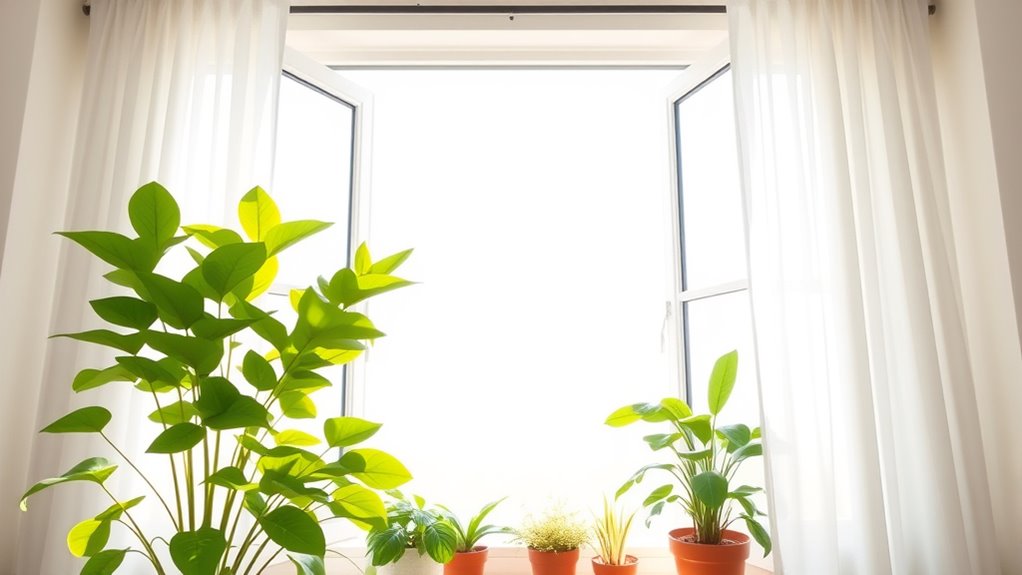
Proper ventilation is key to bringing fresh air indoors and diluting pollutants like dust, mold spores, and VOCs. By ensuring good air exchange, you reduce stale air buildup and improve indoor air quality. Activities like cooking or exercising can increase pollutants, so using exhaust fans, opening windows, or installing mechanical systems is helpful. Good ventilation creates a healthier, more comfortable environment. To discover more tips on maintaining ideal airflow, keep exploring the options available for your home.
Key Takeaways
- Proper ventilation introduces fresh outdoor air to dilute indoor pollutants like dust, VOCs, and mold spores.
- Opening windows and using exhaust fans enhance air exchange and reduce indoor pollutant buildup.
- Mechanical systems such as air purifiers and ventilation fans help maintain continuous fresh airflow indoors.
- Sealing homes tightly requires controlled ventilation to prevent stagnation and ensure pollutant dilution.
- Activities like cooking or exercising increase pollutants, making proper ventilation essential for indoor air quality.
Have you ever wondered why proper ventilation matters? It’s because good ventilation ensures that fresh air circulates through your indoor space, promoting better air exchange and vitally improving indoor air quality. When your home or office isn’t properly ventilated, pollutants like dust, pet dander, mold spores, and volatile organic compounds can build up, making the air unhealthy to breathe. By prioritizing effective air exchange, you help dilute these contaminants and remove stale air, creating a healthier environment for everyone inside.
Think about how often you notice stuffy or musty odors lingering in a room. That’s a clear sign your indoor air isn’t circulating effectively. Proper ventilation introduces fresh air from outside, pushing out the indoor pollutants and replacing them with cleaner, oxygen-rich air. This process not only refreshes your space but also reduces the risk of airborne illnesses and allergies. When you allow for continuous or controlled air exchange, you’re actively improving indoor air quality, which has direct benefits for your health, concentration, and overall comfort.
Stuffy odors signal poor air circulation; proper ventilation refreshes your space and promotes healthier indoor air quality.
In many homes, especially those that are tightly sealed for energy efficiency, indoor air can become stagnant without proper ventilation. This stagnation traps pollutants and increases humidity levels, fostering mold growth and dust accumulation. Installing exhaust fans, air purifiers, or mechanical ventilation systems can help maintain a steady flow of fresh air. These systems work by continuously exchanging indoor air with outdoor air, ensuring that contaminants don’t reach unsafe levels. As a result, your living or working environment stays healthier and more comfortable.
You also need to consider the importance of proper ventilation during activities like cooking, cleaning, or even working out. These activities generate additional airborne particles and moisture, which can degrade indoor air quality if not properly managed. Opening windows, using range hoods, or employing ventilation systems helps facilitate adequate air exchange during these times. Doing so minimizes the buildup of odors, humidity, and airborne pollutants, ensuring you breathe cleaner air and maintain a healthier indoor environment.
Ultimately, good ventilation isn’t just about comfort; it’s an essential aspect of maintaining a safe, healthy space. By focusing on air exchange, you make sure that fresh air continually replaces stale indoor air, reducing pollutants and elevating indoor air quality. When you actively manage your ventilation, you’re taking a simple yet powerful step toward safeguarding your health and creating a more pleasant environment to live or work in. Additionally, understanding the importance of attention can enhance your ability to maintain consistent and effective ventilation practices.
Frequently Asked Questions
How Often Should I Ventilate My Home for Optimal Air Quality?
You should ventilate your home at least once or twice daily, depending on your indoor activities and air exchange rates. Aim for a ventilation schedule that includes opening windows for 5-10 minutes each time to refresh the air. If you have high indoor pollutant sources, increase ventilation frequency. Regularly updating your ventilation routine helps maintain ideal air quality and reduces indoor pollutants effectively.
What Are the Best Types of Ventilation Systems for Different Homes?
You should choose ventilation systems based on your home’s size, layout, and HVAC compatibility. For quiet, efficient airflow, consider energy recovery ventilators (ERVs) or heat recovery ventilators (HRVs), which balance noise considerations and fresh air intake. For smaller homes, exhaust fans or window vents work well, but larger spaces benefit from centralized systems. Balancing noise levels and system compatibility guarantees your home stays comfortable and well-ventilated.
How Does Outdoor Air Quality Affect Indoor Ventilation Choices?
Outdoor air quality impacts your indoor ventilation choices profoundly. If outdoor pollution levels are high, you should prioritize air filtration systems to reduce pollutants from entering your home. Using high-quality filters or air purifiers helps minimize indoor exposure to outdoor pollution. In such cases, mechanical ventilation with filtration becomes essential to maintain healthy indoor air while preventing pollutants from seeping inside, ensuring you breathe cleaner, safer air indoors.
Can Ventilation Help Reduce Indoor Allergy Triggers Effectively?
Breathing new life into your home can make a real difference in allergy relief. Ventilation helps by bringing in fresh air, which aids in air purification and humidity control. This reduces mold, dust mites, and airborne allergens that trigger reactions. Keep vents clean and consider using air purifiers alongside proper airflow. When you prioritize good ventilation, you’re effectively creating an environment where allergy triggers have less room to thrive.
Are There Energy-Efficient Ways to Improve Indoor Air Circulation?
Yes, you can improve indoor air circulation energy-efficiently by using energy-saving fans and smart ventilation systems. These options optimize airflow while minimizing energy use, helping you save on utility bills. Smart ventilation automatically adjusts based on indoor air quality and occupancy, ensuring fresh air without waste. Incorporate these solutions into your home to keep air fresh, reduce pollutants, and save energy effortlessly.
Conclusion
Think of your home as a living, breathing entity that needs fresh air to thrive. When you open windows and let the breeze dance through, you’re clearing out the shadows of pollutants like a gentle rain washing the sky. Proper ventilation isn’t just about air; it’s about inviting energy inside, turning your space into a sanctuary of health. So, don’t let your home suffocate in silence—bring in the breeze and let life breathe freely.