Radon monitors are crucial tools for detecting the invisible, odorless gas that can quietly build up in your basement, increasing health risks over time. By providing real-time data, these devices help you identify dangerous radon levels before they become a serious problem. Regular testing is necessary, especially in vulnerable areas like basements, to ensure a safe indoor environment. Keep exploring to discover how you can better protect your home and health from this silent threat.
Key Takeaways
- Radon is an odorless, invisible gas that naturally seeps into basements, posing hidden health risks.
- Radon monitors detect and measure radon levels in real-time, revealing this invisible danger.
- Regular testing with monitors helps identify dangerous radon concentrations before health effects occur.
- Continuous radon monitoring in basements enables timely mitigation to reduce long-term health risks.
- Using radon detectors makes the hidden threat of radon visible, allowing for effective safety measures.
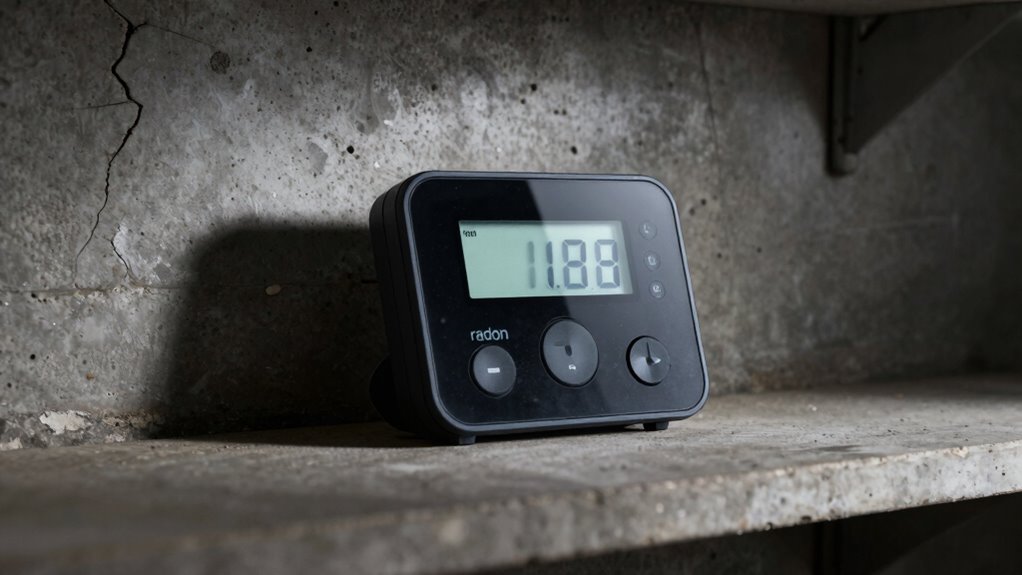
Radon monitors are indispensable tools for detecting and measuring radon levels in your home or workplace. If you’re concerned about your indoor air quality, especially in areas like your basement, using a radon monitor is a smart move. Radon is a radioactive gas that naturally seeps into buildings from the ground, and because it’s invisible and odorless, many people remain unaware of its presence. This makes regular homes inspection with a reliable radon monitor crucial for identifying potential health risks before they become serious. Left unchecked, elevated radon levels can accumulate over time, quietly exposing you and your loved ones to harmful radiation. Understanding the risks linked to radon exposure is essential. The primary health concern is lung cancer, which can develop after prolonged inhalation of radioactive particles. Studies have shown that radon is the second leading cause of lung cancer after smoking, but it’s often overlooked because the gas isn’t detectable without specialized equipment. That’s where radon monitors come into play—they provide real-time data, allowing you to see if your home’s radon levels are within safe limits or if action is needed. If your homes inspection reveals high radon levels, you can take steps to mitigate the problem, such as installing ventilation systems or sealing cracks in the foundation.
Radon monitors are essential for detecting harmful radon levels in your home.
Most radon monitors are easy to use and provide accurate readings within a short period. They come in various types, from continuous monitors that track radon levels over time to short-term tests that give quick snapshots of your indoor air quality. When you deploy a monitor in your basement—often the most vulnerable area—you can better understand the radon concentrations in that space. Since radon tends to accumulate in enclosed areas like basements or crawl spaces, regular testing is essential to protect your family’s health. Being aware of radon levels through proper monitoring can help you make informed decisions about your home’s safety. The sooner you detect elevated levels, the sooner you can implement effective mitigation strategies. Investing in a radon monitor is a proactive step toward safeguarding your home environment. It’s a simple, cost-effective way to stay informed about invisible threats that could pose serious health risks. Remember, radon exposure doesn’t have to be a hidden danger; with the right tools, you can identify and reduce it. Regular testing, especially in frequently used spaces like the basement, ensures that you’re not unknowingly putting your health at risk. In the end, a radon monitor is your best defense against this silent, invisible threat, making your homes inspection more thorough and your living space safer.
Frequently Asked Questions
How Often Should I Test My Basement for Radon?
You should test your basement for radon at least once every two years to guarantee safety. Radon testing frequency can increase if you notice seasonal radon fluctuations, as levels tend to be higher in winter and lower in summer. It’s also wise to test after any renovations or changes to your home’s ventilation. Regular testing helps you catch dangerous radon levels early and take action if needed.
Are There Specific Seasons When Radon Levels Are Higher?
Yes, radon levels tend to be higher during colder months due to seasonal fluctuations and weather influence. When it’s winter, your home’s heating can cause more radon to seep in, especially with closed windows and doors. In contrast, warmer months often see lower levels because ventilation increases. To stay safe, test your basement regularly, especially in winter when radon risks are at their peak.
Can Radon Levels Vary Between Different Areas of the Basement?
You’ll find radon levels can vary dramatically across your basement, almost like an invisible rollercoaster! Radon distribution isn’t uniform, so certain zones—like near foundation cracks or vents—may have higher concentrations. Basement zoning helps you identify these hotspots, ensuring you test and monitor specific areas. Don’t assume every corner is the same; understanding these variations helps you take targeted action to keep your home safe from radon.
Do Radon Monitors Require Calibration or Maintenance?
Yes, radon monitors require regular device maintenance and calibration to guarantee accurate readings. You should check your monitor periodically and follow the manufacturer’s instructions for monitor calibration. Proper maintenance helps keep the device functioning correctly, providing reliable radon level measurements. This way, you can confidently assess your basement’s radon risk and take necessary actions to protect your health. Don’t neglect monitor calibration and device maintenance for peace of mind.
What Immediate Actions Should I Take if Radon Levels Are High?
If radon levels spike, act quickly like a firefighter rushing into a blaze. Ventilate your home immediately by opening windows and doors to flood the space with fresh air. Evacuate if necessary, and follow emergency procedures to stay safe. Contact professional mitigation experts promptly—they can assess the situation and install proper systems to reduce radon. Don’t delay; swift action protects your health and your home.
Conclusion
If you haven’t tested your basement for radon, you’re taking a silent risk. Did you know that radon exposure is responsible for about 21,000 lung cancer deaths each year? That’s more than drunk driving fatalities. Installing a radon monitor is a simple step to protect your family’s health and peace of mind. Don’t wait for symptoms—stay informed, stay safe, and keep your home a healthy space for everyone.