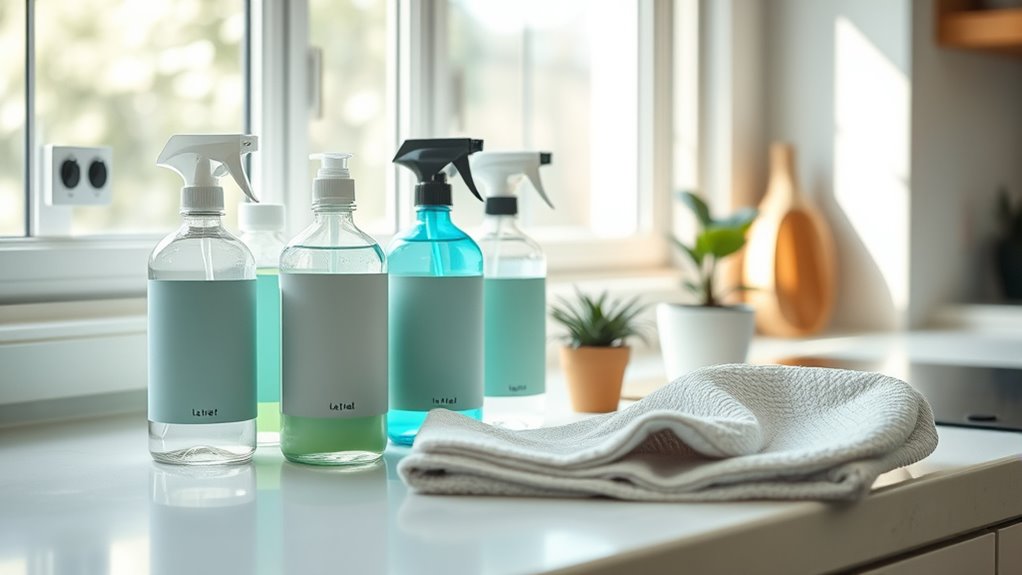

To reduce VOCs, choose cleaning products labeled as low-VOC, VOC-free, or eco-friendly. These options emit fewer harmful chemicals and improve indoor air quality. Look for natural or plant-based ingredients like vinegar, baking soda, or essential oils, and always ventilate your space during and after cleaning. Proper storage and regular maintenance of air filters also help. Keep exploring to discover more simple steps for creating a healthier home environment.
Key Takeaways
- Look for cleaning products labeled as low-VOC, VOC-free, or environmentally friendly.
- Prefer natural or plant-based cleaners like vinegar, baking soda, or essential oils.
- Ensure proper ventilation during and after cleaning to disperse residual fumes.
- Store cleaning chemicals safely out of reach of children and pets to prevent VOC emissions.
- Regularly replace HVAC filters to trap airborne chemicals and improve indoor air quality.
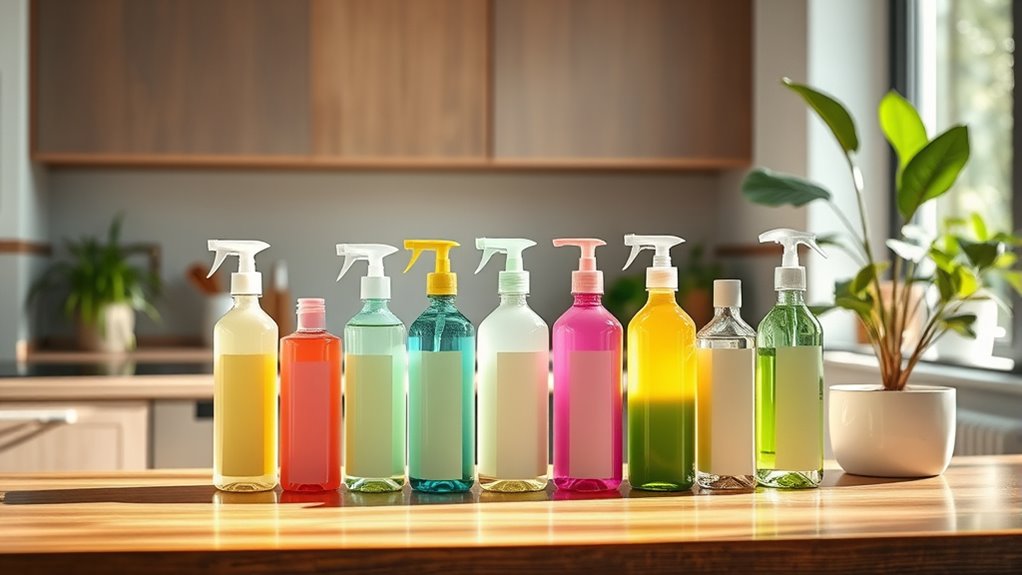
Have you ever wondered how to improve indoor air quality and protect your health? One effective way is by reducing the presence of volatile organic compounds (VOCs) in your home. VOCs are chemicals emitted by many cleaning products, paints, and air fresheners, and they can considerably impact your indoor air quality. When VOC levels are high, they can cause headaches, respiratory issues, and even long-term health problems. That’s why choosing low-toxicity cleaning products is essential for maintaining product safety and ensuring a healthier living space. By making informed choices, you can lower VOC emissions and create a safer environment for yourself and your loved ones.
Start by carefully reading labels when shopping for cleaning supplies. Look for products labeled as low-VOC, VOC-free, or environmentally friendly. These products are formulated to emit fewer harmful chemicals, which directly contributes to better air quality inside your home. When you prioritize product safety, you’re reducing the risk of exposure to toxic substances that can linger in the air long after cleaning. Remember, many conventional cleaners contain harsh chemicals like ammonia, formaldehyde, and synthetic fragrances, all of which can deteriorate indoor air quality and pose health risks. Switching to natural or plant-based cleaning products is a smart move that aligns with your goal of creating a healthier space.
In addition to selecting low-toxicity products, think about using alternatives like vinegar, baking soda, or essential oils for various cleaning tasks. These options are naturally low in VOCs and provide effective cleaning without compromising air quality. Ventilating your home properly during and after cleaning is equally important. Opening windows and using exhaust fans helps disperse any residual fumes, preventing VOC buildup and supporting better air circulation. This simple step enhances product safety by decreasing the concentration of potentially harmful chemicals in your indoor environment.
Another aspect worth considering is storing cleaning products safely out of reach of children and pets. Proper storage minimizes accidental exposure and prevents VOCs from seeping into your indoor air over time. Regularly cleaning or replacing air filters in your HVAC system also helps trap airborne chemicals, further improving air quality. Additionally, understanding the 16PF personality traits of household members can help tailor cleaning routines to fit individual preferences and behaviors, making maintenance easier and more effective. By taking these proactive measures, you not only reduce VOC levels but also reinforce your commitment to maintaining a safe, healthy home. Ultimately, making conscious choices about your cleaning products and practices empowers you to protect your health and ensure that your indoor environment remains a safe haven.
Frequently Asked Questions
Are Natural Cleaning Products Always Low in VOCS?
No, natural cleaning products aren’t always low in VOCs. While they often contain natural ingredients, some may still include chemicals that release VOCs. You should check the labels for chemical transparency to guarantee they don’t contain hidden volatile compounds. By reading product labels carefully, you can better choose natural options that genuinely have low VOC emissions, helping you create a healthier home environment.
How Can I Identify Low-Voc Cleaning Products on Labels?
To identify low-VOC cleaning products on labels, look for clear label symbols indicating eco-friendliness or low emissions, and read ingredient lists carefully. Choose products with fewer synthetic chemicals, and avoid those with strong fragrances or solvents. Trust labels that highlight low toxicity, and verify ingredients like water, plant-based cleaners, or natural extracts. By paying attention to symbols and ingredient lists, you make certain you’re selecting safer, low-VOC options.
Do Low-Toxicity Cleaners Clean as Effectively as Traditional Ones?
Low-toxicity cleaners can be just as effective as traditional ones when you use proper application techniques. The effectiveness comparison often depends on the specific product and surface, so follow the label instructions carefully. You might need to let the cleaner sit a bit longer or apply more product for tough stains. With the right approach, you’ll see excellent results while reducing your exposure to harmful chemicals.
Can Switching to Low-Voc Products Improve Indoor Air Quality Immediately?
Switching to low-VOC products can lead to immediate air quality improvements, with some studies showing noticeable differences within hours. When you choose low-toxicity cleaners, you reduce the release of harmful chemicals into your indoor environment. This means you’ll breathe easier right away, enjoying fresher, healthier air. Making this switch is a simple way to enjoy the immediate benefits of improved indoor air quality and protect your health.
Are There Specific Certifications for Low-Voc Cleaning Products?
Yes, there are specific certifications for low-VOC cleaning products. These certifications, such as Green Seal and EPA’s Safer Choice, set standards for certification standards and label requirements, ensuring products meet strict low-VOC criteria. When shopping, look for these labels to confirm the product’s low-toxicity status. Choosing certified products helps you reduce indoor air pollutants and supports healthier, safer cleaning practices.
Conclusion
By choosing low-toxicity cleaning products, you create a fresh start in your home, clearing away the invisible clouds of harmful VOCs. Imagine your space filled with crisp, clean scents instead of chemical fumes, like a gentle breeze sweeping through open windows. Every small choice you make becomes a shield of safety, turning your home into a sanctuary where pure, invigorating air nurtures your well-being. You hold the power to transform your environment into a healthier, brighter place.