
During wildfire smoke events, tracking PM2.5 levels is essential because these tiny particles can penetrate deep into your lungs and bloodstream, causing serious health problems. Since PM2.5 is the primary measure of smoke pollution, monitoring it helps you understand when to take protective actions like staying indoors or wearing masks. Staying aware of PM2.5 levels allows you to minimize health risks and better prepare for smoky conditions—continue on to learn how to stay safe during these dangerous times.
Key Takeaways
- PM2.5 particles are tiny, capable of penetrating deep into lungs and bloodstream, posing serious health risks during wildfire smoke events.
- Monitoring PM2.5 levels provides an accurate measure of air pollution severity and guides protective actions.
- Elevated PM2.5 levels are directly linked to respiratory and cardiovascular health problems, especially during wildfires.
- PM2.5 is the primary metric used in air quality reports to determine when to take precautions.
- Tracking PM2.5 helps individuals stay informed and reduce exposure during wildfire smoke episodes.

Have you ever wondered how to protect yourself from wildfire smoke? The key is understanding air quality and how it impacts your respiratory health. Wildfire smoke isn’t just a nuisance; it’s a serious health hazard, especially when you’re exposed to high levels of fine particulate matter, or PM2.5. These tiny particles are less than 2.5 micrometers in diameter, small enough to penetrate deep into your lungs and even your bloodstream. When wildfire smoke blankets your area, the air quality drops sharply, making it essential to stay informed and take precautions. Monitoring PM2.5 levels helps you gauge the danger and decide when to take protective measures.
Protect yourself from wildfire smoke by understanding PM2.5 levels and taking appropriate precautions.
Increases in PM2.5 levels directly threaten respiratory health. These particles can cause short-term issues like coughing, wheezing, and throat irritation, but they also pose long-term risks, especially for children, the elderly, and those with preexisting respiratory or heart conditions. When PM2.5 concentrations spike, your lungs work harder to filter out harmful particles, which can lead to inflammation and decreased lung function. Over time, repeated exposure may even lead to chronic respiratory diseases. That’s why understanding air quality reports and PM2.5 metrics is essential; they serve as early warning signs to help you decide whether you need to stay indoors or take other protective actions. Recognizing air quality indicators can significantly improve your ability to respond effectively during wildfire events.
To minimize your exposure, it’s essential to stay indoors as much as possible when air quality drops. Keep windows and doors closed, and use high-efficiency particulate air (HEPA) filters if you have them. This not only reduces the amount of PM2.5 entering your home but also improves indoor air quality. If you need to go outside, wear a properly fitted N95 mask, which can filter out most of the fine particles and protect your respiratory health. Avoid vigorous outdoor activities that increase your breathing rate, as inhaling more air means more particles.
Staying informed is key; check air quality indexes regularly through local alerts or online tools. Pay close attention to PM2.5 levels, especially during wildfire season. By understanding how air quality affects your respiratory health, you can make smarter decisions that protect your lungs from the harmful effects of wildfire smoke. Remember, the smaller the particles, the deeper they go into your lungs, making PM2.5 the most important metric to watch during wildfire events. Being proactive with this knowledge helps you stay safe and minimizes the health risks associated with wildfire smoke inhalation.
Frequently Asked Questions
How Does PM2.5 Affect People With Pre-Existing Health Conditions?
If you have pre-existing health conditions, PM2.5 can worsen your symptoms by triggering inflammation and weakening your immune response. You might experience increased breathing difficulty or cardiovascular issues. It’s essential to monitor your symptoms closely and consult your healthcare provider about medication adjustments. Protect yourself by staying indoors, using air purifiers, and wearing masks outdoors to reduce exposure and minimize health risks during wildfire smoke events.
Are There Specific Regions More Vulnerable to Wildfire Smoke?
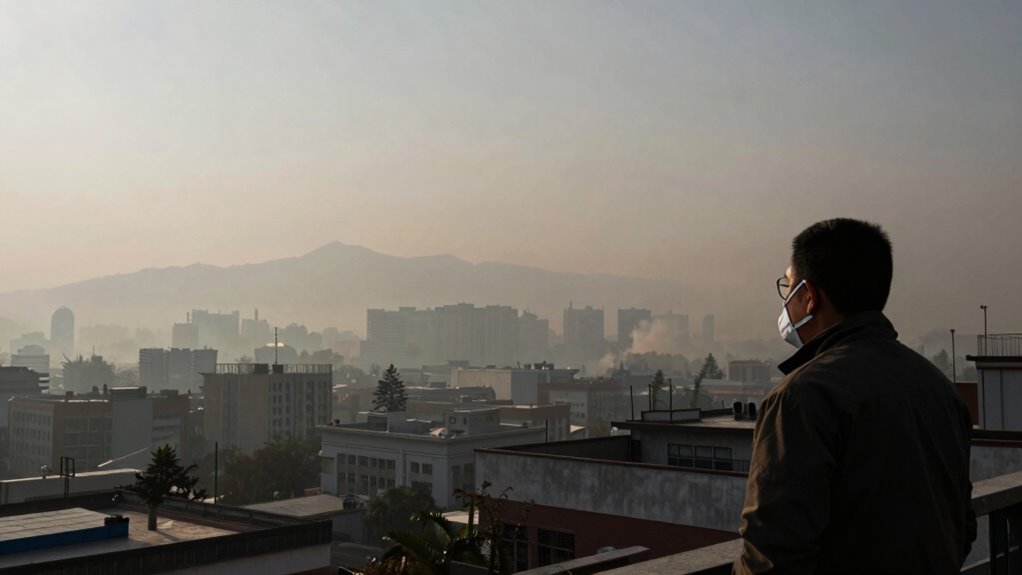
In wildfire smoke’s fiery grip, urban areas and mountain regions stand out as the most vulnerable. Urban zones, with dense populations and pollution, turn into smoky maelstroms, while mountain regions, often shrouded in haze, trap dangerous PM2.5 particles. You’re at greater risk in these areas, where the air feels thick as fog and the health impacts hit harder. Protect yourself by staying indoors and monitoring air quality closely.
What Short-Term Health Effects Can Wildfire Smoke Cause?
You might experience airway irritation and eye discomfort after short-term exposure to wildfire smoke. Breathing in PM2.5 can cause coughing, sore throat, and difficulty breathing, especially if you have asthma or respiratory issues. Your eyes may feel itchy or burn. These effects are usually temporary but can worsen with prolonged exposure. To protect yourself, limit outdoor activities, stay indoors, and use air purifiers if possible.
How Can Outdoor Activities Be Safely Managed During Smoke Events?
Think of outdoor air quality as a fragile glass—once it’s cracked, it’s hard to see clearly. To stay safe, plan outdoor activities when PM2.5 levels are low, usually early mornings or after rain. During high smoke days, limit outdoor time, wear N95 masks, and use indoor air filtration to reduce exposure. These steps help you enjoy outdoor activities while minimizing health risks during smoke events.
What Are the Long-Term Health Risks of Repeated Wildfire Smoke Exposure?
Repeated exposure to wildfire smoke increases your risk of developing chronic respiratory and cardiovascular issues over time. You might experience ongoing breathing problems, asthma exacerbations, or heart-related conditions. To protect yourself, limit outdoor activities during smoky periods, use air purifiers, and wear masks if necessary. Staying informed about air quality levels helps you make better decisions and reduce long-term health risks associated with PM2.5 exposure.
Conclusion
As you face the smoky haze, remember that PM2.5 is your silent sentinel. It’s the tiny warrior tracking danger’s breath, guiding you to safety amidst the chaos. Keep your eyes on this tiny metric, like a lighthouse in a storm, illuminating the path through darkness. Protect your lungs, your life, and trust in the small but mighty indicator to keep you safe when wildfire smoke threatens to engulf your world. Stay vigilant, stay alive.