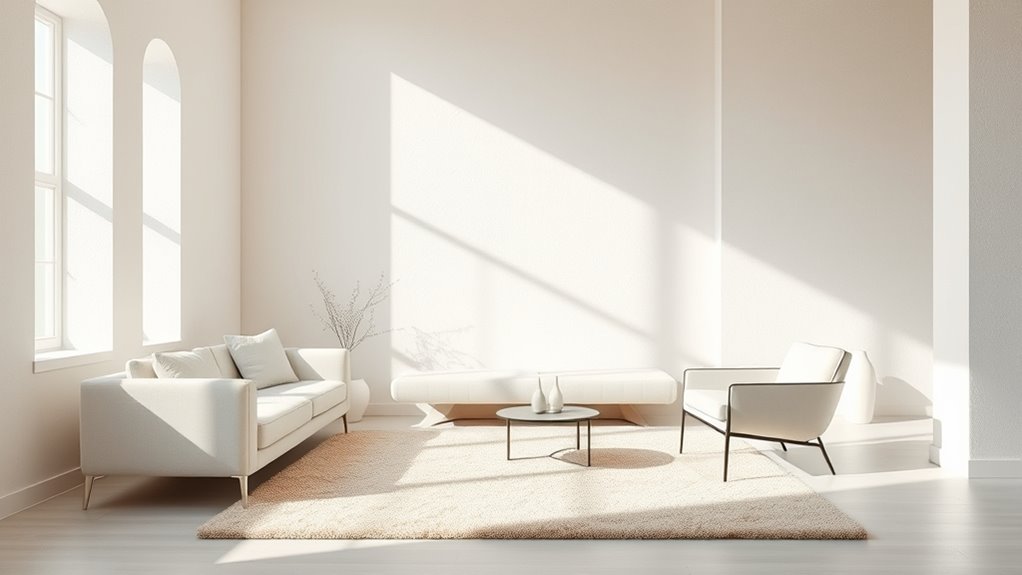

Neutral tones like whites, beiges, and greys can dramatically influence your space’s mood, making it feel calm, spacious, and inviting. They create a subtle backdrop that fosters tranquility, focus, and sophistication while effortlessly tying together different design elements. These shades help you shape a peaceful environment that promotes relaxation or clarity. If you continue exploring, you’ll uncover how to harness the true power of these versatile hues to enhance your home’s atmosphere.

Get decor and gifts delivered free — and shop member deals
- Fast, free delivery on millions of items
- Access to Prime Big Deal Days deals on October 6–7
- Prime Video, Amazon Music and more included
Key Takeaways
- Neutral tones like whites, beiges, and greys evoke calm, stability, and sophistication, shaping a peaceful and inviting mood.
- These shades serve as versatile backdrops, enhancing natural light and making spaces feel more open and airy.
- Whites promote clarity and tranquility, while beiges add warmth, and greys contribute depth and elegance to interior environments.
- The psychological effects of neutral colors foster relaxation, focus, and a balanced atmosphere conducive to well-being.
- Incorporating these tones allows for flexible decor updates and creates timeless, harmonious spaces that evoke desired emotional responses.
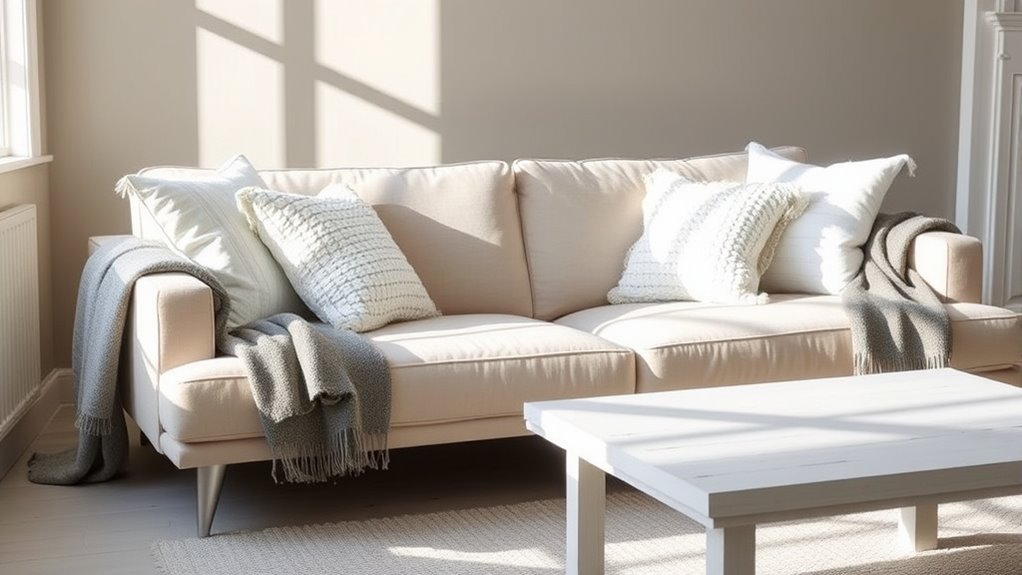
Neutral tones often evoke a subtle, understated mood that can influence how you interpret a scene or emotion. These shades—whites, beiges, and greys—are more than just background choices; they shape the atmosphere of a space and the feelings it evokes. In interior design, understanding color psychology helps you harness these tones to create a sense of calm, balance, and sophistication. When you incorporate neutral hues, you’re not just choosing a color palette; you’re establishing a foundation for interior harmony that promotes tranquility and clarity.
Using neutral tones allows you to craft environments that feel open and inviting without overwhelming the senses. They serve as a versatile backdrop, complementing a wide range of accent colors and textures. This flexibility makes it easier to change decor over time without clashing or needing a complete overhaul. When you select whites, beiges, or greys, you’re intentionally shaping the mood of the room to be peaceful and refined. These colors tend to reflect light well, enhancing natural brightness and making spaces appear more expansive and airy.
Neutral tones create versatile, inviting spaces that reflect light, enhance brightness, and promote a peaceful, refined atmosphere.
Color psychology reveals that neutral shades often evoke feelings of stability, order, and sophistication. They’re ideal for creating a balanced interior where the focus shifts from bold statements to subtle details and textures. If you want to foster a sense of relaxation or concentration, neutral tones are your go-to. They help reduce visual noise and promote a serene environment. When you prioritize interior harmony, these tones act as a unifying element, tying different design elements together seamlessly. Whether paired with warm woods, metallic accents, or soft textiles, neutrals serve as a cohesive canvas that elevates the overall aesthetic.
In practice, embracing neutral tones means you can experiment with different materials and finishes, knowing they’ll work harmoniously. Light-colored walls can make a small space feel larger, while darker greys add depth and sophistication. Beiges introduce warmth, making rooms feel cozy and welcoming. When you balance these shades thoughtfully, you create an environment that encourages relaxation, focus, or social connection—depending on your intent. Incorporating textiles in neutral tones can further enhance the calming atmosphere and add tactile interest to your space.
Ultimately, neutral tones aren’t just a style choice; they’re a powerful tool for shaping mood and fostering interior harmony. By understanding how color psychology influences perception, you can design spaces that evoke the desired emotional response—calm, clarity, or elegance. With their timeless appeal and versatile nature, whites, beiges, and greys help you craft environments that feel both peaceful and intentional, making your space a true sanctuary.
Frequently Asked Questions
How Do Neutral Tones Influence Emotional Well-Being?
Neutral tones can positively influence your emotional well-being by offering a calming, soothing environment. They promote emotional resilience by reducing overstimulation and creating a sense of stability. In color therapy, whites, beiges, and greys help you feel more centered and relaxed, making it easier to manage stress. By surrounding yourself with these hues, you support your mental health and foster a peaceful, balanced mindset.
Can Neutral Colors Be Used to Energize a Space?
Yes, you can energize a space with neutral colors by adding vibrant accents and dynamic textures. Think of neutral tones as a calm canvas, waiting for bursts of lively color and tactile interest. Incorporate bold cushions, lively artwork, or textured rugs to create a sense of movement. These elements transform your space from serene to invigorating, turning neutral backdrops into vibrant, energizing environments that spark creativity and enthusiasm.
What Are the Psychological Effects of Beige and Grey?
Beige and grey create calming, neutral environments that promote relaxation and focus. Their subtlety supports color harmony, making them versatile backgrounds for other accents. Culturally, these shades often symbolize stability and sophistication, influencing your mood positively. When used thoughtfully, beige and grey help reduce stress, foster clarity, and create a balanced atmosphere, making them ideal choices for spaces where you want to feel at ease and centered.
How Do Neutral Tones Impact Room Acoustics?
Think of neutral tones as a gentle forest, where sound absorption acts like soft moss dampening noise. You notice that whites, beiges, and greys help reduce echoes and control noise by absorbing sound waves, creating a calmer space. These hues don’t reflect sound aggressively, making your room quieter and more comfortable. So, by choosing neutral tones, you enhance sound quality and enjoy a peaceful environment, much like walking through a serene woodland.
Are Neutral Colors Suitable for Creating a Calming Environment?
Yes, neutral colors are perfect for creating a calming environment. They promote relaxation and reduce visual clutter, helping you feel at ease. By carefully pairing these tones with soft textures or subtle accents, you enhance your space’s serenity. Their design versatility allows you to switch up styles effortlessly, ensuring your environment remains peaceful while maintaining a stylish, cohesive look. Neutral colors truly support a tranquil, inviting atmosphere.
Conclusion
Embracing neutral tones is like planting seeds of calm in your space, allowing tranquility to flourish. Whites, beiges, and greys act as a quiet symphony, shaping your mood with subtle yet powerful notes. When you surround yourself with these hues, you’re crafting a sanctuary where serenity blooms, and stress quietly melts away. Remember, these shades are the canvas upon which your mood paints its most peaceful masterpiece, turning your environment into a gentle harbor of calm.
Fall Picks
fall essentials
As an affiliate, we earn on qualifying purchases.