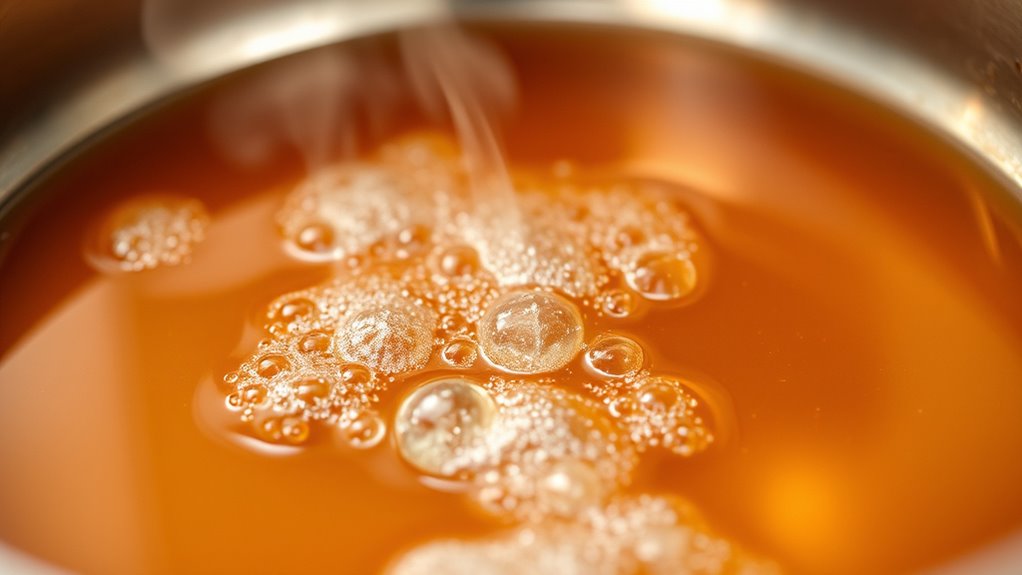

When you heat sugar, it undergoes a fascinating chemical change called caramelization, where molecules break down and create new compounds. This process begins around 320°F (160°C), transforming sugar into rich flavors, aromas, and the golden-brown color we associate with caramel. As heating continues, complex chemical reactions produce sweet, nutty, and toasty notes. Understanding these changes helps you control the process for perfect caramel every time—keep exploring to learn more about this delicious transformation.

Get decor and gifts delivered free — and shop member deals
- Fast, free delivery on millions of items
- Access to Prime Big Deal Days deals on October 6–7
- Prime Video, Amazon Music and more included
Key Takeaways
- Caramelization occurs when sugar is heated to about 320°F (160°C), causing molecules to decompose and form new flavor compounds.
- Heating transforms sugar from a clear syrup into complex compounds, producing the characteristic aroma, color, and taste of caramel.
- The process involves chemical reactions like the formation of furans, esters, and aldehydes, contributing to rich flavors.
- Factors such as sugar type, temperature, and cooking duration influence the development of caramel’s flavor and color.
- Caramelization is distinct from the Maillard reaction, involving only sugar molecules without amino acids, and is key to creating sweet, nutty flavors.
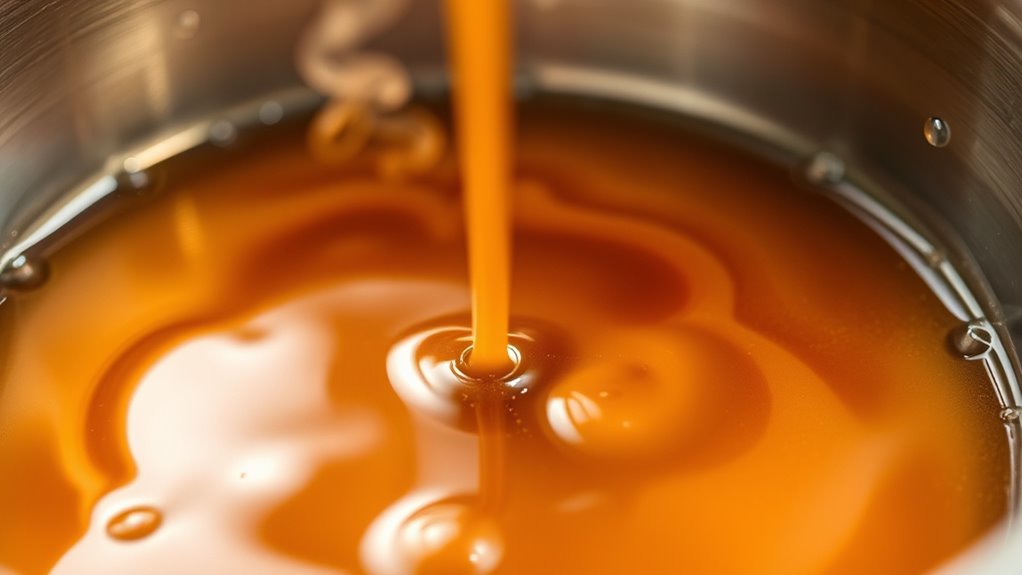
Caramelization is a complex chemical process that occurs when sugar is heated to high temperatures, causing it to break down and produce new, flavorful compounds. When you heat sugar, the sugar molecule changes dramatically. Instead of remaining intact, the molecules start to decompose, releasing water and forming a variety of new substances that give caramel its characteristic color, aroma, and taste. This transformation begins around 320°F (160°C) and accelerates as the temperature rises, resulting in the rich, golden-brown hues and complex flavors you’re familiar with in caramelized treats.
Caramelization transforms sugar into rich flavors by breaking down molecules at high heat.
It’s important to distinguish caramelization from the Maillard reaction, even though both create delicious results. While caramelization involves solely sugar molecules breaking down and recombining, the Maillard reaction involves amino acids and reducing sugars reacting together. The Maillard process occurs at slightly lower temperatures and is responsible for browning in foods like roasted coffee, bread crusts, and grilled meats. In contrast, caramelization focuses purely on sugar’s chemical changes. Understanding this difference helps you better control your cooking process—whether you’re aiming for a pure caramel flavor or the complex taste profiles from browning proteins and sugars together.
As sugar heats up, it first melts into a clear syrup, then begins to turn amber as the molecules break down. During this stage, multiple reactions occur, producing a variety of flavorful compounds such as furans, esters, and aldehydes. These compounds are responsible for the aroma and taste that make caramel so appealing. The caramelization process is influenced by factors like sugar type, temperature, and cooking duration. For instance, sucrose, the common table sugar, first hydrolyzes into glucose and fructose, which then caramelize at different rates, adding complexity to the flavor profile. Controlling heat levels is crucial to avoid burning the sugar and developing bitter flavors instead of the desired rich caramel.
You can see how the sugar molecule changes as it transitions from simple sugar to complex flavor compounds. It’s not just a matter of browning; it’s a series of intricate chemical reactions that lead to the development of rich, sweet, and sometimes nutty or toasty flavors. While both caramelization and the Maillard reaction produce browning and deepen flavor, their distinct pathways mean you can manipulate your cooking techniques depending on the desired outcome. Whether you’re making caramel candies or enhancing the aroma of roasted coffee, understanding these chemical processes helps you achieve perfect results every time.
As an affiliate, we earn on qualifying purchases.
Frequently Asked Questions
How Does Moisture Content Affect Caramelization?
Moisture content considerably impacts caramelization because it affects how easily sugar reaches its caramelization threshold. When moisture is high, it slows down the process, requiring higher temperatures or longer cooking times to caramelize. Conversely, low moisture levels allow sugar to caramelize quickly, producing rich flavors and a deep color. By controlling moisture, you can influence the timing and quality of your caramel, ensuring it develops the desired taste and texture.
Can Caramelization Occur at Low Temperatures?
Caramelization can occur at low temperatures, but it’s limited by temperature thresholds. You won’t get the deep caramel color or complex flavors that develop at higher heats. At lower temperatures, the process is slower, and the caramel color may be lighter or less pronounced. To achieve rich caramel flavors, you need to raise the temperature enough to trigger the chemical reactions involved in caramelization, typically around 320°F (160°C).
What Role Do Different Types of Sugar Play?
You might wonder how different sugars influence caramelization. Each type of sugar, like glucose, fructose, or sucrose, affects sugar crystallization and flavor variations uniquely. For example, fructose caramelizes faster and creates richer flavors, while sucrose produces a classic caramel color. Choosing the right sugar determines the texture, color, and taste of your caramel, helping you achieve the desired consistency and flavor profile in your culinary creations.
How Does Ph Influence Caramel Flavor Development?
You might think pH is just a number, but it surprisingly controls caramel flavor development. By adjusting the pH, you can enhance or suppress certain flavors through pH adjustment, making your caramel more complex or mellow. Acidic solutions intensify the richness, while alkaline conditions slow down caramelization. So, don’t overlook pH—it’s a powerful tool for flavor enhancement, transforming simple sugar into a deep, savory delight.
Are There Health Implications of Caramelized Sugars?
You might wonder if caramelized sugars pose health concerns. Consuming them in moderation is generally safe, but overdoing it could contribute to weight gain, cavities, or increased risk of diabetes. Using sugar alternatives can help reduce these risks. Always balance your treats with a healthy diet, and be mindful of how much caramelized sugar you enjoy to avoid potential health issues.
Conclusion
As you explore the chemistry of caramelization, you’ll see how heat transforms sugar into a rich, complex treat. Did you know that during this process, over 200 different compounds develop, contributing to caramel’s unique flavor and aroma? Understanding this intricate transformation helps you appreciate the science behind your favorite sweets. So next time you enjoy caramel, remember the fascinating chemical journey that makes it so irresistibly delicious.
Halloween Picks
halloween
As an affiliate, we earn on qualifying purchases.