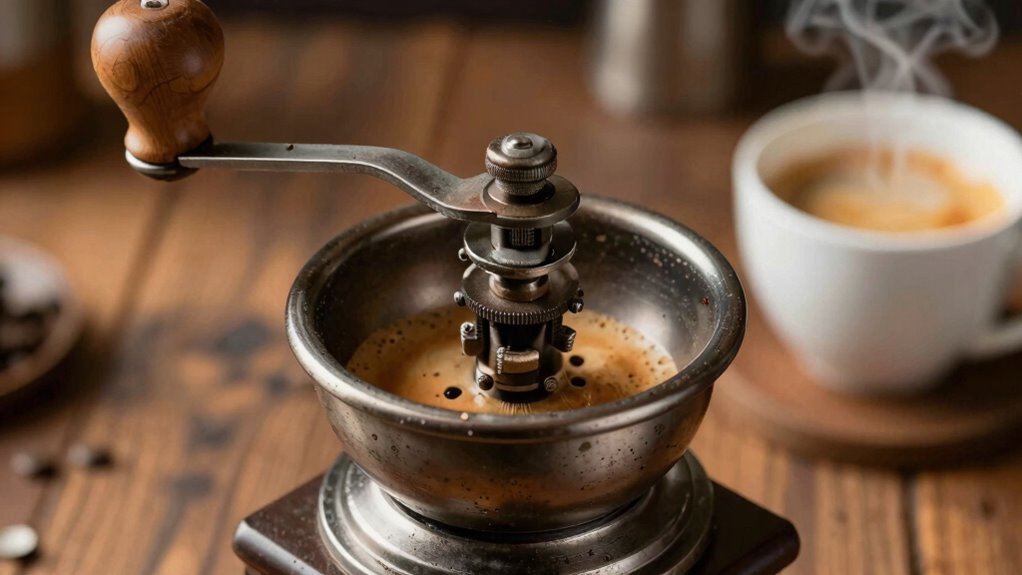

You might think a fancy espresso machine makes all the difference, but the truth is, your grinder matters more. A well-calibrated grinder guarantees consistent grind size, which directly impacts flavor, aroma, and extraction. Even the best machine can’t compensate for uneven or poorly ground beans. Regular calibration and quality burrs reveal the full potential of your equipment, making a huge difference in your espresso quality. Stay with us to discover how mastering your grinder transforms your brewing results.

Get decor and gifts delivered free with Prime
- Fast, free delivery on millions of items
- Prime Video, Amazon Music and more included
- Member-only deals all year
Key Takeaways
- Proper grinder calibration ensures consistent grind size, crucial for optimal extraction regardless of machine quality.
- High-quality burrs and regular calibration improve flavor and aroma more than expensive machines alone.
- Grinder performance directly influences shot consistency, making it more impactful than machine cost.
- Even affordable machines produce great espresso if the grinder is correctly calibrated and maintained.
- Regular calibration fine-tunes the brewing process, often outweighing the importance of machine price for quality.
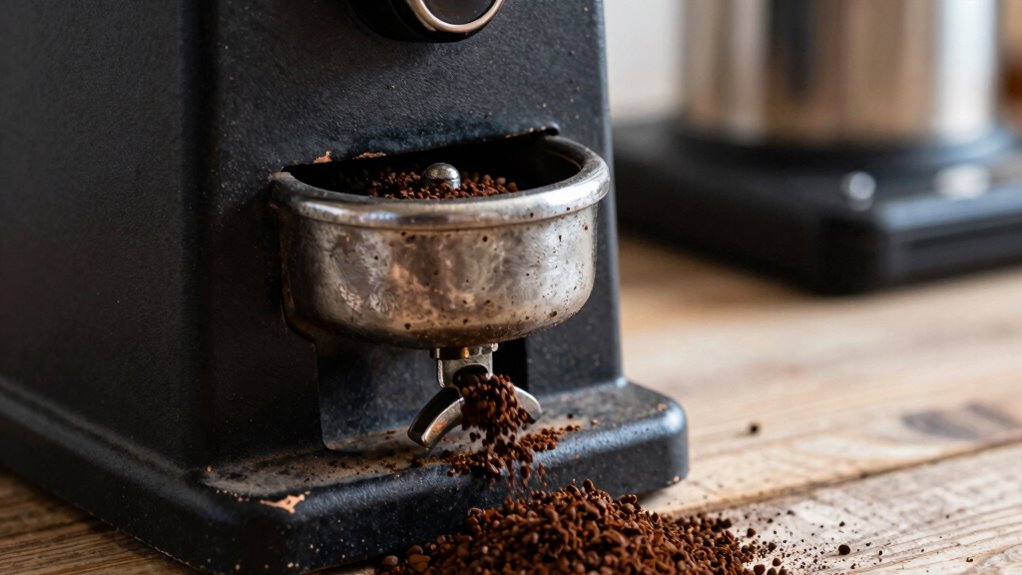
While machines often get the credit for productivity, it’s the grinder that truly makes the difference on the shop floor. Your espresso’s quality hinges on the grinder’s performance, and that starts with proper grinder calibration. When you calibrate your grinder correctly, you guarantee each shot is consistent, maintaining the same grind size every time. This consistency is essential because even slight deviations can lead to over-extraction or under-extraction, affecting flavor and aroma. Grinder calibration isn’t a one-time task; it’s an ongoing process that requires attention to detail and regular adjustments based on the beans you’re using and the desired extraction. Regular maintenance and understanding of your grinder’s mechanics further enhance its performance and longevity.
Proper grinder calibration ensures consistent, flavorful espresso with every shot.
Beyond calibration, the burr quality plays a fundamental role in the overall coffee experience. High-quality burrs produce uniform particles, which translate into even extraction and richer flavors. Cheaper or worn-out burrs tend to produce inconsistent grinds, resulting in uneven extraction that can make your espresso taste flat or overly bitter. Investing in durable, well-made burrs ensures that each grind is precise, giving you better control over your brew and a more refined cup. The sharpness and material of the burrs directly influence how evenly the beans are ground, so choosing the right burrs and maintaining them properly is essential.
You might think that a more expensive machine automatically guarantees excellent espresso, but without a properly calibrated grinder and high-quality burrs, even the best machine can fall short. The grinder is the unsung hero in this process, and paying close attention to its calibration and burr quality can dramatically elevate your coffee game. When you take the time to calibrate your grinder regularly, you’re fundamentally fine-tuning your entire brewing process. It’s not just about grinding beans; it’s about controlling how each particle interacts with water, how flavors are released, and how the final shot tastes. Understanding the importance of proper calibration can make all the difference in your brewing results.
espresso grinder calibration tools
As an affiliate, we earn on qualifying purchases.
As an affiliate, we earn on qualifying purchases.
Frequently Asked Questions
How Does Grind Size Affect Espresso Flavor?
You’ll notice that grind size directly impacts your espresso flavor. If it’s too fine, it can cause over-extraction, making your shot bitter. Too coarse, and you get under-extraction, resulting in a weak taste. Using a burr grinder helps guarantee grind consistency, unlike a blade grinder, which can produce uneven particles. This consistency lets you fine-tune your grind size, revealing the best flavor for your espresso and enhancing your overall brewing experience.
What Are the Best Types of Grinders for Home Use?
Think of your grinder as the key to your perfect espresso symphony. For home use, choose a burr grinder—its consistent grind size guarantees rich flavor. Look for models with adjustable grinder size to fine-tune your brew. Consider noise levels too; quieter grinders make mornings more peaceful. Brands like Baratza or Breville strike a balance between performance and affordability. Your ideal grinder converts each shot into a harmonious experience.
How Often Should I Calibrate My Grinder?
You should calibrate your grinder whenever you notice inconsistency in grind size or a change in taste. Regular calibration guarantees ideal grind consistency and burr alignment, which are essential for a great espresso shot. Typically, doing this every few weeks or after changing beans helps maintain peak performance. Pay attention to how your coffee brews, and if you see fluctuations, it’s time to recalibrate.
Can a Cheap Grinder Produce Quality Espresso?
A cheap grinder can produce decent espresso if you pay attention to brew temperature and tamp pressure. While it may not grind as consistently as high-end models, adjusting your tamp pressure and ensuring the right brew temperature can help improve flavor. Focus on dialing in these variables, and you can get a satisfying shot. However, investing in a better grinder will make consistent quality easier and more reliable over time.
Does Grinder Maintenance Impact Espresso Taste?
Yes, grinder maintenance impacts your espresso taste. When you keep your grinder clean, it preserves the coffee’s aroma and guarantees consistent grind size. Neglecting it can cause uneven grinding, leading to bitter or sour flavors. Plus, a well-maintained grinder produces less noise, making your brewing experience more enjoyable. Regular cleaning and calibration help you extract the best flavor, so your espresso always tastes fresh and vibrant.
Conclusion
You see, if you skimp on your grinder, even the priciest espresso machine can’t save your brew. Imagine Sarah, who upgraded her machine but kept her old grinder; her espresso still lacked that perfect crema. It’s clear—your grinder’s quality and grind size matter more than the machine itself. So, invest wisely in your grinder, and you’ll enjoy richer, more flavorful shots every time, making every morning a little more special.
Fall Picks
fall essentials
As an affiliate, we earn on qualifying purchases.