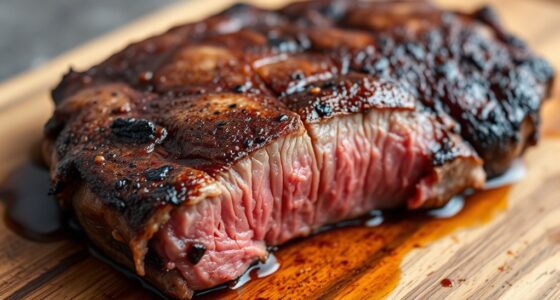
The Maillard reaction is a chemical process that occurs when you cook foods at higher temperatures, causing sugars and proteins to interact. This reaction creates new compounds that lead to browning and develop rich flavors and aromas, found in grilled meats, toasted bread, and roasted coffee. By understanding this process, you can control and enhance the flavor and color of your dishes. Continuing explores how this fascinating reaction transforms simple ingredients into tasty foods.

Get decor and gifts delivered free — and shop member deals
- Fast, free delivery on millions of items
- Access to Prime Big Deal Days deals on October 6–7
- Prime Video, Amazon Music and more included
Key Takeaways
- The Maillard reaction involves complex chemical reactions between amino acids and reducing sugars during cooking.
- It produces browning, rich flavors, and aromatic compounds that enhance the sensory appeal of foods.
- Higher temperatures and alkaline pH levels accelerate browning and flavor development in the Maillard process.
- Protein-sugar interactions create melanoidins, responsible for the characteristic color and depth of cooked foods.
- Controlling cooking conditions allows for optimization of flavor and color through the Maillard reaction.
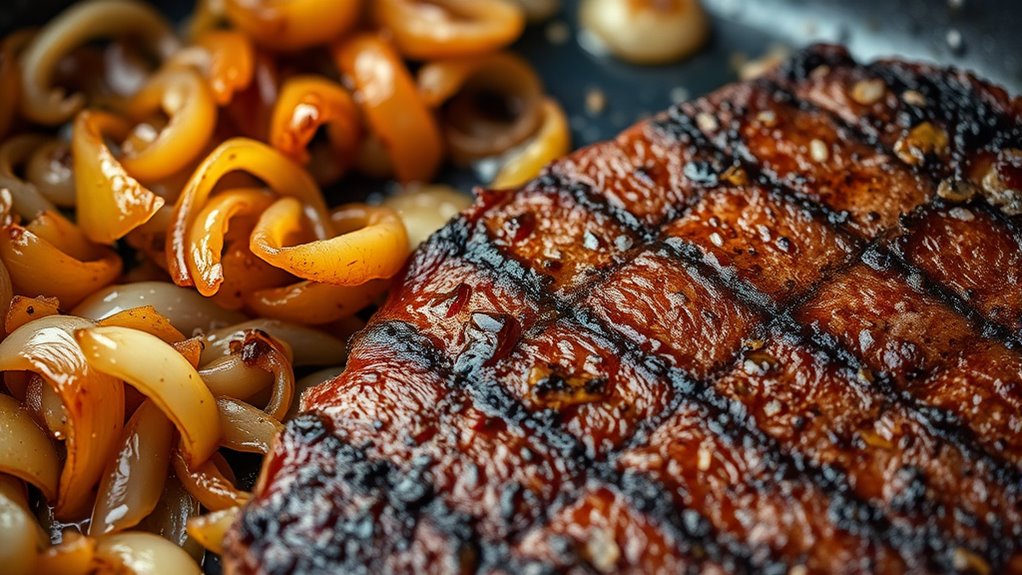
The Maillard reaction is a fundamental chemical process that transforms plain ingredients into flavorful, aromatic foods during cooking. When you heat foods containing proteins and sugars, this complex series of reactions kicks into gear, producing the rich browning and deep flavors we associate with grilled meats, toasted bread, and roasted coffee. At its core, the Maillard reaction involves sugar caramelization and protein interactions, which work together to create the complex taste and aroma profiles that make cooked foods so appealing.
The Maillard reaction creates rich flavors and browning by transforming proteins and sugars during cooking.
Sugar caramelization occurs when sugars are heated to high temperatures, causing them to break down and form new compounds that give foods their golden-brown color and sweet, nutty flavors. This process is distinct from the Maillard reaction but often overlaps in cooking, especially when sugars are present alongside proteins. As the heat intensifies, caramelization contributes to the overall flavor complexity, adding a layer of sweetness and depth that complements the savory notes produced by the Maillard process.
Meanwhile, protein interactions are central to the browning and flavor development. Proteins, made up of amino acids, react with reducing sugars during heating. These interactions lead to the formation of a wide array of new molecules, including flavorful compounds called melanoidins, which give browned foods their characteristic color. When you cook meat or bread, the heat causes amino acids and sugars to bond and rearrange, creating complex flavors and aromas. The specific types of amino acids and sugars involved influence the final taste, with certain combinations producing nutty, roasted, or caramel-like notes.
The Maillard reaction is highly dependent on temperature, pH, and moisture level. Higher temperatures accelerate the reaction, but too much moisture can slow it down, which is why dry heat methods like roasting or grilling are ideal for maximizing browning. Additionally, the pH influences the speed and extent of browning; slightly alkaline environments tend to enhance the reaction, leading to richer flavors and darker coloration. Controlling temperature and pH during cooking allows chefs and home cooks to optimize browning and flavor development.
As you cook, understanding these processes helps you control the browning and flavor development. Whether you’re searing a steak, baking bread, or roasting vegetables, you’re actively promoting sugar caramelization and protein interactions. This knowledge allows you to fine-tune cooking times and conditions to achieve the perfect balance of flavor and color. Ultimately, the Maillard reaction is what elevates simple ingredients into culinary masterpieces, transforming bland into flavorful with each sizzle and browning.
Top picks for "science maillard reaction"
As an affiliate, we earn on qualifying purchases.
Frequently Asked Questions
Does Temperature Influence the Speed of the Maillard Reaction?
Yes, temperature influences the speed of the Maillard reaction. As temperature increases, the reaction kinetics accelerate, leading to faster browning and flavor development. Higher temperatures lower activation energy barriers, making it easier for amino acids and sugars to react. You’ll notice this in cooking, where higher heat speeds up browning processes, enhancing flavor and color. Just be cautious, as too high a temperature can cause undesirable burnt flavors.
Can the Maillard Reaction Occur in Cold Storage?
You might think cold storage halts all chemical reactions, but surprisingly, the Maillard reaction can still occur at low temperatures, albeit extremely slowly. Cold storage slows enzyme activity, which influences browning and flavor development, but it doesn’t completely stop the reaction. Over extended periods, minimal Maillard browning can happen, subtly enhancing flavors. So yes, in cold storage, the Maillard reaction persists, just at a glacial pace.
Are There Health Risks Associated With Maillard Browning?
There are some health concerns linked to Maillard browning, especially when foods are overcooked or charred. These reactions can produce potentially harmful compounds like acrylamide, which may pose food safety risks. While moderate browning adds flavor and aroma, it’s best to avoid excessive browning to reduce health risks. Proper cooking methods help balance the delicious flavors with safety, ensuring you enjoy your food without unnecessary health concerns.
How Does Ph Level Affect the Maillard Reaction?
You might think pH levels don’t matter, but they actually play a big role in the Maillard reaction. When the pH balance shifts toward higher acidity, the reaction slows down, resulting in less browning and flavor development. Conversely, more alkaline conditions speed up browning by increasing amino acids and sugars’ reactivity. So, controlling acidity levels ensures ideal flavor and color in your cooked foods.
Can the Maillard Reaction Be Reversed or Halted?
You can’t fully reverse the Maillard reaction once it starts, but you can inhibit it using techniques like lowering the temperature, reducing moisture, or adjusting pH levels. These inhibition techniques slow down or halt the process, preventing further browning and flavor development. While complete reversal isn’t possible, controlling conditions helps you manage the reaction’s progress, keeping food from over-browning or losing desired flavors.
Conclusion
Think of the Maillard reaction as a master artist, transforming simple ingredients into a vibrant masterpiece of flavor and aroma. By understanding this process, you reveal the magic behind your favorite browned foods. Every sizzle and caramelized surface is like a brushstroke, adding depth and warmth to your culinary creations. Embrace this science, and turn everyday cooking into a beautiful symphony of taste—where science and art blend seamlessly on your plate.
Halloween Picks
halloween
As an affiliate, we earn on qualifying purchases.