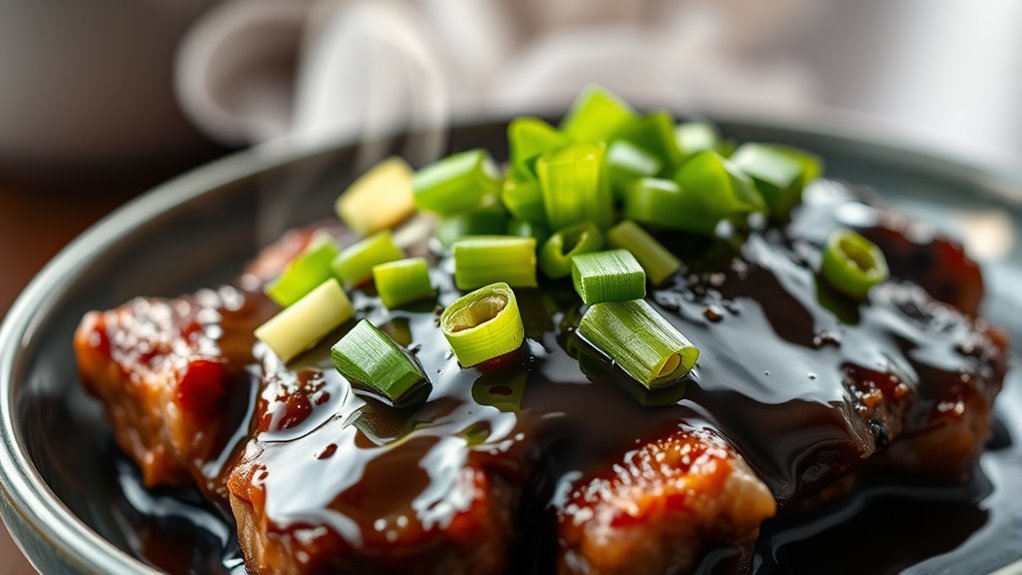

If you’ve never heard of umami, you’re missing out on a essential flavor that changes how you experience food. Discovered in Japan in the early 20th century, it’s now known as the fifth basic taste, alongside sweet, sour, salty, and bitter. Umami deepens flavors through ingredients like aged cheeses, soy sauce, and mushrooms, making dishes more satisfying without extra salt or fat. Discover how this powerful taste can transform your cooking as you explore further.
Key Takeaways
- Umami is recognized as the fifth basic taste, distinct from sweet, sour, salty, and bitter.
- It was discovered in Japan in the early 20th century by Kikunae Ikeda, linked to glutamic acid.
- Umami enhances flavor depth and complexity in dishes, reducing the need for salt or fat.
- Common sources include aged cheeses, soy sauce, mushrooms, and tomatoes, used as natural flavor enhancers.
- Its understanding has transformed culinary practices worldwide, impacting healthier and more flavorful cooking.
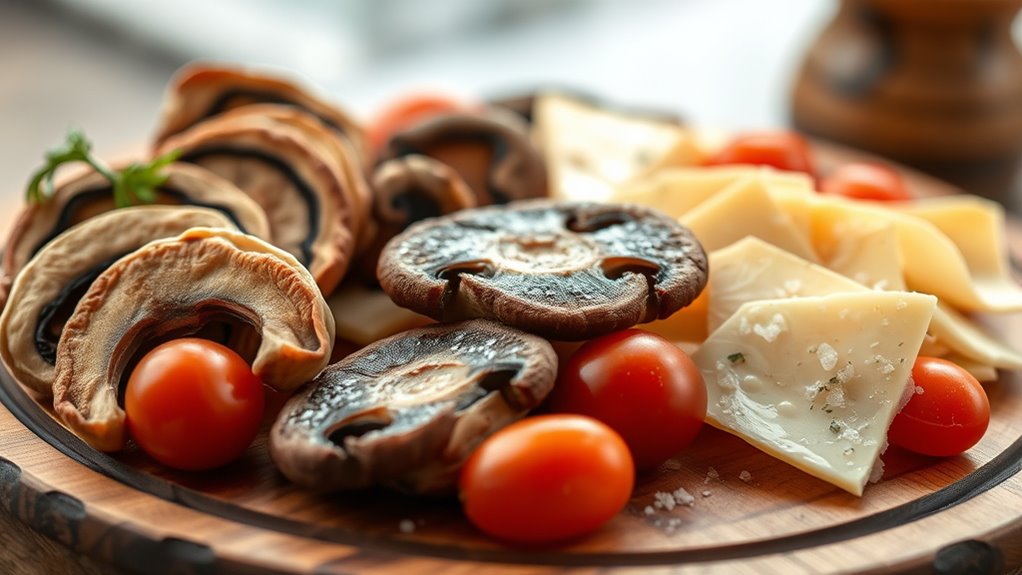
Have you ever wondered what makes certain foods taste so deeply satisfying? That rich, savory flavor you can’t quite put into words? It’s all thanks to umami, the fifth basic taste that has intrigued chefs and scientists alike for decades. To understand umami’s power, you need to explore its history and how it’s been embraced in culinary traditions around the world. Umami history traces back to Japan in the early 20th century, when a scientist named Kikunae Ikeda identified a distinct taste in seaweed broth that didn’t fit into sweet, sour, salty, or bitter categories. He dubbed it “umami,” which translates roughly to “pleasant savory taste.” Ikeda discovered that this flavor was primarily caused by glutamic acid, a natural amino acid found in many foods. His research laid the foundation for recognizing umami as a true, standalone taste, reshaping the way we understand flavor profiles. Over time, this discovery spread beyond Japan, influencing culinary practices globally. Today, umami culinary uses are diverse and widespread. Chefs incorporate ingredients rich in glutamates—like aged cheeses, cured meats, soy sauce, mushrooms, and tomatoes—to heighten the savory depth of dishes. When used thoughtfully, umami acts as a flavor enhancer, making soups, stews, and sauces more complex and satisfying. It’s no longer just about adding salt; umami ingredients create a rich, full-bodied taste that can elevate even the simplest meal. For example, adding a splash of soy sauce or a handful of shiitake mushrooms can transform a bland broth into something deeply flavorful. Many cuisines leverage umami to deepen dishes without relying heavily on salt or fat, which can be healthier and more natural. The culinary uses of umami extend to vegetarian and vegan cooking too, offering a way to add depth without animal products. Chefs often use fermented foods, miso, or nutritional yeast to achieve that savory punch. Recognizing umami’s role in flavor development allows cooks to craft more balanced and satisfying meals. Its history underscores a fascinating journey from scientific discovery to culinary staple. Whether you’re seasoning a simple vegetable stir-fry or preparing a complex broth, understanding umami’s culinary uses helps you create more nourishing, flavorful dishes. Incorporating umami-rich ingredients also has health benefits, as they can reduce the need for excess salt intake, supporting better cardiovascular health. Its influence continues to grow as more people explore its potential, making it an essential part of modern cooking. Once you start embracing umami, you’ll see how it truly changes everything about how you approach flavor and meal preparation.
Frequently Asked Questions
How Is Umami Different From Sweet, Sour, Bitter, and Salty Tastes?
You might wonder how umami differs from sweet, sour, bitter, and salty tastes. It’s unique because it’s a savory flavor that enhances overall sensory perception and deepens the flavor profile of dishes. While the other tastes signal specific nutritional needs or food safety, umami acts as a flavor enhancer, making foods more satisfying and complex. This fifth taste adds richness and balance, transforming how you experience your favorite meals.
Which Foods Are Richest in Natural Umami Compounds?
Imagine biting into a symphony of flavors; that’s what umami-rich food sources deliver. You’ll find natural flavor enhancers like aged cheeses, sun-dried tomatoes, mushrooms, and fermented products bursting with umami compounds. These ingredients act like culinary magic, elevating dishes with their savory depth. Incorporate these natural flavor enhancers into your cooking, and you’ll reveal a new dimension of taste that turns simple meals into unforgettable experiences.
Can Umami Taste Be Artificially Replicated in Processed Foods?
You can definitely replicate umami taste in processed foods through flavor enhancement techniques. Food scientists use additives like monosodium glutamate (MSG) and natural extracts to boost sensory perception, mimicking natural umami. This artificially enhanced flavor creates a savory depth, making processed foods taste richer and more satisfying. By understanding how flavor enhancement works, you can enjoy the umami effect even in convenience foods, elevating your overall eating experience.
How Does Umami Influence Appetite and Digestion?
You might notice that umami enhances satiety, helping you feel full longer after eating. It also positively influences gut health by promoting the production of digestive enzymes and supporting beneficial gut bacteria. When you include umami-rich foods like mushrooms or aged cheese, you can improve digestion and reduce overeating. Overall, umami plays a key role in regulating appetite and maintaining a healthy gut, making your meals more satisfying and nourishing.
Are There Health Benefits Associated With Consuming Umami-Rich Foods?
When you consume umami-rich foods, you gain numerous health benefits. These foods supply umami antioxidants, which combat free radicals, and support umami digestion, helping your body process nutrients efficiently. You may experience improved gut health, reduced inflammation, and enhanced nutrient absorption. Embracing umami foods not only satisfies your palate but also boosts your overall well-being, making them a valuable addition to a balanced, health-conscious diet.
Conclusion
Now that you’ve uncovered umami’s secrets, you see how it transforms your palate, much like the hidden magic in a well-told story. Just as the Sistine Chapel’s masterpiece reveals its depth over time, umami invites you to explore layers of flavor you never knew existed. Embrace this fifth taste, and watch your culinary world change, revealing new depths of savor and satisfaction. The journey into umami is your next great adventure—are you ready to taste the extraordinary?