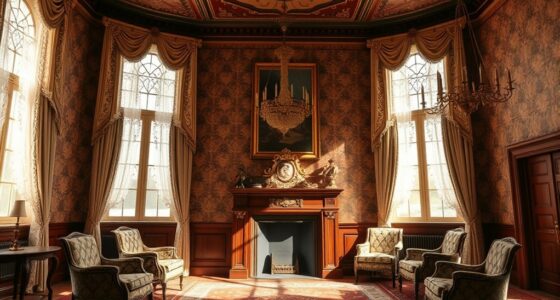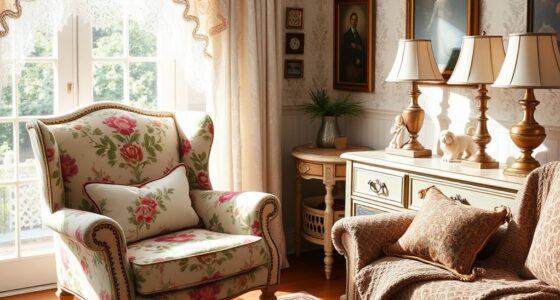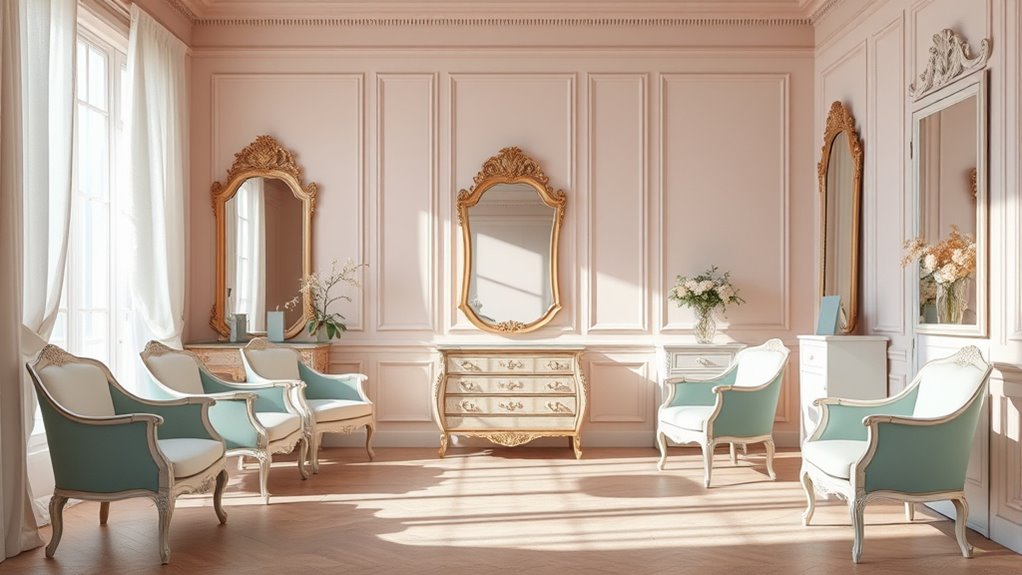

Gustavian style combines the elegance of neoclassical design with soft pastel colors and a strong sense of symmetry. You’ll notice clean lines, minimal ornamentation, and balanced furniture arrangements that create a serene, inviting atmosphere. Pastel shades like light blue, white, and muted pinks highlight the style’s timeless grace. If you want to discover how these elements come together to form a harmonious Scandinavian ambiance, there’s more to explore.
Key Takeaways
- Gustavian style features pastel color palettes like whites, creams, and soft blues to create a serene, light-filled atmosphere.
- Symmetry in furniture arrangement and decor is essential, emphasizing balance and harmony in interior design.
- Inspired by neoclassical motifs from ancient Greece and Rome, decor includes elegant, understated classical details.
- Furniture typically has straight, refined lines with minimal ornamentation and light wood finishes.
- The style blends classical elegance with Scandinavian simplicity, resulting in a timeless, sophisticated aesthetic.
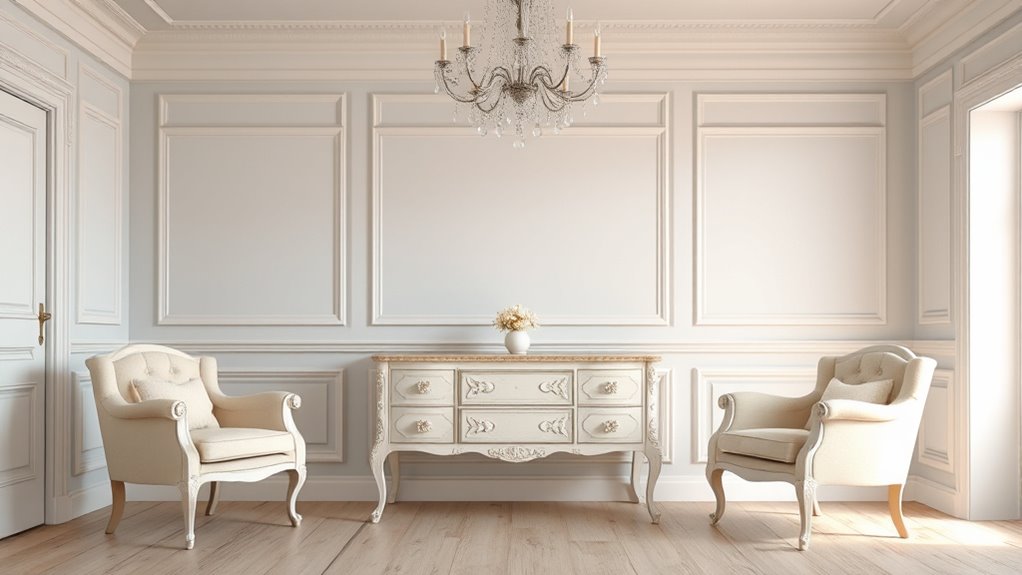
Gustavian style is a refined and elegant interior design movement that emerged in Sweden during the late 18th century, inspired by the reign of King Gustav III. This style reflects a neoclassical influence, drawing on the principles of symmetry, simplicity, and harmony. When you embrace Gustavian decor, you’re adopting a look that balances formality with comfort, blending classical ideals with a distinctly Scandinavian sensibility. The style’s hallmark is its use of pastel color palettes, which create a soft, serene atmosphere within your space. Think gentle shades of white, cream, light blue, and muted pinks that evoke calmness and sophistication. These colors aren’t just decorative; they serve to highlight the clean lines and balanced proportions characteristic of the neoclassical influence, emphasizing symmetry and elegant restraint.
Gustavian style combines neoclassical elegance with pastel palettes and balanced symmetry for timeless Scandinavian sophistication.
In your interior, you’ll notice that furniture pieces often have straight, refined lines, with minimal ornamentation, aligning with the neoclassical tendency to strip away excess decoration. The use of light colors enhances the sense of space and light, making even modest rooms appear more open and airy. When choosing your palette, stick to these understated hues, and pair them with white or light-colored wood finishes to maintain a cohesive, harmonious look. The pastel tones also serve to soften the formality of the architecture and furniture, making your space inviting rather than austere.
Symmetry plays a crucial role in achieving an authentic Gustavian style. You might arrange your furniture in balanced pairs or mirror images, creating a sense of order and stability. Decorative elements, such as chandeliers, mirror frames, and moldings, are often designed with classical motifs that echo ancient Greece and Rome, reinforcing the neoclassical influence. While these details add elegance, they’re never overwhelming. Instead, they complement the overall understated aesthetic, allowing the pastel color schemes to stand out gently. Incorporating classic motifs enhances the historical authenticity of your decor.
You should also consider incorporating antique or vintage pieces, as they add authenticity and character to your space. The combination of neoclassical influence and pastel palettes results in a look that’s timeless yet fresh, making your home feel both historic and modern. By focusing on symmetry, light colors, and classical details, you create a harmonious environment that embodies the sophistication and grace of the Gustavian style. It’s a perfect choice if you want your home to feel calm, elegant, and effortlessly stylish.
Frequently Asked Questions
How Did Gustavian Style Influence Modern Scandinavian Design?
Gustavian style influences modern Scandinavian design through its emphasis on simplicity, elegance, and light colors. You’ll notice this in Scandinavian minimalism, which uses clean lines and functional forms. Nordic color palettes, inspired by pastels and natural tones, create calm, inviting spaces. This style fosters a sense of harmony and understated beauty, making it a timeless foundation for contemporary interiors that prioritize both form and function.
What Are the Main Differences Between Gustavian and French Louis XVI Styles?
Imagine walking into a room with Gustavian furniture, simple and elegant with Swedish pastels, versus a French Louis XVI space filled with ornate carvings and gilded accents. The main difference lies in their details: Gustavian style favors restraint, with pared-down, symmetrical forms, while Louis XVI features intricate, ornate carvings and gilded details. You notice the Gustavian’s softer palette contrasts sharply with the lavish, decorative richness of Louis XVI.
Which Colors Are Most Authentic for Gustavian Interiors?
You should choose pastel palettes and soft hues to stay authentic to Gustavian interiors. Think light blues, gentle grays, muted yellows, and soft pinks, which reflect the refined, airy feel of the style. These colors emphasize the elegance and simplicity of Swedish design, creating a serene ambiance. Use these authentic shades on walls, furniture, and accessories to achieve a true Gustavian look that balances sophistication with subtlety.
How Can I Incorporate Gustavian Elements Into a Small Space?
Think of your small space as a delicate canvas ready for a touch of elegance. To incorporate Gustavian elements, choose a soft color palette of pale blues, creams, and grays to brighten and expand. Use mirrors to reflect light and create an illusion of space, while sleek, symmetrical furniture keeps the look balanced. Keep decor minimal yet refined, letting the gentle pastels and classic lines breathe life into your cozy setting.
Are There Specific Furniture Pieces Typical of Gustavian Style?
You should look for Gustavian furniture featuring white painted wood, which gives it a bright, airy feel. Pieces like vintage sideboards, petite chairs, and elegant consoles often have Rococo influences with curved lines and delicate details. These furniture pieces are perfect for creating a classic Gustavian vibe in your space, adding charm and sophistication while keeping the look light and timeless.
Conclusion
Imagine stepping into a room where pastel hues and perfect symmetry greet you like a gentle handshake. Just like a well-balanced melody, the Gustavian style creates harmony and calm, transforming any space into a serene retreat. Think of it as a gust of fresh Swedish air, where every detail whispers elegance. Embrace this timeless style, and you’ll find your home becomes a peaceful haven—proof that beauty in simplicity truly stands the test of time.