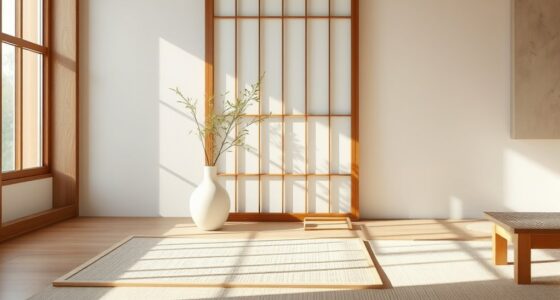

Minimalism is about prioritizing quality and purpose over quantity, creating spaces that promote calm and focus. It encourages you to choose meaningful, functional items and strip away excess clutter, making your environment more organized and peaceful. By simplifying your surroundings, you can improve mental clarity and foster a sense of fulfillment. Embracing these principles helps align your space with your values, leading to a more intentional and rewarding life. Keep exploring to discover how to apply these ideas effectively.
Key Takeaways
- Prioritize quality over quantity to create a purposeful and durable environment.
- Select meaningful, functional items that serve a clear purpose.
- Strip away excess to promote simplicity and reduce clutter.
- Maintain balance to foster harmony, calmness, and focus.
- Ensure each object contributes to well-being and aligns with personal values.

Have you ever wondered how simplifying your life can lead to greater happiness and focus? When you embrace minimalism, you start to see how less truly is more. It’s not about depriving yourself but about creating a space where what truly matters can shine. A key part of this process is understanding the importance of balance in design. Balance in design isn’t just about aesthetics; it’s about creating harmony within your environment. When your space feels balanced, it promotes a sense of calm and order, making it easier to focus on what’s important. You want to avoid cluttered chaos that distracts your mind and overwhelms your senses. Instead, aim for a layout where each item has a purpose and contributes to the overall harmony. This doesn’t mean every surface must be empty, but each piece should serve a clear role, enhancing your space rather than detracting from it.
To achieve this, decluttering techniques become essential. Decluttering isn’t just about throwing things away; it’s about making intentional choices. Start by evaluating each item—ask yourself if it adds value or if it’s just taking up space. Keep only what you use regularly or what truly brings you joy. Remove the rest, and don’t be afraid to let go. This process can be freeing and helps establish a clearer sense of your space’s purpose. As you declutter, you’ll notice your environment becoming more open and inviting. This clarity extends beyond your physical surroundings to your mental state. When your space is free of unnecessary objects, your mind feels less burdened, more able to focus on what matters most.
Minimalism encourages you to prioritize quality over quantity, selecting items that are meaningful and functional. This approach aligns with the principle of simplicity—stripping away excess to reveal what’s essential. It’s about cultivating an environment that promotes serenity and efficiency, where each object has a reason for being there. As you incorporate balance in design and apply smart decluttering techniques, you’ll find that your daily life becomes more manageable and joyful. The process might require effort at first, but the reward is a space that supports your well-being and helps you concentrate on your goals. Ultimately, minimalism isn’t just about a tidy space; it’s about creating a life that feels lighter, more focused, and truly aligned with your values.
Frequently Asked Questions
How Does Minimalism Impact Mental Health and Well-Being?
Minimalism positively impacts your mental health by reducing stress and promoting emotional clarity. When you declutter your space, you create a calmer environment that helps you focus and feel more in control. Less clutter means fewer distractions, making it easier to manage emotions and stay grounded. Embracing minimalism encourages mindfulness, allowing you to prioritize what truly matters and enjoy a more balanced, peaceful state of mind.
Can Minimalism Be Applied to Digital and Online Spaces?
Imagine you’re overwhelmed by endless notifications and cluttered screens—applying minimalism to your digital space helps. You can practice digital decluttering by limiting apps and emails, and embracing minimalist interfaces that prioritize essential features. This reduces distraction, enhances focus, and creates a calmer online environment. By consciously simplifying your digital life, you foster better mental clarity and well-being, making your online experience more intentional and less stressful.
What Are Common Challenges Faced When Adopting Minimalism?
When adopting minimalism, you often face challenges like overcoming clutter and resisting consumerism. It’s tough to let go of possessions and curb the urge to buy unnecessary items. You need to stay committed to your goals and practice mindful consumption. Staying focused on what truly matters helps you resist the temptation of material excess, making it easier to maintain a minimalist lifestyle and enjoy its benefits.
How Does Minimalism Influence Environmental Sustainability?
Minimalism promotes environmental sustainability by encouraging sustainable consumption and eco-friendly design. When you adopt minimalism, you buy less and choose quality over quantity, reducing waste and resource use. This lifestyle supports eco-conscious choices, like using sustainable materials and simplifying your living space. By focusing on what’s essential, you lessen your ecological footprint and help protect the planet, making your daily habits more in harmony with environmental health.
Is Minimalism Suitable for All Personality Types and Lifestyles?
You might find minimalism suits your personality and lifestyle if you value simplicity and clarity. For example, someone with a busy, chaotic schedule may thrive in a minimalist space that reduces clutter and stress. While it’s adaptable for many, personality compatibility and lifestyle adaptability vary; some may prefer more expressive environments. Ultimately, minimalism can be tailored to fit diverse needs, but it’s not one-size-fits-all.
Conclusion
Embracing minimalism gently guides you toward a calmer, more intentional life. By simplifying your surroundings and focusing on what truly matters, you create space for clarity and peace. Remember, less isn’t about deprivation but about making room for what brings you joy and purpose. As you adopt these principles, you’ll find that life becomes a little lighter, a little brighter—allowing you to enjoy each moment with a gentle ease and a grateful heart.