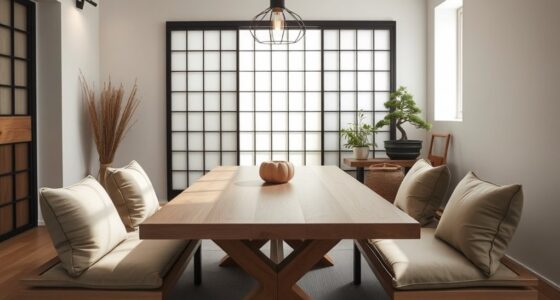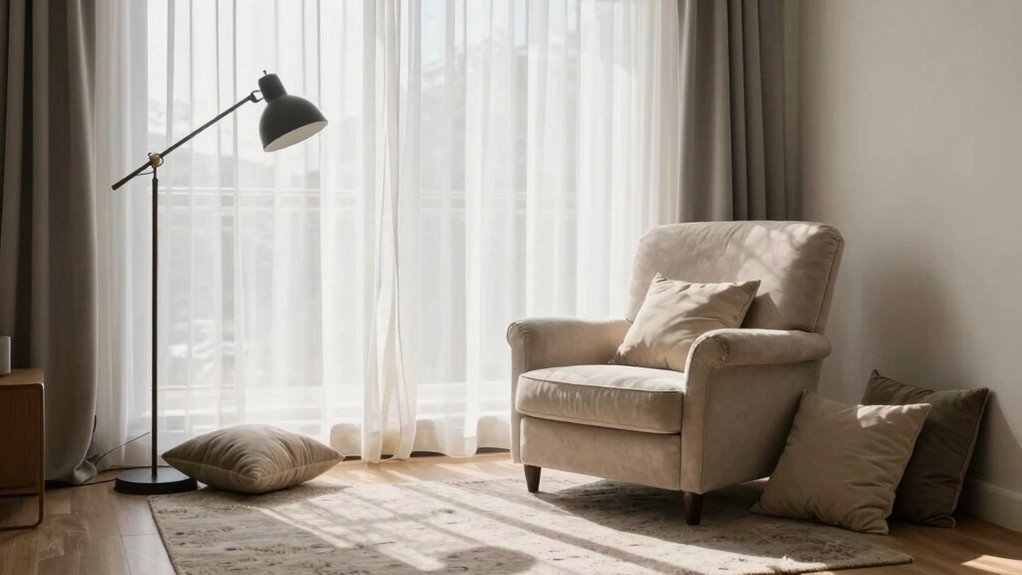

The most overlooked sign your room needs rebalancing is that persistent feeling of discomfort or that something’s “off,” even when everything looks in place. You might notice a dull, cluttered vibe or a sense that energy isn’t flowing smoothly. Small cues like visual disharmony or blocked pathways can also signal imbalance. Recognizing this early is key. Keep exploring, and you’ll uncover simple ways to restore harmony and make your space feel right again.
Key Takeaways
- Persistent feelings of discomfort or “something off” despite an organized space often indicate unnoticed imbalance.
- Clutter or poor flow can subtly disrupt energy, even if the room appears tidy.
- Visual cues like color clashes or furniture obstructions are frequently overlooked signs.
- Avoidance of certain areas suggests underlying issues with harmony or layout.
- Small adjustments in furniture placement or accessories can restore balance before problems become obvious.
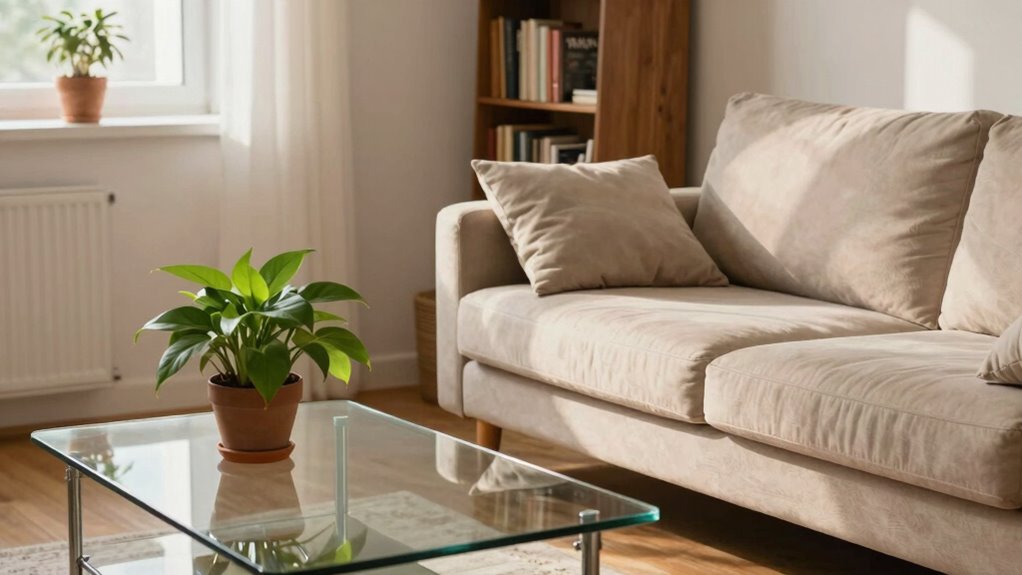
Rebalancing a room can dramatically enhance its harmony and functionality. When a space feels off, it’s easy to overlook the subtle signs that indicate a need for adjustment. One of the most overlooked signs is a feeling that the room’s energy is unbalanced, even when everything appears to be in place. You might notice that despite your efforts, the space doesn’t quite feel right—perhaps it feels cluttered, dull, or oddly disjointed. This discomfort often stems from issues with color harmony and furniture placement. If the colors clash or the furniture arrangement blocks natural flow, your room can feel chaotic or stagnant without you realizing why. Recognizing these signs early allows you to make targeted adjustments that restore harmony.
A room that feels off may hide unbalanced energy, clutter, or poor flow—trust your intuition to spot the signs early.
Color harmony plays a crucial role in creating a balanced environment. When the hues in your room don’t complement each other, it can throw off the entire feel of the space. You might be using too many contrasting colors or not enough variation within a cohesive palette. The result is a visual imbalance that makes the room seem disjointed or overwhelming. If you find yourself avoiding certain areas because they seem too jarring or if the color scheme feels inconsistent, it’s a clear sign that rebalancing is needed. Adjusting the shades, adding neutral tones, or incorporating accent colors can help you achieve a more unified look. This doesn’t mean you have to repaint everything; sometimes, strategic accessories or textiles can tie the room together and improve color harmony. Additionally, understanding the importance of biodiversity in design can inspire more harmonious choices that promote a sense of balance and well-being. Incorporating visual balance by varying textures and patterns can also enhance overall harmony. A well-balanced room often reflects the mindful arrangement of these elements, making the space feel more cohesive.
Furniture placement is another critical factor often overlooked. Even with the perfect colors, poorly arranged furniture can disrupt the flow and functionality of the space. If you notice that walking from one side of the room to the other feels awkward or that certain pieces block pathways, it’s time to rethink your layout. Proper furniture placement encourages a natural flow of movement and helps define distinct zones within the room. It’s not just about aesthetics; it’s about creating a space that feels inviting, functional, and balanced. When furniture is arranged haphazardly or symmetrically without purpose, it can make a room feel cluttered or unwelcoming. By shifting pieces, creating focal points, and ensuring clear pathways, you can restore a sense of order and harmony. Paying attention to spatial awareness in your furniture arrangement can significantly impact the overall comfort and balance of the room.
In essence, the most overlooked sign that your room needs rebalancing often boils down to how it makes you feel. If you’re experiencing discomfort or a sense that something’s off, pay close attention to color harmony and furniture placement. These elements are fundamental to creating a space that is both beautiful and functional. Taking the time to assess and adjust these aspects can transform your room into a harmonious retreat that genuinely feels right.
As an affiliate, we earn on qualifying purchases.
Frequently Asked Questions
Can Lighting Affect Room Balance Perceptions?
Lighting definitely affects how you perceive room balance. If ambient brightness is uneven or natural light is too harsh or too dim, it can throw off the room’s harmony. You might notice areas feeling heavier or lighter than others. Adjusting the natural light sources and adding balanced artificial lighting can help improve the overall perception, making the space feel more comfortable and visually appealing. Proper lighting is key to a well-balanced room.
How Does Furniture Placement Influence Room Rebalancing?
Furniture placement greatly influences room rebalancing by creating better furniture symmetry and enhancing spatial flow. When you position furniture thoughtfully, you guide movement naturally and prevent cluttered areas. Symmetrical arrangements foster harmony, while uneven layouts can disrupt balance. By paying attention to how pieces relate to each other and the room’s focal points, you guarantee a cohesive, comfortable space that feels balanced and inviting.
Are Color Schemes Important in Room Rebalancing?
Colors are essential in room rebalancing because they set the mood and influence how you feel. You shouldn’t overlook their importance—color schemes are like the seasoning in a recipe, enhancing overall harmony. Using color psychology, you can boost mood and create balance. Bright hues energize, while softer tones promote calm. When you choose colors thoughtfully, your space naturally feels more balanced and inviting.
What Role Do Textures Play in Room Harmony?
Textures play a essential role in room harmony by creating tactile contrast and enhancing surface harmony. You can mix smooth and rough finishes to add visual interest and prevent monotony. Incorporate different textures in fabrics, furniture, and decor to make the space feel balanced and inviting. This tactile contrast engages your senses, making the room feel more dynamic and well-composed without overwhelming the overall aesthetic.
How Often Should I Reassess My Room’s Balance?
You should reassess your room’s balance every few months, especially after adding new decorative accents or rearranging furniture. Pay attention to airflow optimization, ensuring air circulates evenly and feels comfortable. If you notice clutter, uneven textures, or the space feels stagnant, it’s time for a re-evaluation. Regular checks help maintain harmony, making your room inviting and functional. Don’t wait too long—small adjustments can make a big difference.
Conclusion
Think of your room as a delicate dance partner—when one side leads too much, the entire rhythm feels off. Rebalancing your space is like tuning a musical instrument; a small adjustment can restore harmony and flow. Don’t wait for the discord to grow louder. Instead, step in, make those subtle shifts, and bring back the balance. When your room moves in perfect harmony, you’ll feel the difference—grounded, centered, and ready to dance through your day.