
Scandinavian design combines clean lines with functional aesthetics to create spaces that are simple yet inviting. You’ll notice the focus on minimalism, with uncluttered layouts and natural materials like light-colored woods. This style emphasizes practicality through thoughtful organization and ample natural light, resulting in calming, timeless environments. By understanding how these elements work together, you’ll discover how to craft spaces that are both stylish and functional—if you look further, you’ll see how these principles can transform your home.
Key Takeaways
- Scandinavian design features clean, simple lines that create uncluttered and elegant spaces.
- Focuses on functionality, combining practicality with aesthetic appeal for everyday living.
- Emphasizes natural materials like light-colored woods to add warmth and texture.
- Utilizes natural light and minimal artificial lighting to enhance a bright, airy environment.
- Promotes a minimalist approach that balances aesthetic simplicity with thoughtful space organization.
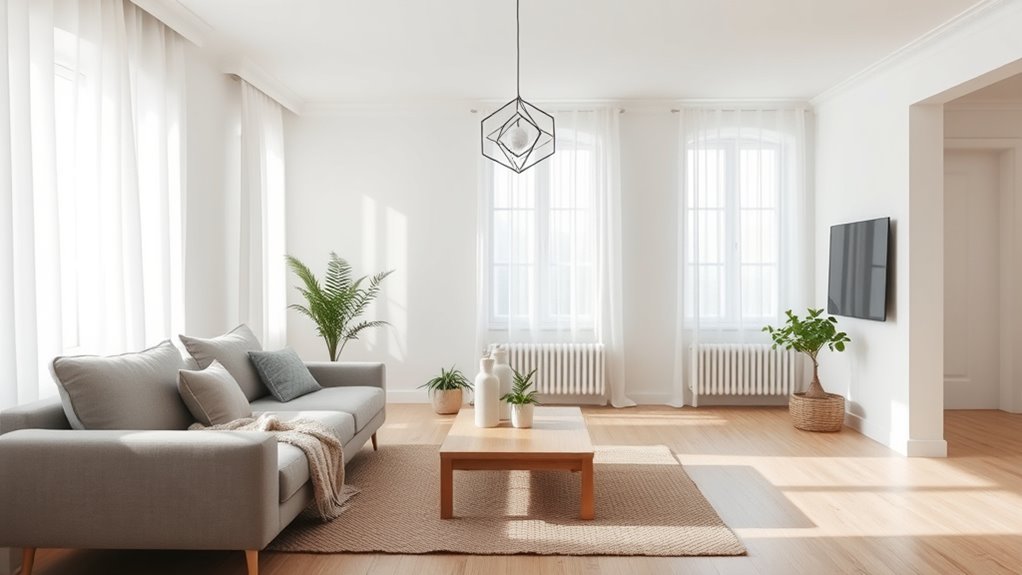
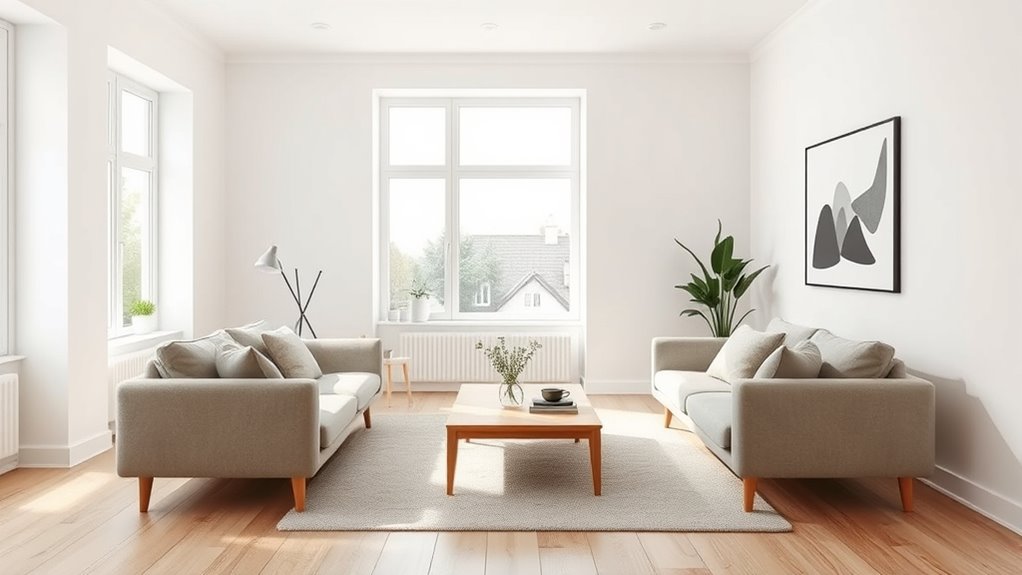
Have you ever wondered what makes Scandinavian design so instantly appealing? It’s the way it combines simplicity with functionality, creating spaces that feel both calming and practical. At its core, Scandinavian design embraces a minimalist approach, focusing on clean lines and uncluttered spaces. This simplicity isn’t about starkness or coldness; instead, it highlights the beauty of natural materials and thoughtful craftsmanship. When you walk into a Scandinavian-inspired room, you’ll notice how everything seems thoughtfully chosen, with no unnecessary ornamentation. Every piece has a purpose, and the overall effect is a serene, welcoming environment that feels effortlessly stylish.
Scandinavian design seamlessly blends simplicity and function, creating calm, stylish, and thoughtfully curated spaces.
The use of natural materials plays a vital role in defining this aesthetic. You’ll often see light-colored woods like pine, oak, or birch, which add warmth and texture to the space. These materials are chosen not only for their durability but also for their ability to bring the outdoors inside, fostering a connection with nature. The textures of wood grain or wool fabrics add visual interest without overwhelming the senses. When you incorporate natural materials, your space gains a timeless quality that resists trends and feels authentic. This approach encourages sustainability, as it favors quality over quantity and promotes eco-friendly choices. Additionally, rustic decor elements can be seamlessly integrated to enhance the cozy, natural feel characteristic of Scandinavian spaces.
The minimalist approach in Scandinavian design extends beyond just furniture choices. It influences how you organize and decorate your space, emphasizing open, airy layouts. Clutter is minimized as each item serves a purpose or adds to the overall aesthetic. Storage solutions are discreet, helping maintain the clean look while keeping essentials within reach. This simplicity makes the environment easier to maintain and more calming to be in. You’re encouraged to focus on quality over quantity, selecting pieces that are both functional and beautiful. The idea is to create a sanctuary where every element contributes to a sense of harmony.
Lighting is another key element—natural light is maximized with large windows and light-colored walls that reflect daylight, making the space feel bright and inviting. When artificial lighting is used, it tends to be soft and unobtrusive, complementing the natural light and enhancing the overall ambiance. The result is a balanced environment that feels peaceful and uncluttered. By combining a minimalist approach with natural materials, Scandinavian design achieves a timeless aesthetic that’s both practical and visually calming. It’s a style that invites you to slow down, appreciate simplicity, and live comfortably in a space that feels authentic and well-balanced.
Frequently Asked Questions
How Does Scandinavian Design Influence Modern Interior Trends?
You’re influenced by Scandinavian design’s emphasis on sustainable practices and cultural influences, shaping modern interior trends. Its focus on simplicity, natural materials, and functionality encourages you to create spaces that are both stylish and eco-friendly. You’re inspired by the blend of minimalism with warmth, incorporating sustainable choices and cultural touches. This approach helps you design interiors that are timeless, practical, and reflective of a conscious, modern lifestyle.
What Materials Are Most Commonly Used in Scandinavian Furniture?
Like a canvas waiting for your touch, Scandinavian furniture often features natural woods and neutral fabrics. You’ll find light oak, pine, and ash that bring warmth and simplicity, creating a calming atmosphere. These materials are chosen for their durability and timeless appeal, aligning with the design’s focus on functionality. The neutral fabrics complement the wood, enhancing the clean, uncluttered aesthetic that defines Scandinavian style.
Can Scandinavian Design Be Adapted for Small Spaces?
Yes, you can definitely adapt Scandinavian design for small spaces. Focus on using multi-functional furniture and space-saving solutions like fold-out beds, extendable tables, and compact storage units. These pieces help maximize your space without sacrificing style. Keep the design simple with clean lines and neutral colors to maintain that classic Scandinavian aesthetic. This approach creates a cozy, functional environment that feels open and inviting, even in limited areas.
How Does Scandinavian Design Balance Minimalism With Coziness?
You balance minimalism with coziness by choosing warm textile textures like soft throws and plush rugs that add comfort without clutter. Use lighting techniques such as warm, layered lighting to create a welcoming atmosphere while maintaining clean lines. Keep your space simple and functional, but don’t shy away from cozy accents that invite relaxation. This blend guarantees your Scandinavian-inspired space feels both sleek and inviting.
What Are the Key Color Palettes in Scandinavian Interiors?
You’ll find that Scandinavian interiors primarily use muted neutrals like soft whites, grays, and beiges to create a calm, airy atmosphere. To add vibrancy, bold accent colors such as deep blues, vibrant reds, or mustard yellows are incorporated through accessories or textiles. This palette balances simplicity with visual interest, making your space feel both serene and lively without overwhelming.
Conclusion
Embrace Scandinavian design’s timeless charm, where clean lines and functional beauty invite serenity into your space. Picture a cozy room bathed in natural light, every piece effortlessly blending form and purpose. It’s more than style—it’s a gust of fresh air that refreshes your surroundings and your spirit. By choosing this aesthetic, you’re not just decorating; you’re creating a sanctuary that whispers calm and invites you to breathe, live, and thrive amidst simplicity’s gentle embrace.