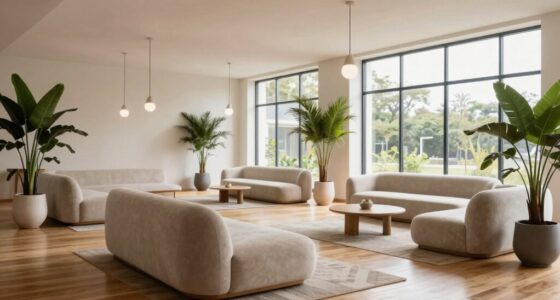
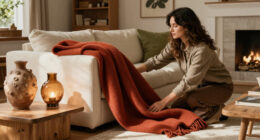
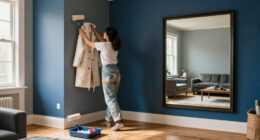
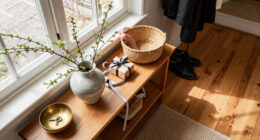
To make your room work better together, focus on pairing colors and furniture thoughtfully. Use neutral tones as a base and add accent colors that reflect your personality, while matching furniture styles and textures for cohesion. Arrange pieces to highlight focal points and keep pathways clear, creating a smooth flow. Combining these strategies helps your space look balanced, inviting, and functional. Keep exploring to discover even more ways to perfect your room’s design.

Get decor and gifts delivered free with Prime
- Fast, free delivery on millions of items
- Prime Video, Amazon Music and more included
- Member-only deals all year
Key Takeaways
- Pair complementary furniture styles to create visual harmony and cohesive aesthetics.
- Coordinate colors through neutral bases and accent shades for a balanced, unified look.
- Arrange furniture to highlight focal points and facilitate smooth pathways.
- Use multifunctional pieces to optimize space and enhance functionality.
- Incorporate textures and patterns to add visual interest and depth to the room.

Creating a better room often comes down to how you pair different products to enhance both style and functionality. When you focus on thoughtful product pairings, your space becomes more inviting and organized. Two key elements to consider are color coordination and furniture arrangement, which work together to create harmony and flow in any room.
Color coordination is the foundation of a cohesive look. You want your colors to complement each other rather than clash, so start by selecting a neutral base, like beige, gray, or soft white. From there, add accent colors that reflect your personality—perhaps a bold blue or a calming green. When choosing furniture, keep color in mind; for instance, a dark wood coffee table pairs well with lighter-colored sofas and throws in vibrant pillows to add pops of color. This balance prevents the room from feeling overwhelming or monotonous. If you prefer a more monochromatic scheme, varying textures and patterns can add visual interest without disrupting the color harmony. The goal is to create a unified palette that guides your eye smoothly across the space.
Start with neutral tones and add vibrant accent colors for a balanced, cohesive, and visually appealing room.
Furniture arrangement plays a crucial role in how well your room functions. Consider the focal point of the room —be it a fireplace, TV, or stunning window view—and arrange your furniture to highlight it. Don’t just place pieces randomly; instead, think about how people will move through the space. Keep pathways clear and avoid blocking entryways or windows. For example, position your sofa facing the main focal point, with chairs angled inward to facilitate conversation. A well-planned furniture layout not only makes the room more inviting but also maximizes its usability. If space is limited, opt for multi-functional furniture like a storage ottoman or wall-mounted shelving to free up floor space while maintaining style. Mix and match furniture styles carefully, ensuring they share a common element—such as similar legs or upholstery—to create visual cohesion. Additionally, paying attention to color coordination helps tie the entire room together, making the space feel intentional and well-designed. Incorporating furniture placement tips can further enhance the room’s flow and comfort. Being mindful of space utilization can help you achieve a more balanced and functional layout.
Pairing products thoughtfully means paying attention to both color coordination and furniture arrangement. When these elements work together, your room will feel balanced, functional, and aesthetically pleasing. You’ll find that a carefully curated combination of colors and furniture placement transforms your space into a comfortable haven. The key is to stay intentional, making sure each piece complements the others in both style and purpose. With a little planning, your room will not only look better but also feel more welcoming and efficient for everyday living.
Products Worth Considering

Philips Hue Large Smart Light Tube, Black – White and Color Ambiance LED Color-Changing Light – 1 Pack

Sonos Era 100 Wireless Smart Speaker, Black

Levoit Core 600S-P Smart Air Purifier for Large Rooms
As an affiliate, we earn on qualifying purchases.
Frequently Asked Questions
How Do I Choose Complementary Colors for Room Pairings?
To choose complementary colors for room pairings, focus on color harmony by selecting shades opposite or adjacent on the color wheel. You’ll create visual balance by mixing bold and neutral tones thoughtfully. Consider the room’s natural light and mood you want to set. Test small swatches first, and trust your instincts. This approach guarantees your room feels cohesive, vibrant, and inviting, making your space both stylish and balanced.
What Are the Best Materials for Durable Room Combinations?
Durability in room combinations is the backbone of lasting style. Opt for materials like hardwood, leather, and stone; they’re the sturdy pillars supporting your design. These materials offer excellent furniture balance and withstand daily wear. Incorporate texture contrast with woven rugs or plush cushions to add visual interest and comfort. This mix creates a resilient, inviting space that ages gracefully, much like a well-loved song that only gets better over time.
How Can I Mix Modern and Traditional Products Effectively?
You can mix modern and traditional products effectively by balancing vintage accents with sleek, contemporary pieces. Incorporate artful accessories like antique vases or ornate mirrors to add character, while keeping furniture and decor clean-lined and minimalist. This contrast creates visual interest without feeling cluttered. Be mindful of color schemes and textures, ensuring they complement each other. The key is blending elements harmoniously for a cohesive, stylish space that feels both fresh and timeless.
Are There Eco-Friendly Pairing Options for Sustainable Rooms?
Yes, you can create eco-friendly rooms by pairing recycled textiles with biodegradable finishes. Choose furniture upholstered with recycled fabrics, and finish wood pieces with biodegradable coatings. Incorporate accessories like rugs, curtains, and throws made from recycled materials. These pairings not only promote sustainability but also add texture and warmth to your space. By combining these eco-conscious options, you make your room stylish and environmentally responsible.
How Do Lighting Choices Impact Product Pairings?
Lighting choices dramatically influence your product pairings by setting the mood and highlighting key elements. Ambient lighting creates a warm, inviting atmosphere that complements soft textiles and cozy furniture, while accent lighting draws attention to artwork or architectural features, enhancing their visual appeal. Combining these lighting types allows you to craft balanced spaces where product pairings feel intentional and harmonious, making your room both functional and aesthetically pleasing.
Conclusion
By thoughtfully pairing your furniture and decor, you create a space that feels both inviting and harmonious. Imagine walking into a room where cozy cushions complement sleek tables, and warm lighting dances across coordinated textiles. When each piece works together, your room becomes a canvas of comfort and style, reflecting your personality. With these simple pairings, you turn an ordinary space into a welcoming sanctuary—where every detail plays its part in crafting a perfect, balanced environment.