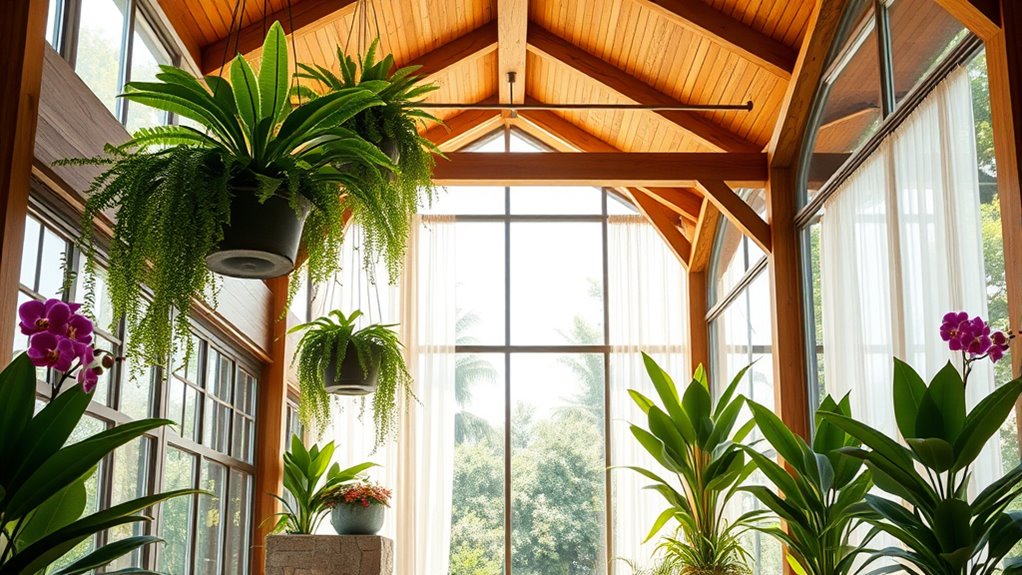

Biophilic design connects your indoor environment to nature by integrating natural elements like plants, natural light, and outdoor views. This approach boosts your well-being, reduces stress, and improves air quality through easy-care indoor plants and optimized daylight. By blending natural features with your space, you create a calming, healthier atmosphere that enhances comfort and productivity. To discover how to seamlessly incorporate these elements into your environment, continue exploring the benefits and strategies of biophilic design.

Get decor and gifts delivered free — and shop member deals
- Fast, free delivery on millions of items
- Access to Prime Big Deal Days deals on October 6–7
- Prime Video, Amazon Music and more included
Key Takeaways
- Biophilic design seamlessly integrates natural elements like plants, light, and materials into indoor spaces to promote well-being.
- Incorporating indoor plants improves air quality, reduces stress, and enhances the visual connection to nature.
- Natural light optimization through large windows, skylights, and adjustable treatments enhances space vitality and occupant mood.
- Using natural materials and textures creates a more authentic, calming environment that mimics outdoor settings.
- Automation technology supports sustainable, comfortable interiors by regulating light and temperature, strengthening the connection to nature.

Have you ever wondered how incorporating natural elements into built environments can boost your well-being? Biophilic design makes this possible by seamlessly blending nature with indoor spaces. One of the most effective ways to achieve this is through indoor plant integration. When you add plants to your environment, you’re not just decorating; you’re creating a healthier, more vibrant space. Indoor plants improve air quality by filtering toxins and increasing humidity, which can reduce respiratory issues and boost your overall comfort. Plus, their presence has been linked to lower stress levels and enhanced mood. The greenery offers a visual connection to nature that’s proven to calm your mind and improve focus. You don’t need a green thumb to experience these benefits—simple, easy-care plants like pothos, snake plants, or succulents work well in most settings. Incorporating automation in interior design can also help optimize light and temperature, enhancing the comfort and sustainability of your space.
Alongside indoor plants, natural light optimization plays a crucial role in biophilic design. Bright, natural light makes your space feel more open and inviting, positively impacting your circadian rhythm. When you maximize the amount of sunlight that enters your room, you help regulate your sleep cycle, improve your mood, and increase productivity during the day. To do this, consider installing larger windows or using glass doors that allow more sunlight to flood your space. Use sheer curtains or adjustable blinds to control glare and prevent overheating while still letting in plenty of light. Position your workspace or seating areas near windows to benefit from direct sunlight, which can also highlight your indoor plants and make the space feel more lively. Incorporating skylights or light tubes can further enhance natural light if windows are limited.
Frequently Asked Questions
How Does Biophilic Design Impact Indoor Air Quality?
Biophilic design improves your indoor air quality by promoting natural ventilation and incorporating plants, which aid in air purification. These elements help reduce pollutants and remove toxins, creating a healthier environment. You’ll notice better airflow and fresher air, making your space more comfortable and reducing allergy symptoms. By integrating nature into your interiors, you actively enhance pollutant reduction and support overall well-being through cleaner, more breathable air.
Can Biophilic Elements Reduce Stress in Workplaces?
Yes, biophilic elements can profoundly reduce stress in workplaces. By incorporating natural light, green walls, and indoor plants, you create a calming environment that enhances employee well-being. These elements help lower cortisol levels, improve mood, and increase focus. When your workspace connects to nature, you foster a sense of tranquility and comfort, leading to better stress reduction and overall happier, healthier employees.
What Are Cost-Effective Ways to Incorporate Biophilic Design?
Imagine bringing a forest into your space—cost-effective ways include adding affordable greenery like potted plants and creating DIY natural features such as moss walls or wooden planters. You can repurpose materials to craft natural decor, which not only enhances aesthetics but also connects you to nature. These simple, budget-friendly touches make biophilic design accessible, helping you enjoy the benefits of a calming, nature-inspired environment without breaking the bank.
How Does Natural Lighting Influence Mental Health?
Natural light benefits your mental well-being by boosting your mood, reducing stress, and improving focus. When you let sunlight into your space, it helps regulate your circadian rhythm, leading to better sleep and increased energy. Exposure to natural light can also decrease feelings of depression and anxiety. By maximizing natural lighting, you create a healthier environment that promotes overall mental health and enhances your daily productivity and happiness.
Are There Specific Plants Best Suited for Indoor Biophilic Spaces?
You should choose indoor plants like snake plants, pothos, and peace lilies for biophilic spaces, as they thrive indoors and improve air quality. When selecting indoor plants, consider your light and humidity levels to guarantee healthy growth. Use plant maintenance tips such as proper watering, adequate lighting, and occasional fertilizing to keep them vibrant. These choices enhance your space’s natural feel and boost your overall well-being.
Conclusion
By embracing biophilic design, you bring brightness and balance to your space, blending beauty with breathability. Connecting interiors to nature not only cultivates calm but also creates a mesmerizing, calming canvas. So, step into a space where sunlight, greenery, and natural elements seamlessly synchronize, sparking serenity and sustainability. Let this lush, lively lifestyle inspire you to nurture nature’s nuances, making your environment a peaceful, productive paradise you’re proud of.
Fall Picks
fall essentials
As an affiliate, we earn on qualifying purchases.