
To make design decisions that still feel right next year, combine insights from color psychology with ongoing user feedback. Stay attentive to evolving preferences by regularly monitoring analytics, surveys, and usability tests. Incorporate scientific and perceptual insights to improve accessibility and understanding. Balance current trends with timeless principles, and keep an open dialogue with users to adapt your designs over time. If you want to learn how to stay ahead with dynamic, user-centered choices, keep exploring these strategies.
Key Takeaways
- Continuously monitor user feedback and preferences to adapt designs while maintaining core brand identity.
- Incorporate scientific insights and perceptual psychology to ensure accessibility and timeless visual hierarchies.
- Balance current trends with fundamental design principles to keep visuals fresh yet familiar.
- Regularly test and update color schemes based on user interaction data and cultural shifts.
- Engage users regularly for input, demonstrating responsiveness and aligning designs with evolving expectations.
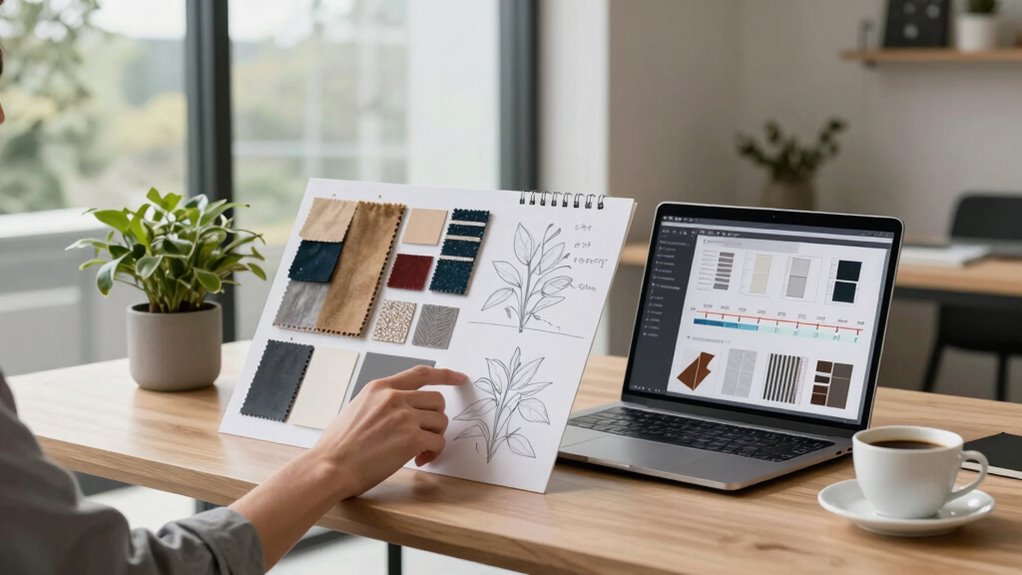
Are you wondering which design choices will resonate best with users next year? If so, you’re not alone. Staying ahead in design means understanding what appeals to your audience today and predicting what will still work tomorrow. To do this effectively, you need to combine insights from color psychology with genuine user feedback. Color psychology guides you in choosing hues that evoke specific emotions and behaviors, helping you craft interfaces that feel intuitive and engaging. For example, calming blues can foster trust, while energetic reds might stimulate action. But don’t rely solely on theory—listen closely to your users’ voices. Their feedback reveals how real people interact with your designs and what they genuinely connect with. This combination guarantees your choices aren’t just trendy but rooted in actual user preferences, making your designs more likely to stand the test of time.
Combine color psychology with user feedback to create timeless, engaging, and intuitive design choices.
When making design decisions, consider how color psychology influences user perception. Bright, bold colors may grab attention now, but they also need to align with your brand’s message and audience expectations. Over time, preferences shift, so it’s vital to monitor how users respond to your color schemes through ongoing feedback. Use surveys, usability tests, and analytics to gather insights about what resonates and what doesn’t. If users consistently mention that a particular color scheme feels outdated or doesn’t match their mood, it’s a sign to adapt. Balancing current trends with timeless principles ensures your design remains fresh yet familiar, creating a seamless experience that feels right now and in the future. Additionally, understanding visual perception can help you craft designs that are more accessible and inclusive for diverse audiences. Incorporating scientific testing devices and methods can further refine your approach by providing objective data on user interactions. Recognizing how scientific principles influence design choices can deepen your understanding of user behavior and improve your decision-making process. Developing an awareness of perceptual psychology can also help you create more effective visual hierarchies that guide user attention naturally, especially as visual perception is influenced by constantly evolving cultural contexts.
User feedback is your most dependable compass when it comes to making long-term design choices. Instead of guessing what might work, you actively involve your audience in the decision-making process. Regularly ask for their opinions on layout, color choices, and overall usability. Pay attention to recurring themes—if many users find certain elements confusing or unappealing, it’s time to adjust. Incorporating their suggestions into your design evolution, showing that you value their input and are committed to improving their experience. This ongoing dialogue helps you anticipate future preferences and stay aligned with what users want, even as trends evolve.
Ultimately, making design decisions that still feel right next year requires a thoughtful blend of understanding psychological principles and listening to your audience. By leveraging color psychology to evoke the right emotions and continuously integrating user feedback, you create designs that are both appealing now and adaptable for the future. Keep your finger on the pulse of evolving preferences, and your work will remain relevant, engaging, and deeply connected to those you serve.

Color Psychology: Profit From The Psychology of Color: Discover the Meaning and Effects of Color (Business Psychology Books)
As an affiliate, we earn on qualifying purchases.
As an affiliate, we earn on qualifying purchases.
Frequently Asked Questions
How Do I Anticipate Future Design Trends Accurately?
You can anticipate future design trends accurately by conducting trend analysis and innovation forecasting regularly. Keep an eye on industry reports, attend design conferences, and monitor social media for emerging styles. Engage with thought leaders and analyze competitor strategies to identify shifts early. Staying curious and adaptable helps you predict changes more effectively, allowing you to incorporate future-forward ideas into your designs while maintaining relevance.
What Tools Assist in Predicting Long-Term Design Impact?
You can use tools like trend forecasting reports, data analytics, and mood boards to predict long-term design impact. These tools help you assess aesthetic consistency and understand color psychology, ensuring your designs remain relevant and emotionally resonant over time. By analyzing past trends and current data, you make informed decisions that balance innovation with timeless appeal, ultimately guiding you toward designs that stand the test of time.
How Can User Feedback Influence Future-Proof Design Choices?
You’re hitting the nail on the head by valuing user feedback, which heavily influences future-proof design choices. User engagement reveals what truly matters to your audience, guiding necessary adjustments. Feedback analysis helps identify trends and pain points, so you can adapt your designs accordingly. Keeping an ear to the ground guarantees your designs stay relevant, even as trends shift, making your work both innovative and resilient over time.
What Role Does Sustainability Play in Future Design Decisions?
Sustainability plays a vital role in your future design decisions by emphasizing eco consciousness and material innovation. You focus on choosing environmentally friendly materials and reducing waste, ensuring your designs are both responsible and forward-thinking. By prioritizing eco consciousness, you create products that appeal to conscious consumers, while material innovation helps you stay ahead with sustainable solutions that remain relevant next year and beyond.
How Often Should I Revisit and Update My Design Strategies?
You should revisit and update your design strategies regularly, at least once a year, to maintain design consistency while allowing for creative flexibility. As trends evolve and your brand grows, reassessing guarantees your designs stay fresh and relevant. Frequent reviews help you adapt to new insights, technology, and audience preferences, enabling you to balance staying true to your core identity with innovating creatively.
Conclusion
So, next year, when your design decisions seem to dance a little offbeat, remember: trust your gut, not the crystal ball. Embrace the wild, unpredictable ride—like a squirrel juggling acorns in a tornado. If it still feels right, even amid chaos, you’re on the right track. After all, who needs perfect certainty when you can have the thrill of making bold choices that might just make your users smile or scratch their heads?