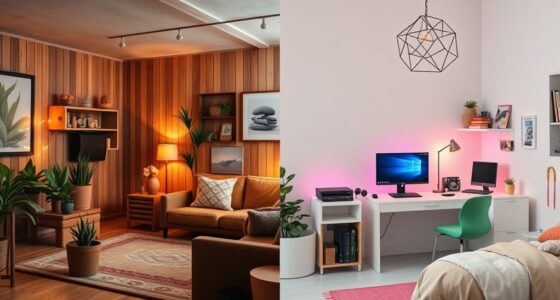

The midcentury modern aesthetic blends sleek, postwar silhouettes with clean lines and warm vintage palettes to create timeless, inviting spaces. You’ll notice streamlined furniture, geometric forms, and an emphasis on simplicity and function. Earthy hues like mustard yellows and olive greens add warmth and nostalgia, enhancing modern decor with a calming vibe. Keep exploring to discover how these design elements can help you craft a stylish yet welcoming environment.

Get decor and gifts delivered free — and shop member deals
- Fast, free delivery on millions of items
- Access to Prime Big Deal Days deals on October 6–7
- Prime Video, Amazon Music and more included
Key Takeaways
- Postwar silhouettes in midcentury modern design emphasize clean, geometric forms with minimal ornamentation.
- Sleek lines create an open, airy feel, enhancing the sense of space and simplicity.
- Furniture features tapered legs and streamlined shapes that highlight functional elegance.
- Vintage color palettes with earthy hues complement postwar furniture silhouettes for a cohesive look.
- Minimalist decor enhances the sleek lines and silhouettes, emphasizing form and purpose.

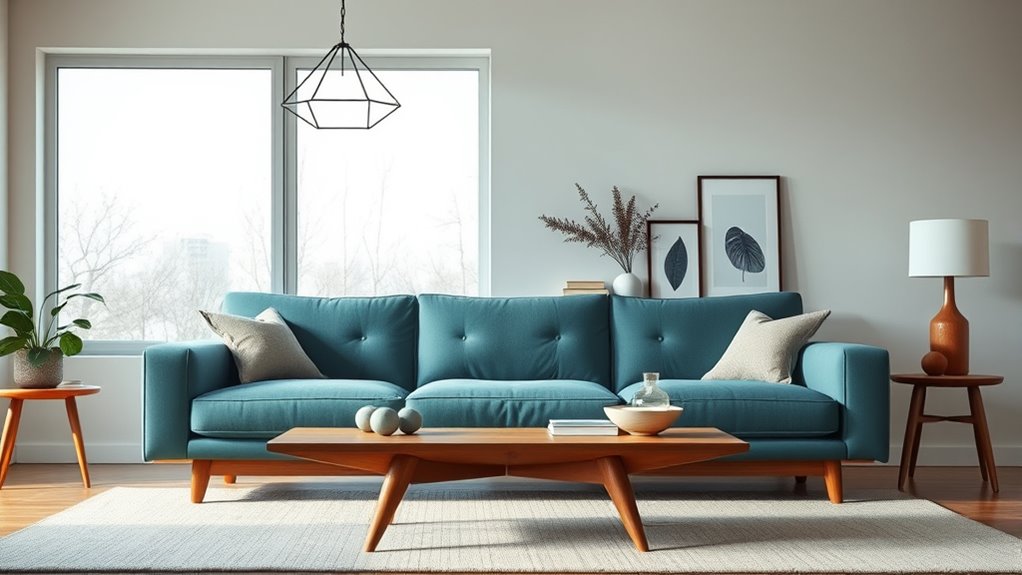
Have you ever wondered what makes the midcentury modern aesthetic so timeless? It’s a style that continues to captivate because of its clean lines, functional design, and effortless elegance. One key aspect that contributes to its lasting appeal is the use of vintage color palettes. During the postwar era, designers favored earthy hues like mustard yellows, olive greens, burnt oranges, and muted browns. These colors evoke a sense of nostalgia while remaining versatile enough to complement modern spaces. When you incorporate vintage color palettes into your decor, you’re not just adding visual interest—you’re connecting with a historical movement that celebrated both simplicity and warmth. These shades work beautifully with minimalist decor, emphasizing a clutter-free environment where every piece has purpose. The streamlined forms and pared-down aesthetic of midcentury modern design make the space feel open and airy, and the colors enhance that effect without overwhelming it. You’ll find that choosing a vintage palette can transform your room into a calm, inviting retreat that still feels fresh and relevant. Additionally, color psychology suggests that these earthy tones promote comfort and relaxation, enhancing the overall ambiance of your space. Minimalist decor is at the heart of midcentury modern style. It’s about stripping away unnecessary ornamentation to focus on the essentials. You don’t need a lot of clutter or ornate details to make a statement; instead, you highlight the beauty of simple, functional furniture pieces. Think of sleek, tapered legs on a coffee table or a sculptural chair with clean geometric lines. These elements serve both aesthetic and practical purposes, making your space feel uncluttered and organized. When combined with vintage color palettes, minimalist decor becomes even more striking—colors act as the focal point, drawing attention to the shape and form of each piece. You can incorporate this style through a few well-chosen furniture items, like a low-profile sofa in olive green or a sideboard in warm teak. The key is to balance the minimalist approach with these nostalgic hues, creating a space that feels both modern and rooted in history.
midcentury modern coffee table with tapered legs
As an affiliate, we earn on qualifying purchases.
As an affiliate, we earn on qualifying purchases.
Frequently Asked Questions
What Are the Key Colors Used in Midcentury Modern Design?
You’ll notice that midcentury modern design uses a vibrant yet balanced color palette. Classic hues include warm oranges, mustard yellows, and cool teals, which set a lively tone. You’ll also see neutral shades like white, black, and shades of gray serving as backdrop colors. Accent hues, such as avocado green or cherry red, add pops of color, making the space feel dynamic while keeping it cohesive and stylish.
How Can I Incorporate Midcentury Modern Pieces Into a Contemporary Home?
You can incorporate vintage furniture and modern accessories to blend midcentury modern style into your contemporary home. Start with iconic pieces like a sleek sofa or a wooden credenza, then add contemporary art or minimalist lamps to create contrast. Keep the color palette simple with neutral tones, and emphasize clean lines and functional design. This mix creates a stylish, balanced space that feels both timeless and current.
What Are Common Materials Used in Midcentury Modern Furniture?
Did you know that wood veneers and molded plastics are staples in midcentury modern furniture? You’ll often see sleek wood veneers used for their beautiful grain and lightweight feel, while molded plastics add vibrant color and innovative shapes. These materials help create the clean lines and functional design that define the style. Incorporating pieces with these materials instantly adds authentic midcentury modern charm to your home decor.
Which Designers Are Most Influential in Midcentury Modern Style?
You’ll want to look at iconic designers like Charles and Ray Eames, whose innovative furniture changed the era, and Eero Saarinen, known for his sleek, sculptural forms. Influential innovators like George Nelson and Arne Jacobsen also shaped midcentury modern style with their functional yet stylish pieces. These designers created timeless silhouettes that define the aesthetic, blending form and function seamlessly. Their work continues to inspire designers today.
How Does Lighting Contribute to the Midcentury Modern Aesthetic?
Imagine stepping into a space where ambient illumination creates a warm, inviting glow, instantly elevating the room’s sleek lines. In midcentury modern design, lighting isn’t just functional; it’s a statement fixture that emphasizes clean silhouettes and minimalist aesthetics. You can use strategically placed lamps or pendant lights to highlight architectural details, making your space feel both stylish and comfortable—like you’ve stepped into a vintage magazine.
Conclusion
Embracing the midcentury modern aesthetic is like stepping into a timeless dream, where sleek lines and postwar silhouettes evoke a sense of effortless sophistication. You’re invited to infuse your space with these clean, functional designs that feel both fresh and nostalgic. By embracing these styles, you create a home that’s as inviting as a gentle breeze on a warm day—simple, elegant, and forever enchanting. Let this iconic era inspire your own unique, stylish sanctuary.
Fall Picks
fall essentials
As an affiliate, we earn on qualifying purchases.